
Last updated November 15, 2026
 Sweep & inspection
 Caps & crowns
 Flue relining
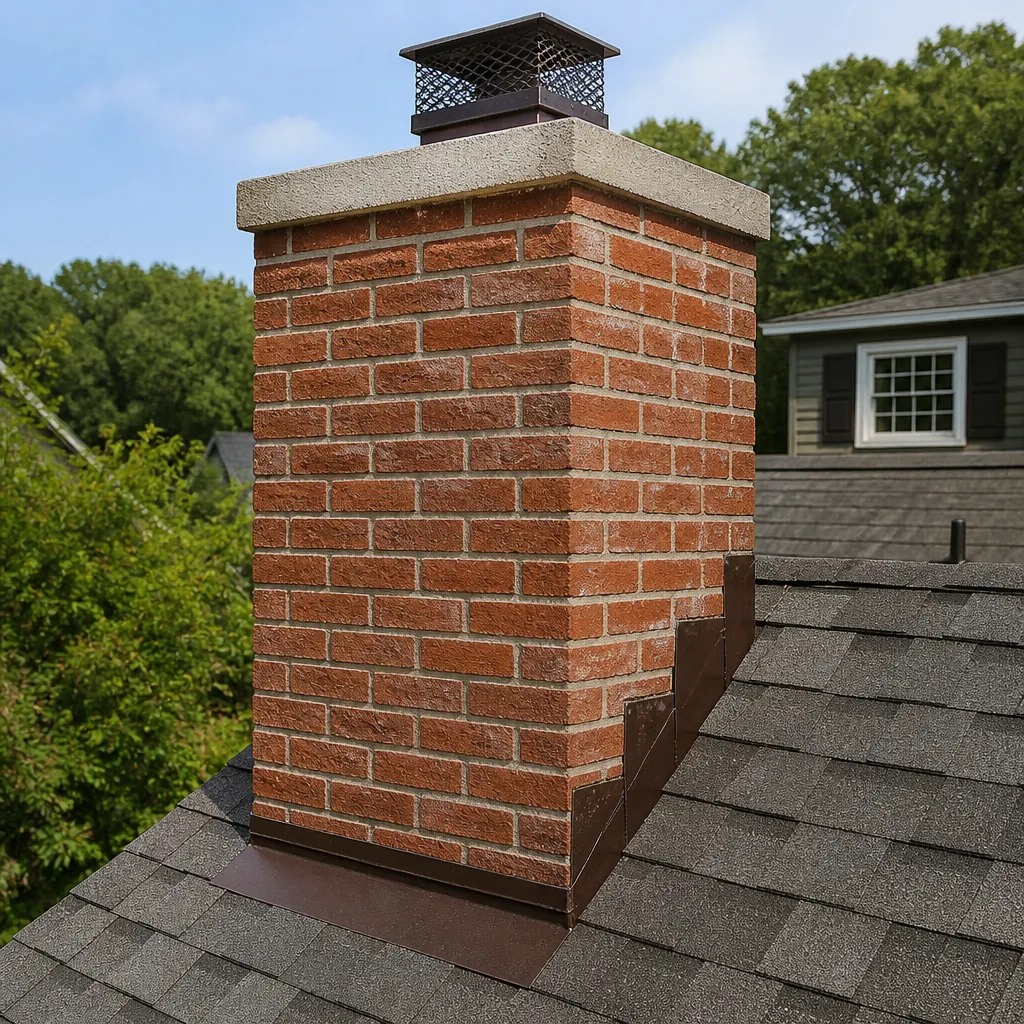 Masonry repair
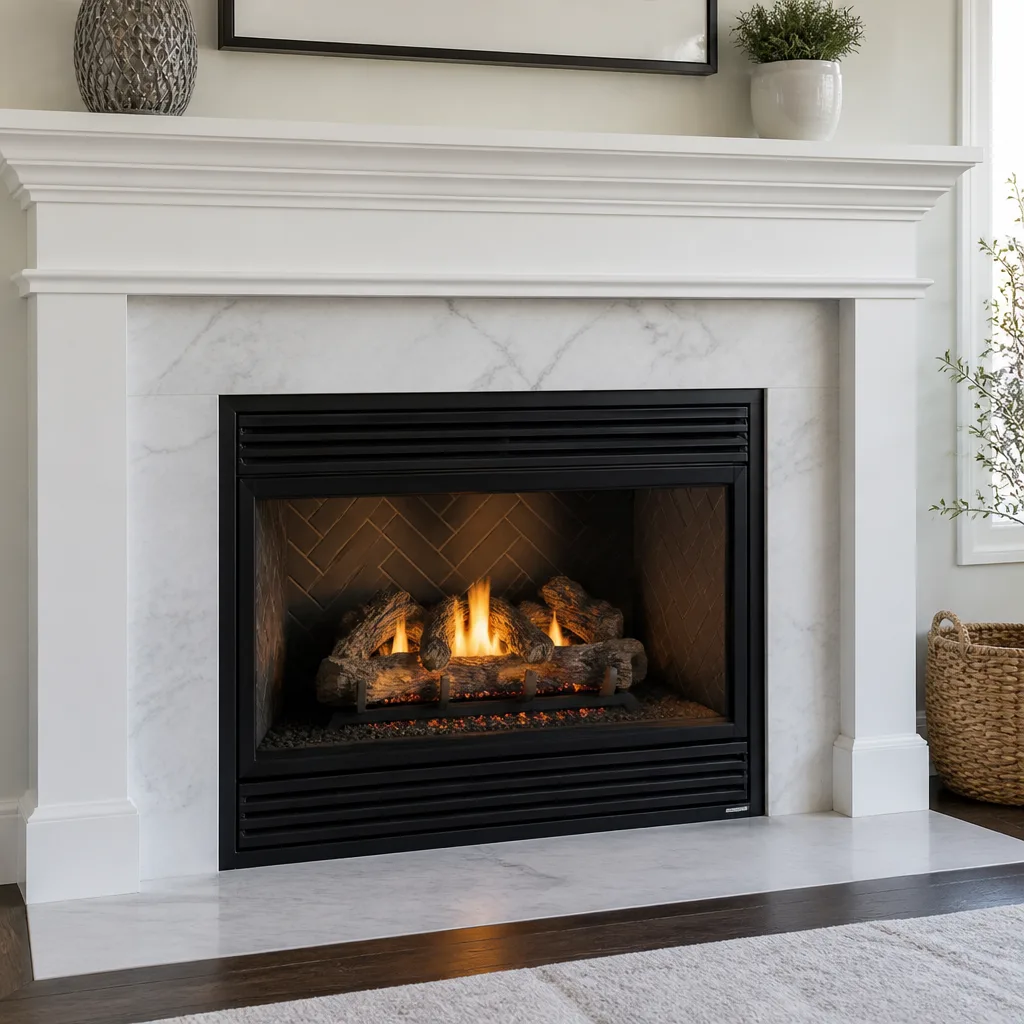 Gas fireplace service
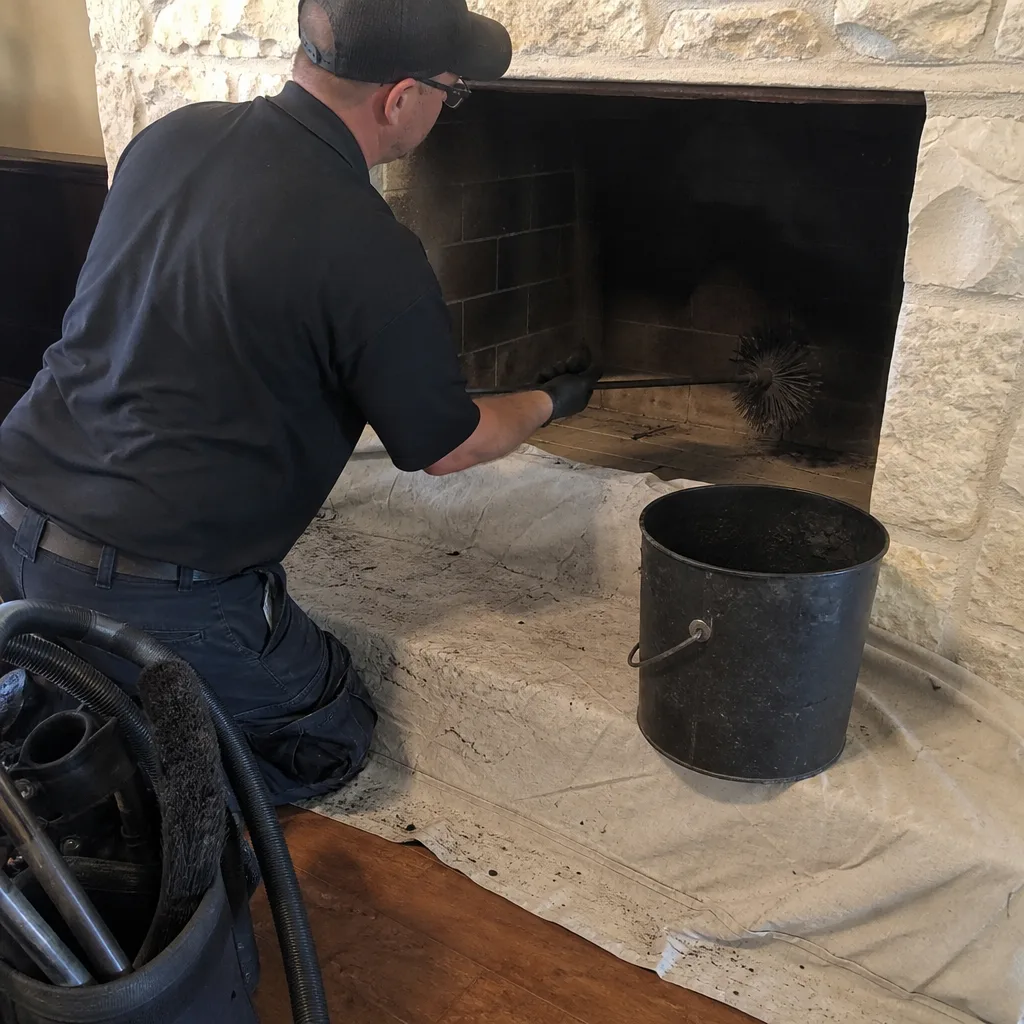
Level 1 sweep and inspection to the NFPA 211 annual standard - flue, crown, cap, and flashing checked and photographed
Chimney sweep logs do not sweep chimneys. They loosen some creosote - which then falls where a brush and vacuum still have to collect it.
The Complete Guide to Chimney Cleaning in Corpus Christi
Most chimney guides are written for homes that burn sixty or a hundred nights a year. In Corpus Christi, you might use your fireplace ten times and then forget about it for months. That low-use pattern is where the hidden risk lives. A chimney that sits idle doesn’t stay clean or stable just because it’s quiet. In our experience, dormant flues in Corpus Christi collect moisture, nesting material, and slow structural wear that a busy northern chimney never has time to develop. This guide explains how chimney cleaning actually works in Corpus Christi, why the local climate changes the schedule, and what “clean” means when Gulf humidity, wind-driven rain, and long gaps between fires are part of the equation.
Quick Answer
Chimney cleaning in Corpus Christi means more than removing creosote. It means inspecting for moisture damage, animal intrusion, and mortar or liner deterioration caused by heat and humidity cycles, then sweeping the flue and documenting what the camera and inspection find. Most homes here should be swept and inspected at the end of a dormant stretch, before the next heating season. You’ll get the most accurate answer from an inspection with photos, not from a schedule printed on a website.
Styles & brands we work with
- Sweep & inspection
- Caps & crowns
- Flue relining
- Masonry repair
- Gas fireplace service
Table of Contents
- Why Corpus Christi Chimneys Age Differently
- The Low-Use Problem: Why Ten Fires a Year Still Need a Clean
- Humidity, Wind-Driven Rain, and Your Masonry
- What “Clean” Means on the Gulf Coast
- The Cleaning Sequence for a Dormant Corpus Christi Fireplace
- When to Schedule a Level 2 Inspection After a Storm
- How Often You Should Book a Chimney Sweep in Corpus Christi
- What Chimney Cleaning Costs in Corpus Christi
Why Corpus Christi Chimneys Age Differently
A chimney is not a passive object. It takes in heat from below, weather from above, and humidity from the air on every side. In Corpus Christi, the humidity stays high through most of the year, and the temperature swings between warm afternoons and cool winter nights are frequent enough to work on masonry over and over. That pattern differs from what a typical northern cleaning guide describes, which is why advice copied from a cold-climate article can miss what’s actually happening in your flue.
Here is what we mean. A masonry chimney in a dry, cold climate deals mostly with creosote buildup from heavy burning, plus occasional freeze-thaw. A masonry chimney in Corpus Christi deals with a quieter set of problems:
- Humidity cycling. Mortar absorbs water vapor from the air and releases it as conditions change. Each cycle stresses the joints slightly. Multiply that by years and you get mortar that crumbles when you touch it.
- Wind-driven rain. Gulf storms push water sideways into caps, crowns, and flue tops. A missing or cracked crown lets water straight into the masonry, where it sits instead of evaporating fast.
- Long dormant periods. A flue that doesn’t see fire for months stays damp inside. A flue that runs hot regularly dries out. Dormancy gives moisture more time to work.
- Animal intrusion. Starlings, sparrows, and chimney swifts nest in uncapped flues across Corpus Christi. A nest doesn’t just block the flue; it holds moisture against the liner.
The result is that chimneys here often show liner and mortar problems earlier than the fire-use history would suggest. It’s why a chimney sweep visit here is partly a moisture and structural inspection, not only a creosote removal.
The Low-Use Problem: Why Ten Fires a Year Still Need a Clean
A fireplace used ten times a year produces less creosote than one used sixty times. That part is simple arithmetic. But creosote isn’t the only thing that makes a chimney unsafe, and in a low-use home the other factors carry more weight. That’s the counterintuitive part most guides skip.
Here’s what builds up in a chimney that isn’t burning:
- Nesting material. Birds find an uncapped flue and build. The nesting material is dry, combustible, and blocks the smoke path.
- Leaf and debris accumulation. Wherever wind carries leaves and twigs, some end up in the flue top.
- Moisture in the flue. Without fire to dry it out, the flue stays humid, which softens mortar and promotes rust on metal components.
- Cracked or spalling liner. A hairline crack that starts from a moisture cycle widens with each small fire you do light. Combustion gases then have a path into the living space.
- Creosote from the few fires. A small amount of creosote is still flammable, and a cold flue running a small fire can produce a stickier, harder deposit than a hot flue does.
So the low-use pattern in Corpus Christi actually concentrates risk differently: less creosote, more obstruction and structural damage. A bird nest or a flue full of leaves can cause smoke to back up into the house on the one night you decide to light a fire. A cracked liner can allow combustion gases into the room. Those are the reasons we tell homeowners not to skip a sweep just because they “barely use it.”
Humidity, Wind-Driven Rain, and Your Masonry
The brick on the outside of a Corpus Christi chimney is doing more work than it looks like. It absorbs and releases moisture constantly. The mortar joints between bricks are the soft part, and they’re the first thing to show the wear. You can learn a lot just by looking closely at your chimney from the ground with binoculars, and if you see any of the following, an inspection is worth booking:
- Crumbling or sandy mortar in the joints (often called spalling)
- Rust stains on the brick or the firebox surround
- White chalky streaks on the brick (efflorescence, a sign of moisture moving through the masonry)
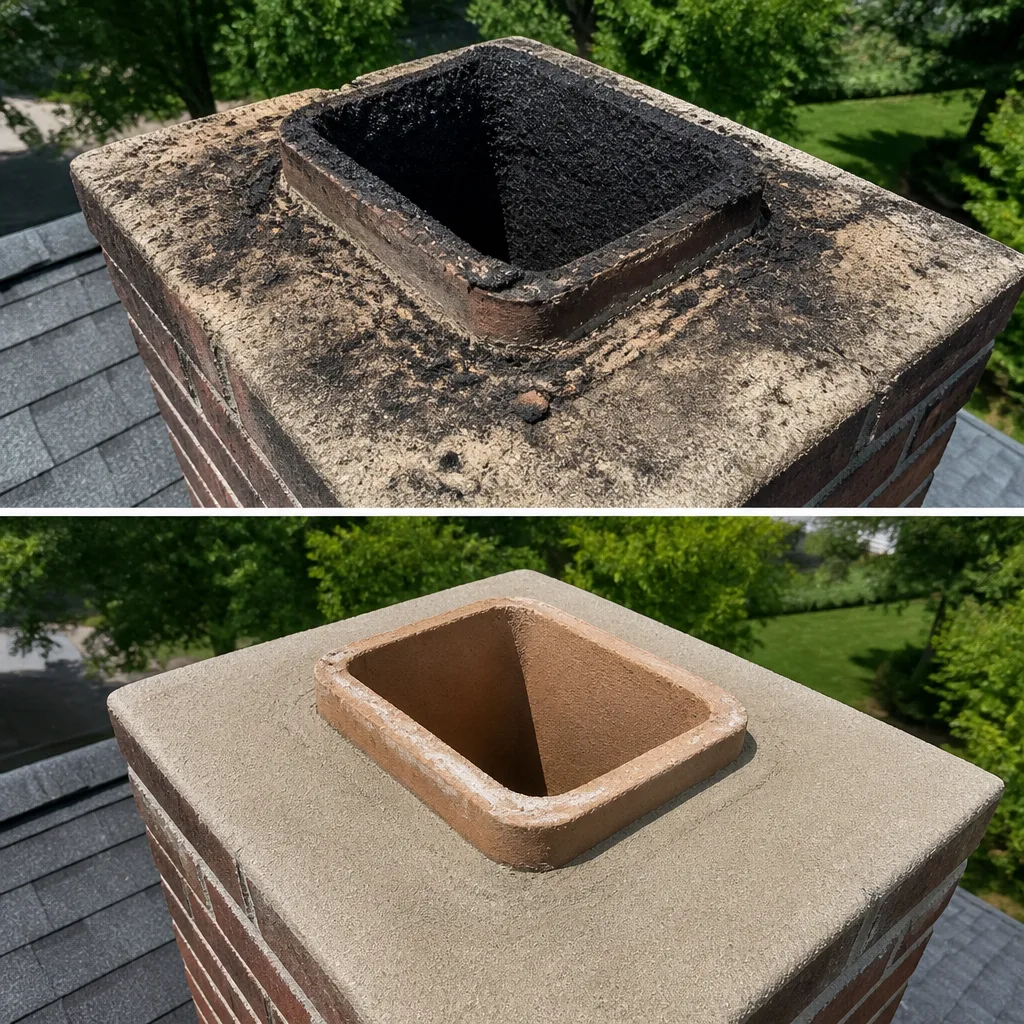
- A crown that is cracked, pulling away, or missing pieces
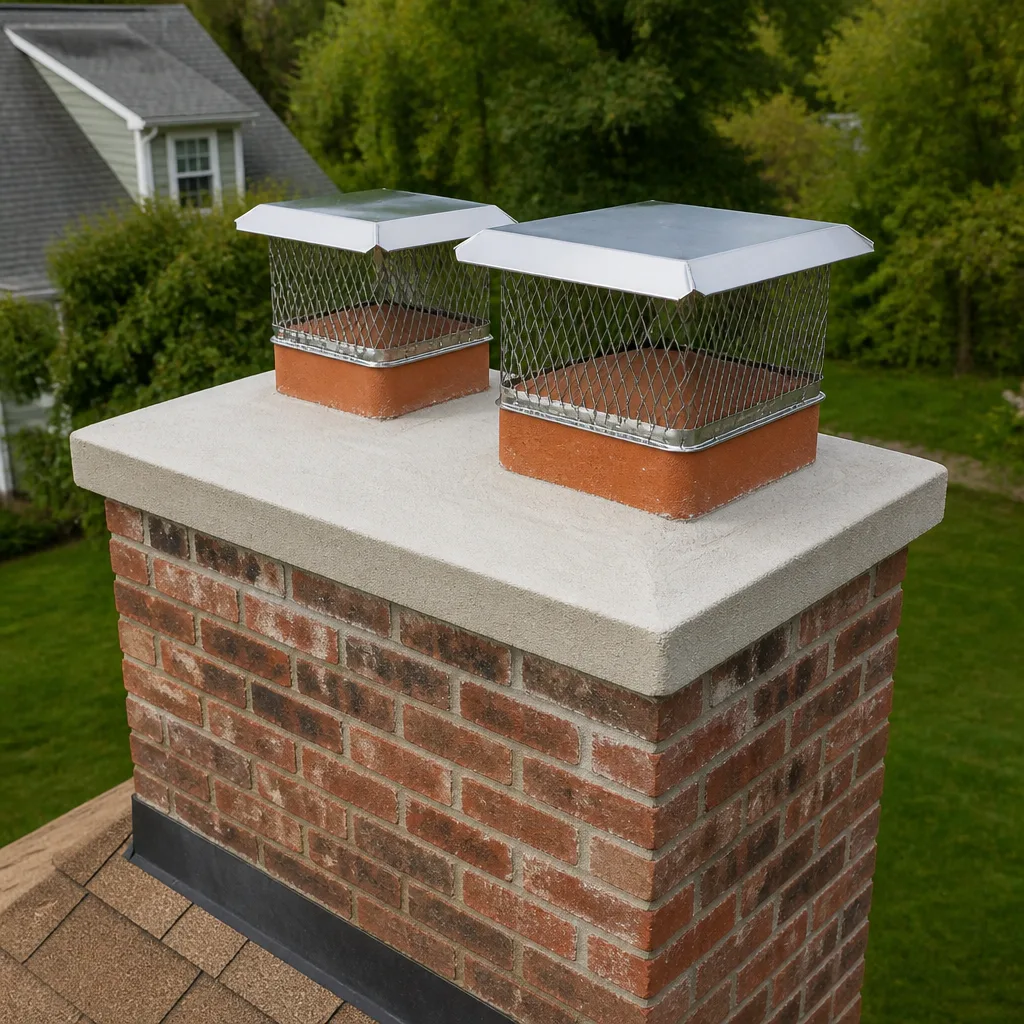
- Missing spark arrestor or cap
- A flue that smells like smoke even when you aren’t burning
None of these mean the chimney is beyond saving. Many are fixable, and some can be handled without pulling the whole flue apart. The important point is that humidity damage doesn’t announce itself. You won’t smell it, and you won’t see it from inside the living room. That’s why we do a camera inspection and hand you the photos. If a recommendation comes with visible evidence, you can decide for yourself whether it’s necessary.
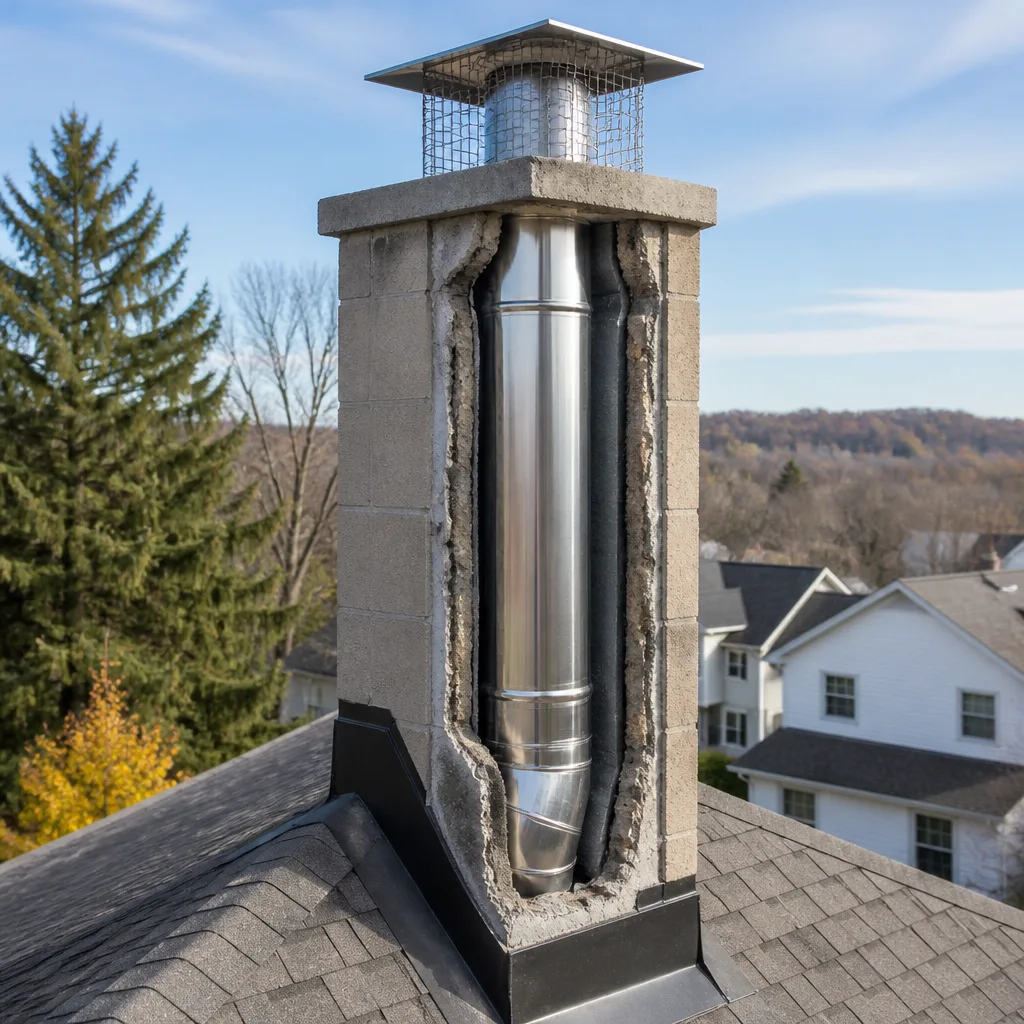
Where the flue interior is deteriorating but still sound enough to resurface, HeatShield ceramic sealant can restore a smooth flue surface without a full relining. Where the liner itself has failed, DuraFlex stainless systems are the replacement standard we work with. The choice comes down to what the camera shows, not to a sales preference.
What “Clean” Means on the Gulf Coast
In a cold-climate guide, “clean” usually means “no creosote.” That’s a fair shorthand for a home burning nightly through a long winter. In Corpus Christi, “clean” needs a wider definition, because what’s actually in the flue is often not creosote at all.
A flue in Corpus Christi is clean when:
- The smoke path is fully open, with no birds’ nests, leaves, or debris blocking it
- The flue walls are free of loose rust, spalling mortar, and any attached deposits
- The firebox and smoke shelf are clear of ash and soot
- The damper opens and closes cleanly, and its linkage is sound
- The cap and crown are intact, keeping water out of the flue
- No visible cracks run through the liner or through mortar joints at the flue
That last point is the one most often missed. A chimney can look “clean” inside and still be unsafe because the liner has a hairline crack you can’t see without a camera. In our experience, this is where a good photographer’s report is worth more than a verbal “all clear.” If there’s no evidence, there’s no rush. If there’s evidence, you deserve to see it before anyone quotes you a repair.
The Cleaning Sequence for a Dormant Corpus Christi Fireplace
This is how a sweep visit actually goes for a fireplace coming out of a long dormant stretch. We’re describing the process so you know what to expect, not so you can do it yourself. Chimney work combines height, confined space, and combustion risk, and it’s the kind of job a trained professional handles with the right tools.
- Living space protection. Drop cloths over the hearth area before anything is opened. Dust control matters in a home you live in.
- Firebox and damper check. Before sweeping, we check that the damper operates and note the firebox condition. This tells us where to focus the camera.
- Top-down brush work. The flue is swept from the top using a properly sized brush, so debris falls into the firebox for controlled removal instead of spreading into the room.
- Smoke shelf and damper area. The smoke shelf traps debris that falls past the flue. It gets cleared separately.
- Camera inspection. A video camera runs the full length of the flue. This is where nesting material, cracks, and liner deterioration show up. We photograph the findings and share them with you.
- Cap and crown review from the roof. We look at what the top of the chimney is doing: cap present, crown intact, mortar joints sound.
- Report and written estimate. If anything needs repair, you get a written estimate itemized by task. Nothing proceeds without your approval.
For a Corpus Christi home near the water or in an older neighborhood where trees overhang the roof, the camera step often turns up leaf debris or a partial nest at the top of the flue. That’s normal. It’s also the kind of thing you can’t find with a flashlight from below.
When to Schedule a Level 2 Inspection After a Storm
Any time a Gulf storm drives water sideways into a chimney, the flue and the masonry take on water in a way that rain from above doesn’t cause. Most of that water finds a hairline somewhere: at the crown, at the cap seal, at a joint in the liner, or at the smoke chamber. A Level 2 inspection uses a camera to look at the whole flue from top to bottom, and it’s the inspection that finds the small problems that a visual check misses.
Book a Level 2 inspection after:
- A storm that pushed rain sideways against the house for hours
- Any roof work or chimney-adjacent repair, including a new cap or crown
- A change in the fireplace’s behavior (smoke coming back into the room, odd smells, draft that used to work)
- A property transfer or a first sweep in a home new to you
- Any fire in the fireplace that behaved unusually
The inspection is not a scare tactic. It’s a look at the inside of the flue. If the camera shows a sound liner and dry masonry, we say so, and you can wait on any minor cosmetic work. If it shows a crack or a failed section, you have a document you can hold next to the estimate.
How Often You Should Book a Chimney Sweep in Corpus Christi
For a home with a wood-burning fireplace, an annual sweep and inspection before heating season is the standard. In Corpus Christi, “before heating season” usually means late fall, when the evenings finally cool enough to light a fire. That timing matters because it gives you a full season of use with a known-good flue, instead of discovering a problem on the first cold night.
A few local factors shift that schedule:
- Low-use homes. Even 10 fires a year warrants an annual inspection, mostly to catch moisture and animal intrusion rather than creosote.
- Homes near tall trees. More leaf and nest debris; check annually at minimum.
- Gas inserts. These don’t produce creosote, but the venting still needs to be inspected for obstruction and corrosion, and the firebox and connections need a look.
- After a long dormancy. If the chimney hasn’t been touched in a few years, book a sweep before you light the first fire, not after.
- Storm years. A season with a wind-driven rain event is a good reason to book a Level 2 inspection even if the annual is already on the calendar.
Our technicians have up to 9 years of experience with exactly this kind of inspection work, and we’d rather tell you “wait a year” than sell you a service the photos don’t support.
What Chimney Cleaning Costs in Corpus Christi
A standard chimney sweep in Corpus Christi typically runs in the range of $180 to $340, depending on the flue’s condition, how long it’s been since the last cleaning, and whether the access is straightforward. A Level 2 inspection with camera documentation is usually quoted as its own line item or included in the sweep visit; ask which it is before you book, because the two aren’t always bundled.
Repair work is priced per job after inspection, and the written estimate sets the final price. Typical ranges to know about:
- Standard sweep and inspection: roughly $180 to $340
- Level 2 camera inspection (as its own visit): commonly $150 to $300
- Crown repair or rebuild: priced per job, usually several hundred dollars and up depending on size
- HeatShield flue resurfacing (where the liner is sound enough to resurface): quoted after camera inspection
- Full liner replacement with a stainless system: the largest of the common repairs; quoted per job after inspection
- Dryer vent cleaning: an add-on service that shares the visit if scheduled together
Please treat all of these as estimates, not quotes. The only number that matters is the one on your written estimate, which is set after the inspection. Two houses on the same block can get different prices if one has a cap and the other doesn’t. If you want a real number for your chimney, call (888) 869-3130. We answer 24/7. Fast dispatch from 7am to 7pm, Sunday through Friday. Estimates are free.
Common Mistakes to Avoid
- Waiting for a fire to test whether the flue works. A dormant flue can have a bird nest or leaf blockage you can’t see from below. Test the flue, not the fire.
- Skipping the sweep because you “barely use” the fireplace. Low use in Corpus Christi concentrates risk in moisture and obstruction, not creosote. The annual inspection catches the problems creosote doesn’t.
- Not booking a Level 2 after a storm. Wind-driven rain pushes water into places a visual check can’t reach. A camera inspection is the only way to see inside the flue.
- Ignoring a missing cap. A cap is the cheapest defense a chimney has. Starlings and swifts find an open flue quickly in this climate.
- Treating a small creosote deposit as no deposit. Any flammable deposit in a flue is worth removing, and a cold flue running a small fire can produce stickier creosote than a hot one.
- Letting a cracked crown sit. A crown is designed to shed water. Once it’s cracked, the masonry underneath absorbs the rain instead.
- Assuming a clean-looking firebox means a clean flue. The part you can see is the firebox. The part you can’t is where the problems are.
See the difference
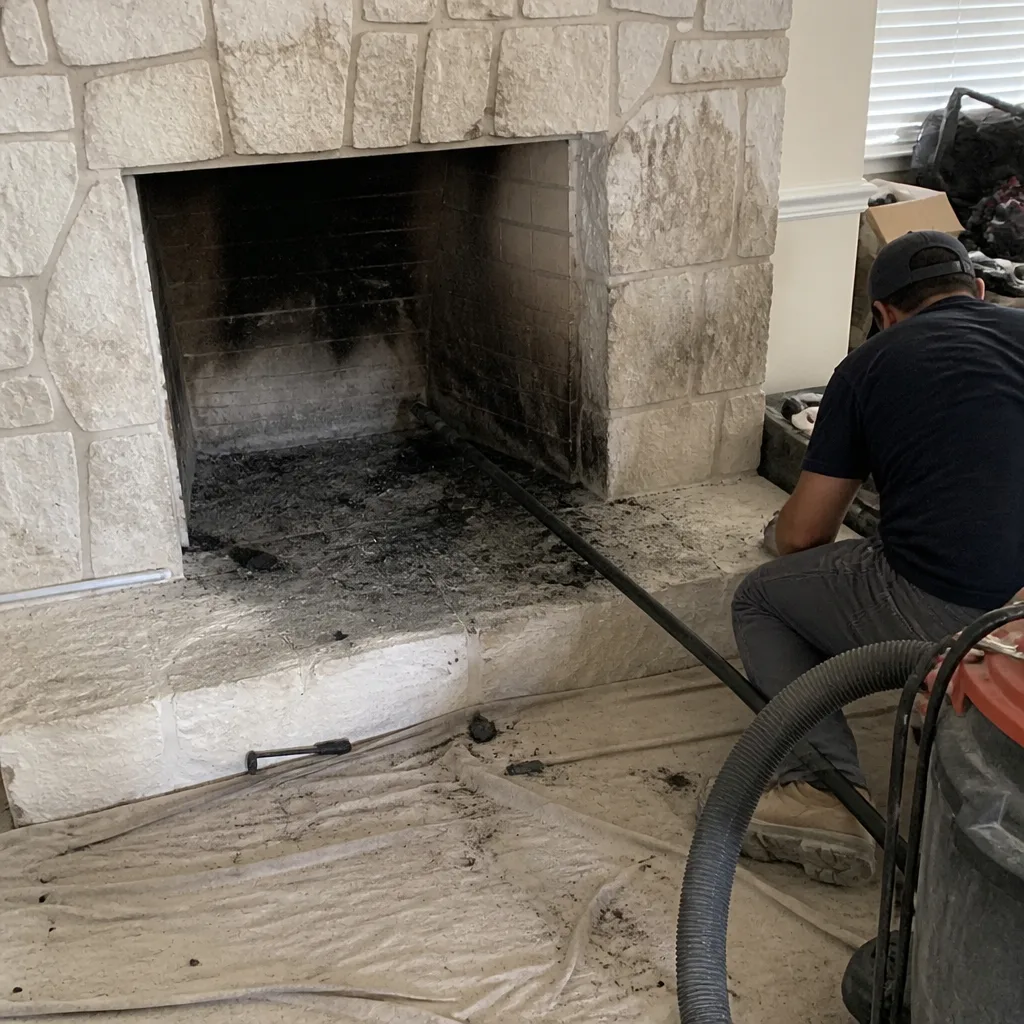 Before
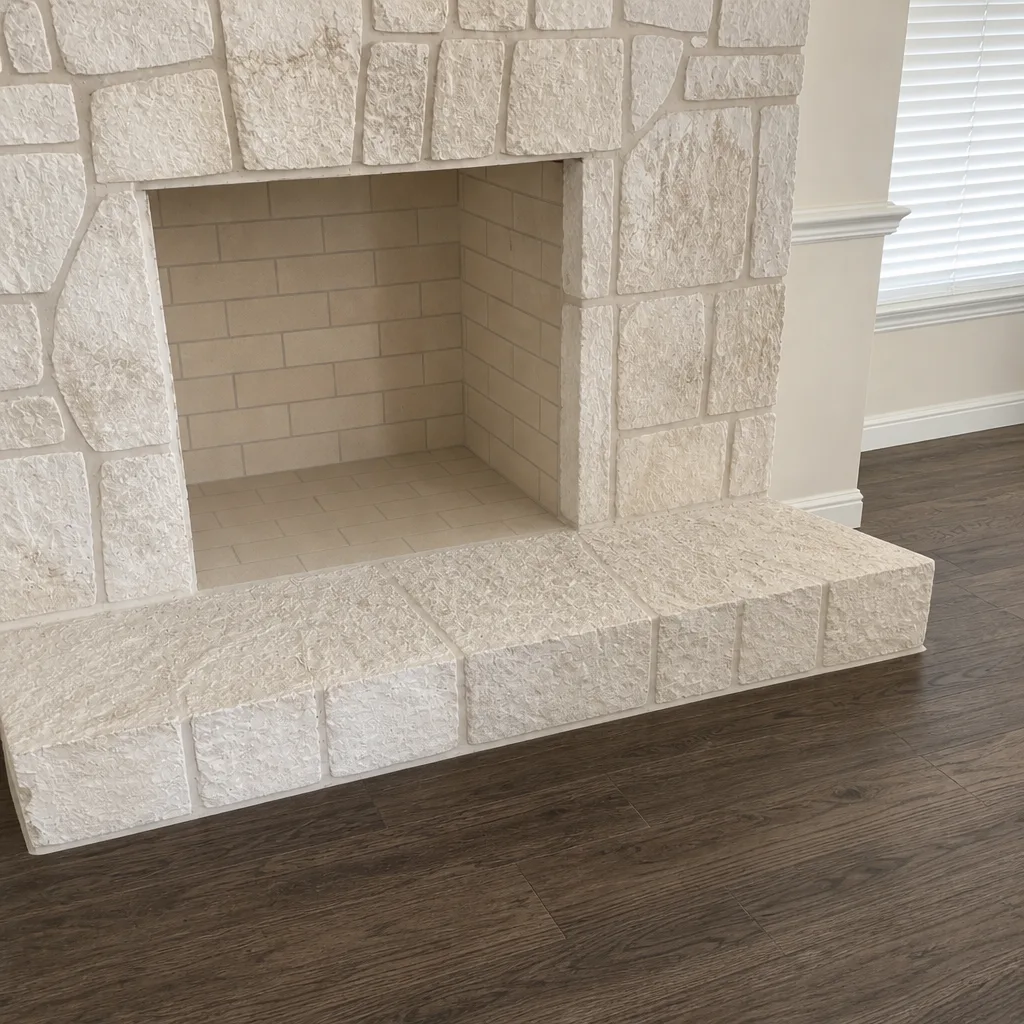 After
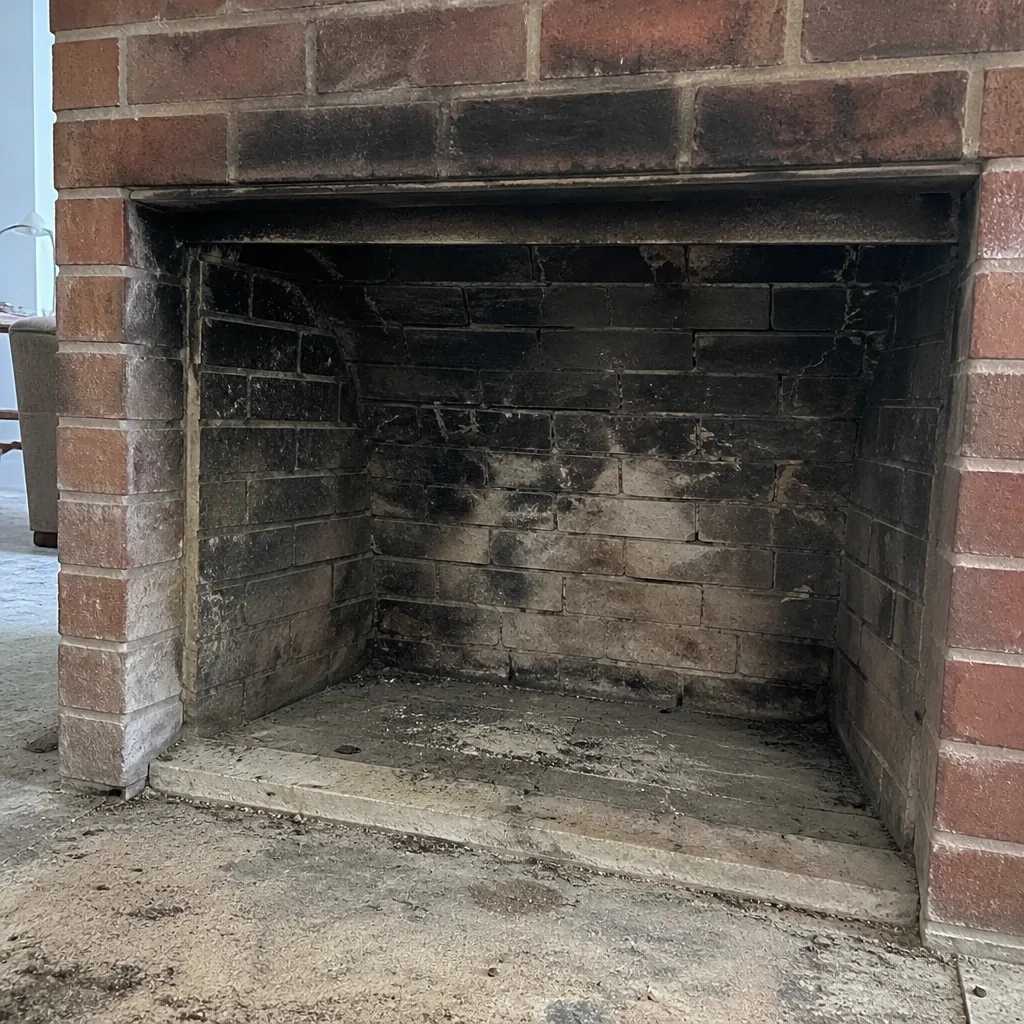 Before
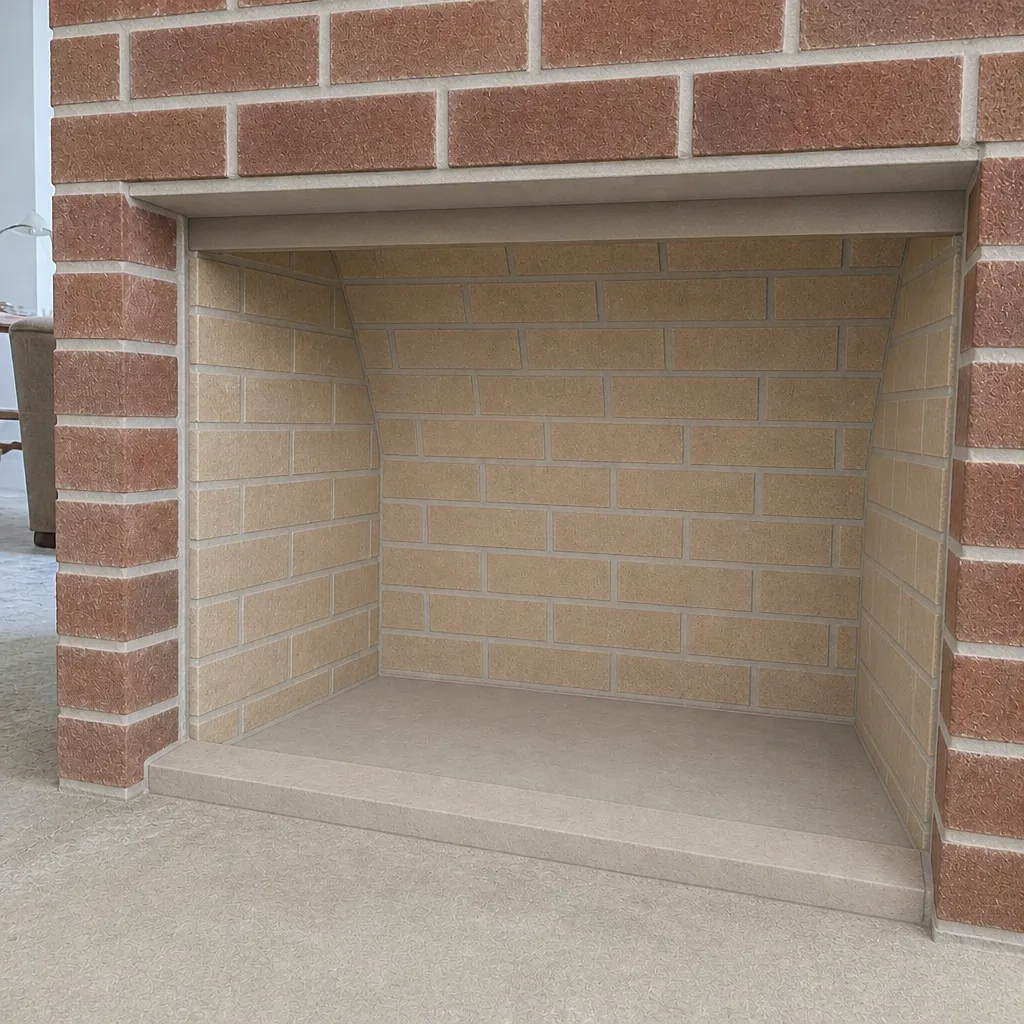 After
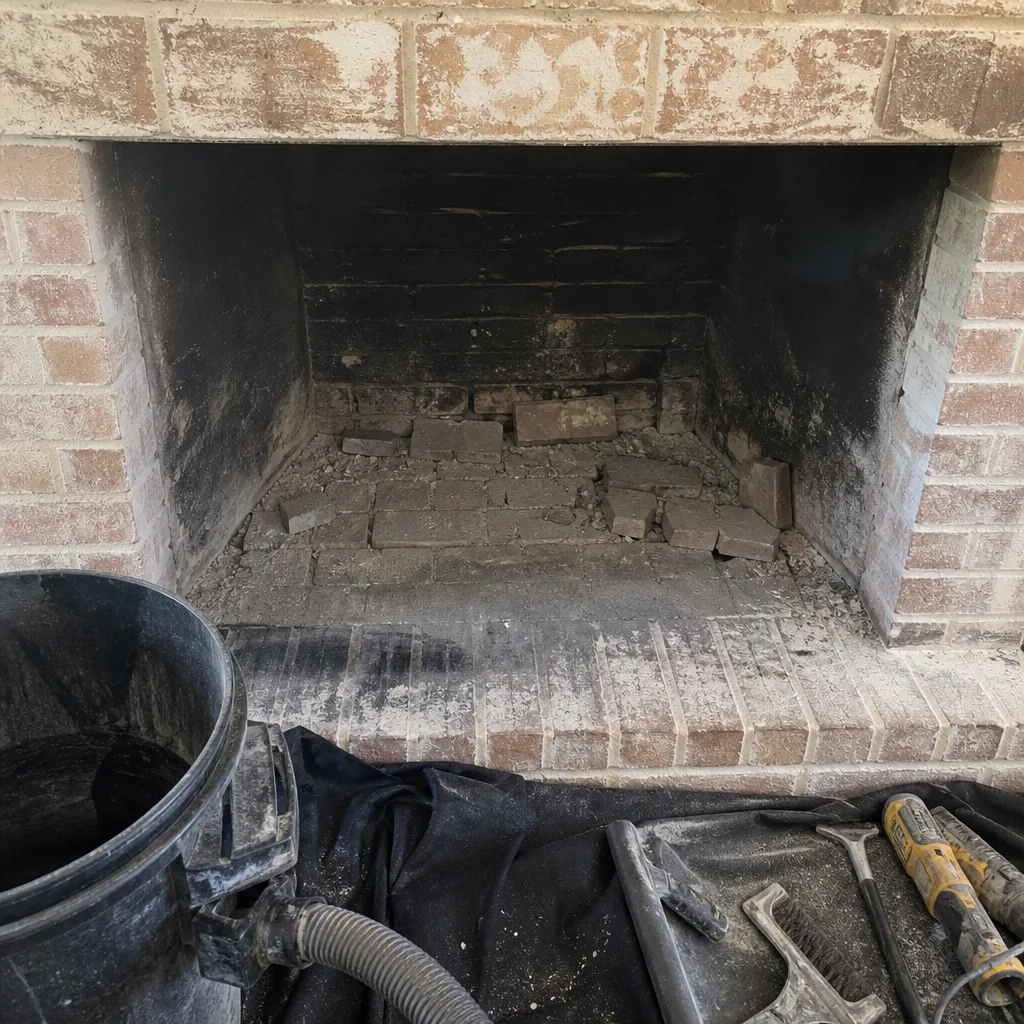 Before
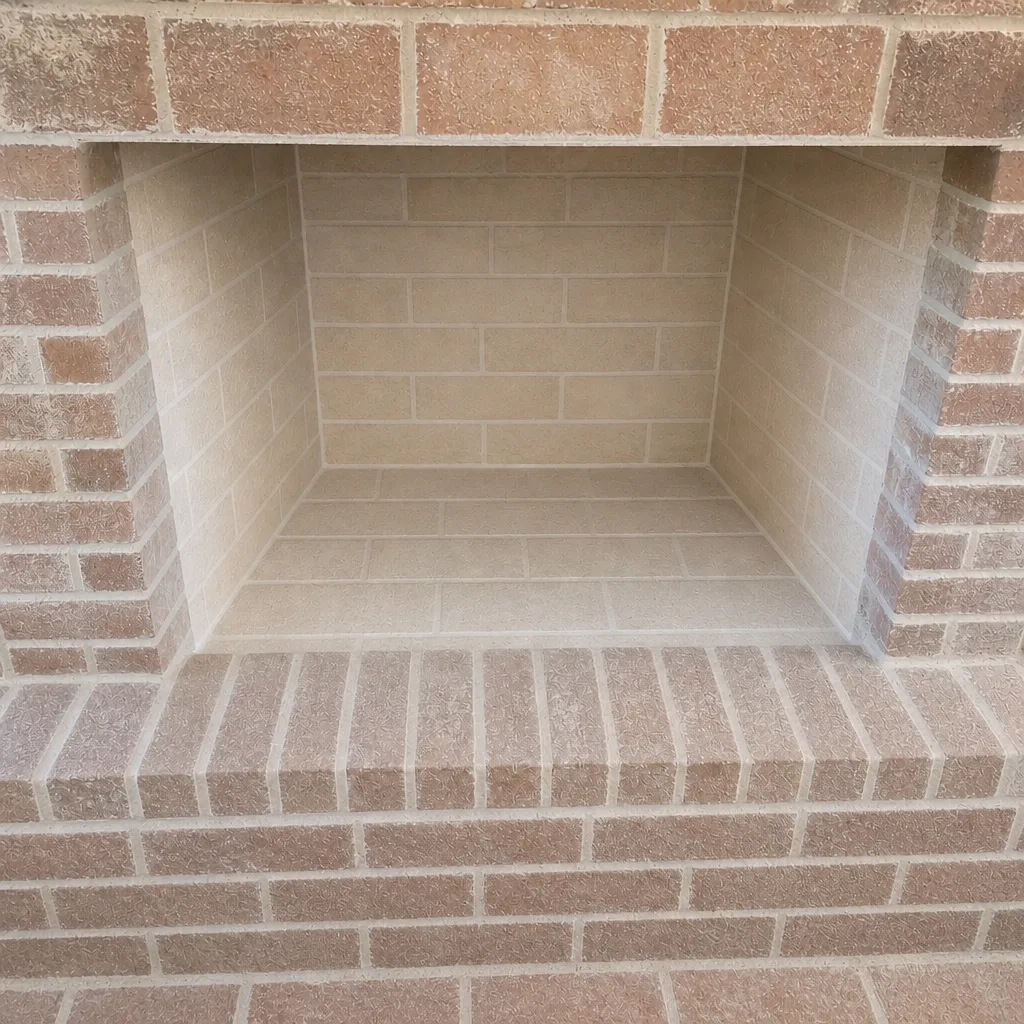 After
When to Call a Professional
Call a professional when the fireplace smokes back into the room, when a storm has pushed rain sideways against the chimney, when you smell smoke in the house with no fire lit, or when you’ve bought a home and don’t know the flue’s history. Call when the cap is missing or the crown is cracked. Call when an animal has nested in the flue, because removing a nest is more than a reach-and-grab job. Chimney work carries real risk: height, confined space, and combustion gases. A chimney sweep visit in Corpus Christi is a small appointment compared to what a chimney fire or carbon monoxide problem can cost. Starling Chimney Sweep offers free estimates in Corpus Christi. Call (888) 869-3130. We answer 24/7. Fast dispatch from 7am to 7pm, Sunday through Friday.
Frequently Asked Questions
A standard sweep in Corpus Christi typically costs in the range of $180 to $340, and a Level 2 camera inspection is usually $150 to $300 when quoted separately. Prices depend on flue condition and the last cleaning date, and the written estimate sets the final price. Call (888) 869-3130 for an exact quote. Estimates are free.
Once a year, ideally before heating season in late fall. Low-use homes in Corpus Christi still benefit from an annual inspection because moisture, animals, and debris cause more damage than creosote does here. If your chimney hasn’t been touched in years, book a sweep before you light the first fire, not after. Call (888) 869-3130 to book.
A skipped cleaning lets debris and nesting material block the smoke path and lets moisture sit in the flue between fires. That can mean smoke backing into the room, a cracked liner continuing to widen, or creosote building up in a flue that didn’t look like it had any. None of those are emergencies on a mild day, but they don’t get better with time. Call (888) 869-3130 for an estimate that starts with an inspection.
If the camera shows the liner is sound enough to resurface, HeatShield ceramic sealing can restore the flue’s smooth surface without a full relining. If the liner itself has failed or shows structural damage, a stainless system like DuraFlex is the replacement standard. The right answer comes from the camera evidence, not from a sales preference. Call (888) 869-3130 and ask to see the photos.
Wind-driven rain pushes water sideways into the cap, crown, and flue in ways that rain from above doesn’t. A Level 2 inspection uses a camera to look at the whole flue from the top down, which is how you find a hairline crack or a soaked masonry section that a visual check would miss. Call (888) 869-3130 to schedule one after any storm that pushed water against the house.
Yes. dryer vent cleaning is one of our three core services, along with chimney sweeping and chimney repair. The NFPA identifies dryers as a leading cause of residential fires, and a blocked duct is the usual reason. If you’re booking a sweep, ask to bundle the vent cleaning into the same visit. Call (888) 869-3130.
The Bottom Line
Chimney cleaning in Corpus Christi isn’t just a creosote job. The local climate makes it a moisture, obstruction, and structural inspection first, with sweeping as the visible part. If you use your fireplace ten times a year, that’s not a reason to skip the annual visit; it’s a reason to book it, because the problems here build while the fire is off. Book before heating season, book after any wind-driven storm, and ask to see the camera photos before you agree to any repair. If your flue is in good shape, we’ll say so. If it isn’t, you’ll see why. Starling Chimney Sweep provides Corpus Christi homeowners with sweep-to-repair chimney care and dedicated dryer vent cleaning. Call (888) 869-3130. We answer 24/7. Fast dispatch from 7am to 7pm, Sunday through Friday. Estimates are free.
Written by the team at Starling Chimney Sweep.