
Last updated November 15, 2026
 Sweep & inspection
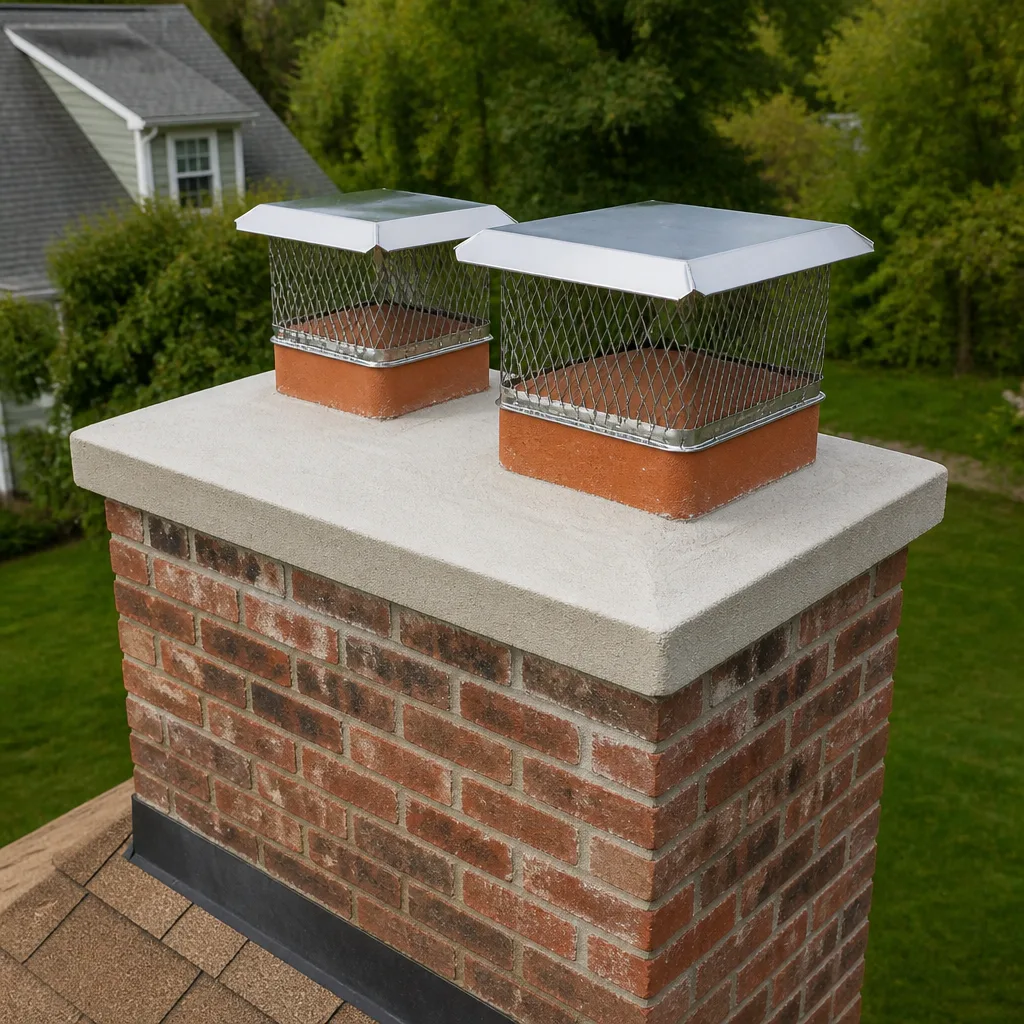 Caps & crowns
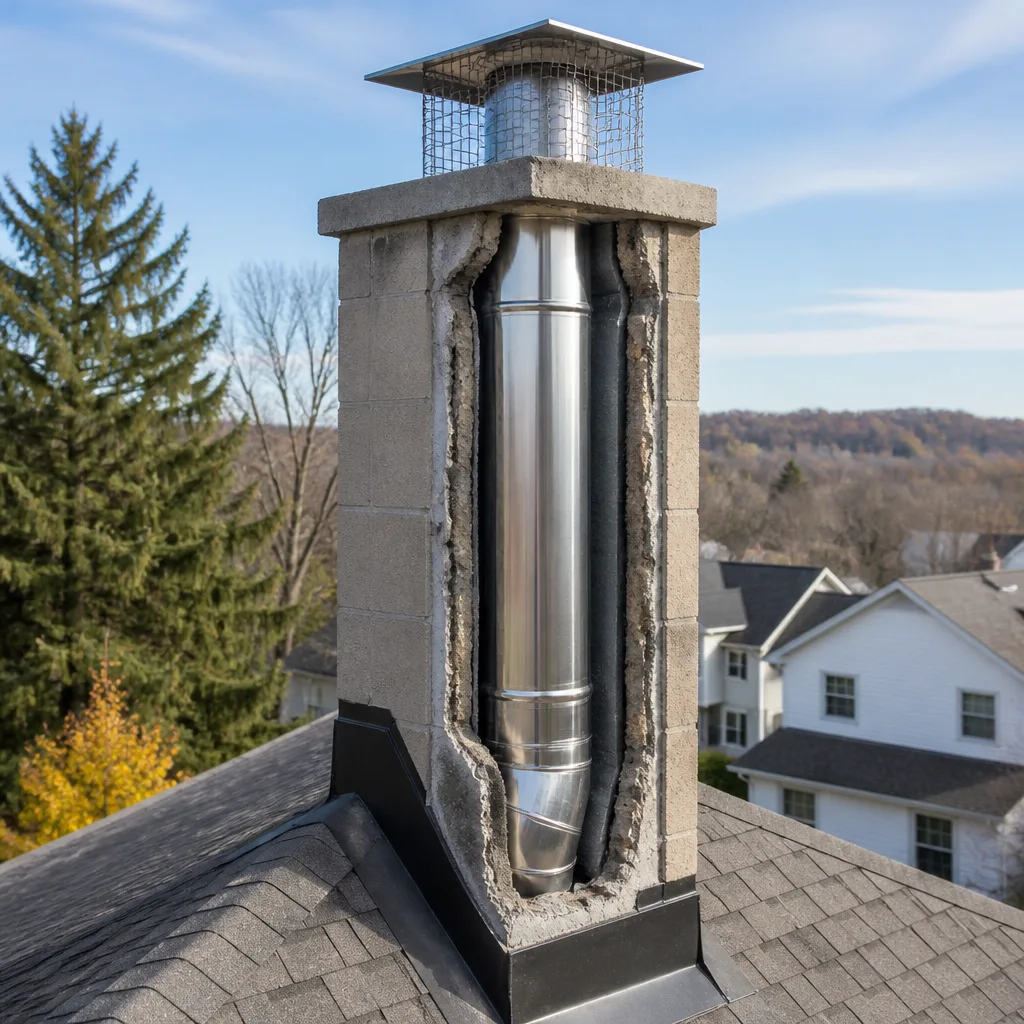 Flue relining
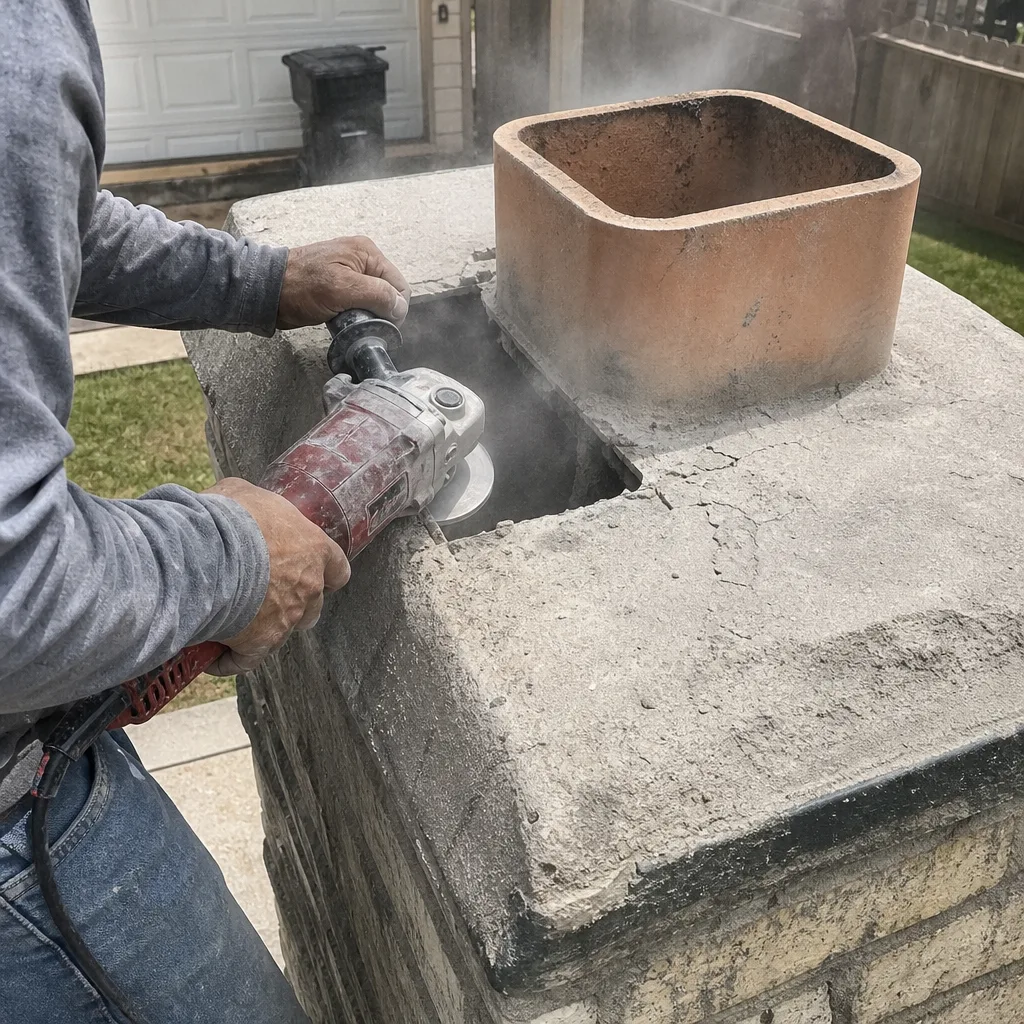
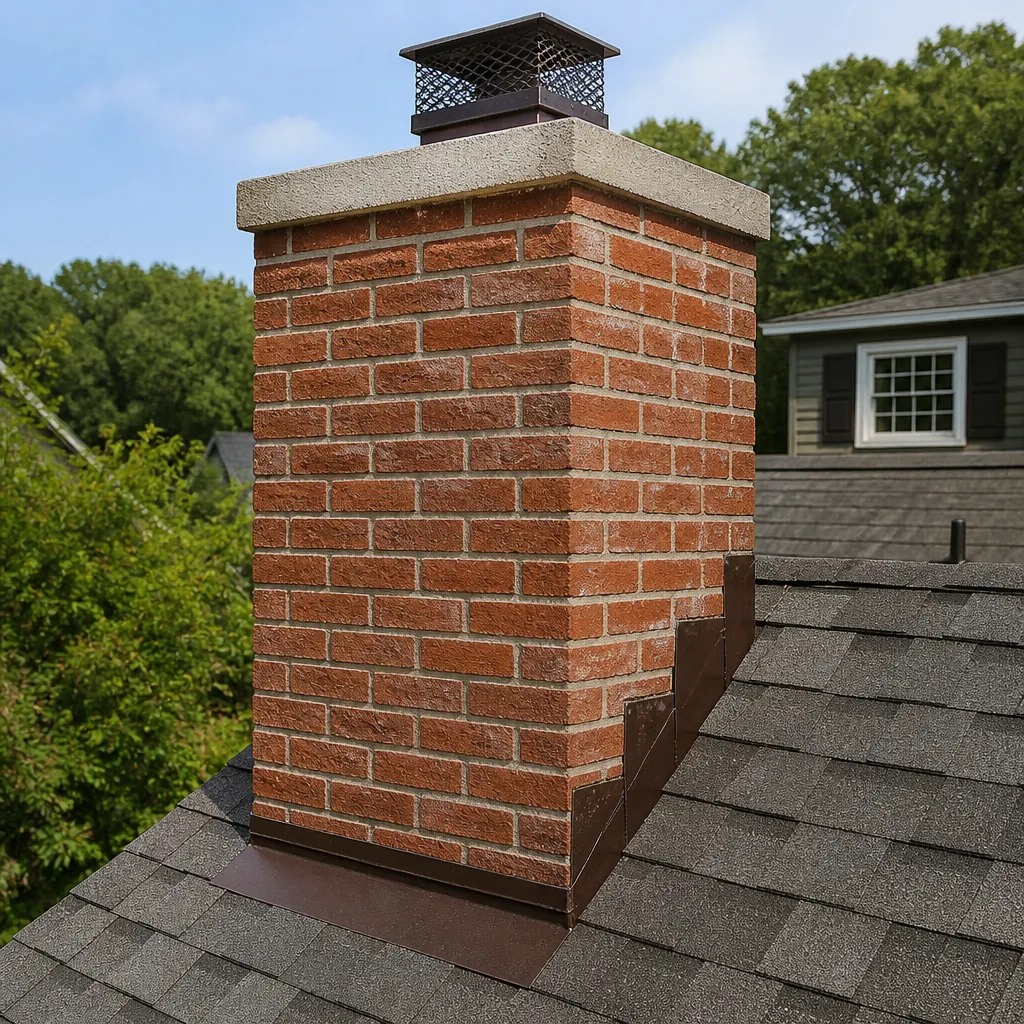 Masonry repair
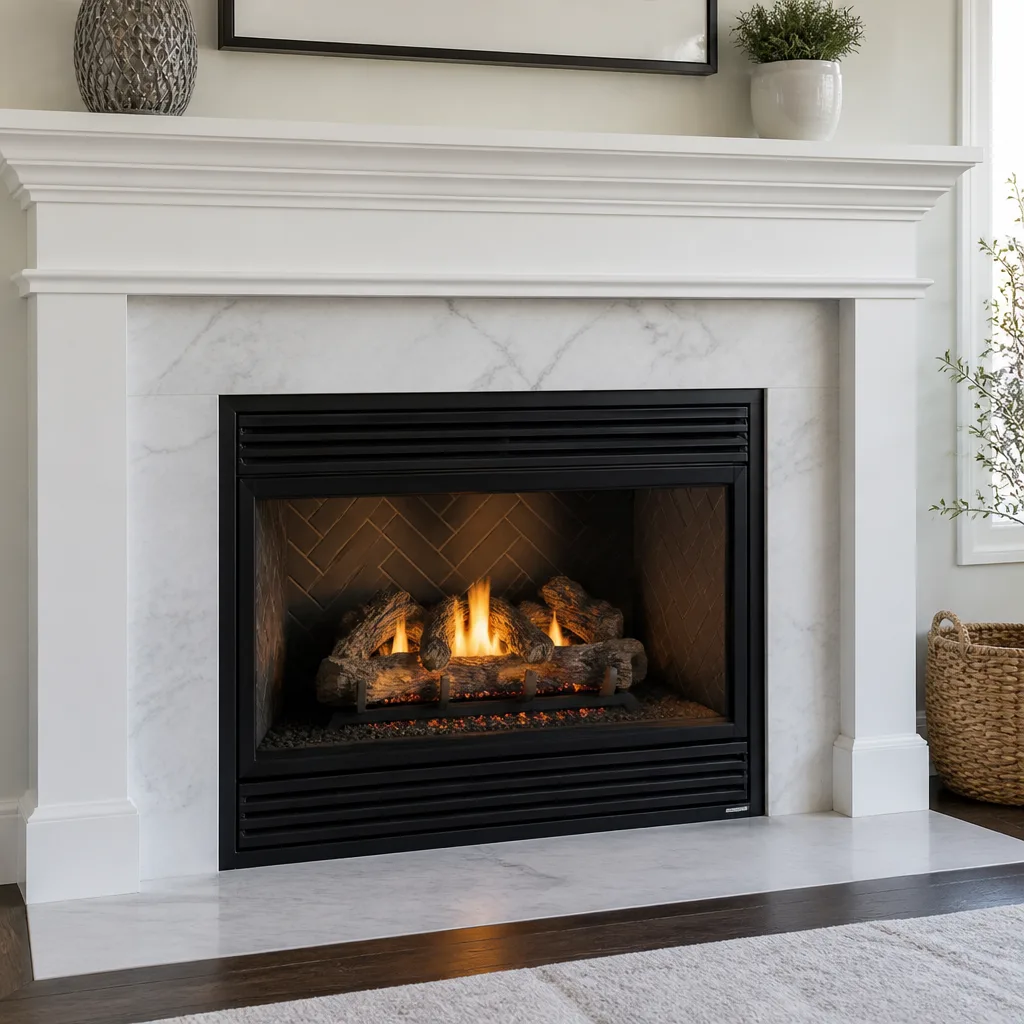 Gas fireplace service
Level 1 sweep and inspection to the NFPA 211 annual standard - flue, crown, cap, and flashing checked and photographed
Chimney sweep logs do not sweep chimneys. They loosen some creosote - which then falls where a brush and vacuum still have to collect it.
DIY vs Professional Chimney Cleaning: The Corpus Christi Homeowner’s Decision Guide
You can buy a chimney brush kit for $60. The question isn’t whether you can run it up the flue. It’s whether you’ll know what you’re looking at when you do. Most homeowners assume the difficulty of chimney cleaning is physical: the climbing, the soot, the mess. In our experience, the physical part is the easy part. The hard part is the assessment. A brush removes what you can see. It can’t tell you whether the liner behind that soot is cracked, whether the mortar joints have softened, or whether a bird has packed your flue with nesting material that a pass with a brush will just push deeper. This guide is about that gap, and about how to think through the DIY-or-hire decision from a Corpus Christi homeowner’s perspective.
Quick Answer
A homeowner can safely inspect the firebox and cap from the ground and can remove light, dry soot with a brush between professional visits. What a homeowner cannot do is assess the inside of the flue: glaze creosote, hairline liner cracks, deteriorated mortar, and hidden animal debris all require a camera, a probe, and training to read correctly. In Corpus Christi’s humid, mild-winter climate, that hidden condition is where the real fire risk lives. For most homes, a professional annual sweep is the safer and more cost-effective choice, with DIY brushing as a supplement, not a replacement.
Styles & brands we work with
- Sweep & inspection
- Caps & crowns
- Flue relining
- Masonry repair
- Gas fireplace service
Table of Contents
- What DIY Brushing Actually Removes (And What It Misses)
- Why Corpus Christi Conditions Make Assessment Matter More
- What You Can Legitimately Do Yourself Safely
- When DIY Adds Real Value vs. a False Sense of Security
- The Equipment Gap: Camera, Probe, and Moisture Meter
- The Insurance and Documentation Angle
- Don’t Forget the Other Vent: Dryer Vent Cleaning
- The Real Cost Comparison
What DIY Brushing Actually Removes (And What It Misses)
A brush pass removes dry, flaky soot and light creosote from the flue walls it can reach. It does that job well. What it does not do is tell you what is happening beyond the brush’s contact surface.
Three conditions are essentially invisible to a brush:
- Glaze creosote. This is the hard, shiny, tar-like stage of creosote that forms when flue gases cool too quickly. It doesn’t flake off with a brush. It needs to be chemically treated or mechanically scraped with specialized tools. A homeowner with a standard brush may pass right over it, believing the flue is clean.
- Hairline liner cracks. A cracked flue liner allows combustion gases into living spaces. You cannot see a hairline crack from inside the firebox or from the top of the chimney with a flashlight. It takes a camera run down the flue and a trained eye to spot one.
- Deteriorated mortar joints. Soft or receding mortar between flue tiles is a structural signal. A brush will not reveal it. A probe will.
When we sweep a chimney in Corpus Christi, the sweeping is the visible service. The camera inspection is the one that actually tells the homeowner what they own. They come together, and that’s the point. A clean flue that is cracked is not a safe flue.
Why Corpus Christi Conditions Make Assessment Matter More
Corpus Christi winters are mild. That’s good news for heating bills and bad news for creosote. A mild winter means fires are burned less frequently, and a flue that sits idle between fires collects moisture and settles. When you do light a fire, the flue is cold, the gases cool fast, and glaze creosote forms more readily than it would in a colder climate where the chimney runs hot and often.
The humidity is the other factor. Corpus Christi’s damp air works on masonry and metal year-round. A chimney that hasn’t been used since last season may have moisture damage in the mortar crown, rust on a metal firebox, or a cap that has loosened. None of that shows up in a brush pass.
Animal debris is a real concern in this region too. Birds, squirrels, and other small animals find an uncapped flue and pack it with nesting material. You’d think a brush would clear it. Often it just pushes it down and compacts it. A proper sweep with the right tools removes the material and confirms the flue is clear top to bottom. The name Starling Chimney Sweep is a quiet nod to that reality; starlings are among the most common birds to nest in unprotected flues, and knowing that from the inside is part of the job.
What You Can Legitimately Do Yourself Safely
There is a legitimate scope for homeowner maintenance. It’s smaller than most people think, but it exists and it’s worth knowing.
What you can safely do:
- Inspect the firebox visually before each heating season. Look for cracked firebrick, loose mortar, and any obvious damage to the damper.
- Check the chimney cap from the ground with binoculars. You’re looking for a missing or damaged cap, visible animal activity, or obvious masonry cracks at the crown.
- Keep the firebox clear of ash buildup and confirm the damper opens and closes smoothly.
- Remove light, dry soot from the firebox walls with a stiff brush between professional visits.
- Verify that your carbon monoxide detectors are working. This is not chimney-specific, but it belongs on any chimney safety checklist.
What requires equipment and training:
- Any work on the flue interior beyond the firebox.
- Roof-level work. Falls from a roof are among the most serious injuries a homeowner can sustain, and a chimney crown or cap repair at height is not a DIY job.
- Anything involving the liner, the firebox structure, or gas appliance venting.
- Creosote removal beyond the flaky stage. Glaze creosote requires chemical treatment and mechanical tools, and mishandling it can spread it or damage the flue.
If you’re ever uncertain whether a task belongs on the first list or the second, treat it as professional work. The downside of guessing wrong on a chimney is not a dirty fireplace. It’s a house fire or carbon monoxide exposure.
When DIY Adds Real Value vs. a False Sense of Security
Here’s the distinction that matters most, and it’s the one the DIY chimney cleaning debate usually skips.
DIY maintenance between professional visits adds real value when it keeps the firebox clean, catches obvious problems early, and reminds you to look at your chimney at all. A homeowner who checks the cap and the firebox before the first fire of the season is doing something useful.
DIY creates a false sense of security when it substitutes for assessment. A brush pass that removes surface soot and leaves a homeowner feeling confident about a flue they’ve never actually seen inside is not maintenance. It’s a guess with a clean-looking result.
In our experience, the homeowners who get into trouble are not the ones who never think about their chimneys. They’re the ones who brushed them, saw mostly clean results, and concluded everything was fine. The flue liner doesn’t announce itself. Neither does glaze creosote. Both require someone to look with the right tools.
The Equipment Gap: Camera, Probe, and Moisture Meter
Three tools separate a professional assessment from a homeowner’s brush pass, and each one answers a question the brush can’t.
- The camera. A chimney camera run down the flue shows the homeowner exactly what the liner looks like from the inside. Cracks, gaps, spalling, and glaze creosote all become visible. When we do a sweep, we include the camera inspection and a photo report so the homeowner can see the condition for themselves. Nothing gets recommended without visual evidence they can review.
- The probe. A probe tests mortar joints and liner surfaces for softness. A joint that looks intact may be receding or crumbly when tested. This is how a professional distinguishes cosmetic age from structural weakness.
- The moisture meter. Moisture meters read how much water is trapped in masonry. In a humid climate like Corpus Christi’s, this matters. A chimney that reads wet has a pathway for deterioration, and it may need repair attention before it needs another sweep.
These tools turn a cleaning into a diagnosis. That’s the difference between removing soot and knowing what’s behind it.
The Insurance and Documentation Angle
A professional chimney sweep produces a dated record of your chimney’s condition. DIY work produces none.
If you ever file a chimney-related insurance claim, or if a home inspector reviews the property during a sale, that dated inspection record matters. It documents that the chimney was assessed, when, and what was found. If a liner crack was identified and repaired, you have a paper trail. If nothing was found, you have confirmation the chimney was in serviceable condition at a specific point in time.
DIY brushing leaves nothing you can show anyone. From an insurance and property-record standpoint, an undocumented chimney is an unknown chimney. That’s a quiet risk that surfaces at the worst possible time.
Don’t Forget the Other Vent: Dryer Vent Cleaning
While you’re thinking about vent safety, the dryer vent deserves the same attention. The NFPA identifies dryers as a leading cause of residential fires, and lint accumulation in the vent line is a major contributor. Clothes dryers push hot, moist air through a duct, and over time lint collects along the walls of that duct. A clogged vent restricts airflow, raises the dryer’s operating temperature, and creates a fire risk.
Homeowners often clean the lint trap and call it done. The lint trap catches a fraction of the lint the system produces. The rest travels into the vent line, and it builds up in places you can’t see. That’s the same principle that applies to your chimney: the visible part is not the whole story.
This is why we treat dryer vent cleaning as a core service, not an upsell afterthought. A home’s combustion-safety picture includes both vents. We work in Corpus Christi homes with the same professional-grade materials across both services: Copperfield chimney supplies for sweep and repair work, DuraFlex liner systems when a liner needs replacing, and HeatShield resurfacing when the flue interior can be restored without a full reline. A dryer vent is a different job, but the standard of care is the same.
The Real Cost Comparison
Pricing varies by job, so treat any figure here as a typical estimate rather than a fixed quote. What matters is understanding the shape of the comparison.
- DIY brush kit: A basic kit costs roughly $50 to $100. That’s the whole visible cost. It’s also, in the DIY column, the only documented cost.
- Professional sweep: A standard sweep with inspection is typically a few hundred dollars for most homes. That includes the camera inspection, the photo report, and the documentation.
- The hidden DIY cost: A missed liner crack or glaze creosote buildup carries no invoice, but the potential cost is real. Repair of a damaged flue, or replacement after a fire, runs into the thousands. That’s the cost a brush pass doesn’t show.
Our estimates are free and the price is set per job in a written estimate before any work begins. There’s no call-out fee, no diagnostic charge, and no surprise line items. You see the number before you agree to anything.
Common Mistakes to Avoid
- Assuming a clean-looking firebox means a clean flue. The firebox is the part you can see; the flue is where the creosote lives. In our experience, the two conditions are often very different.
- Brushing over glaze creosote without recognizing it. A standard brush can’t remove hard glaze creosote. Passing over it and calling the job done leaves the risk in place.
- Skipping the camera because the brush came out clean. A clean brush tells you the flue walls it touched were clean. It tells you nothing about cracks, mortar, or gaps the brush didn’t reach.
- Ignoring animal debris. A flue packed with nesting material restricts airflow and can push carbon monoxide into the living space. A brush pass may compact the material rather than remove it.
- Skipping the dryer vent while focusing on the chimney. A home with a clean chimney and a clogged dryer vent still has a fire risk. We see both in Corpus Christi homes, and both deserve attention.
- Waiting until the flue smells before booking a sweep. A flue that smells has your attention, but a flue that reads wet or shows a liner crack from the camera may show no smell at all.
- Assuming a mild winter means no fire risk. Corpus Christi’s mild winters mean flues sit dormant longer, collect moisture, and build creosote faster when fires start cold. The climate doesn’t remove the risk. It changes its shape.
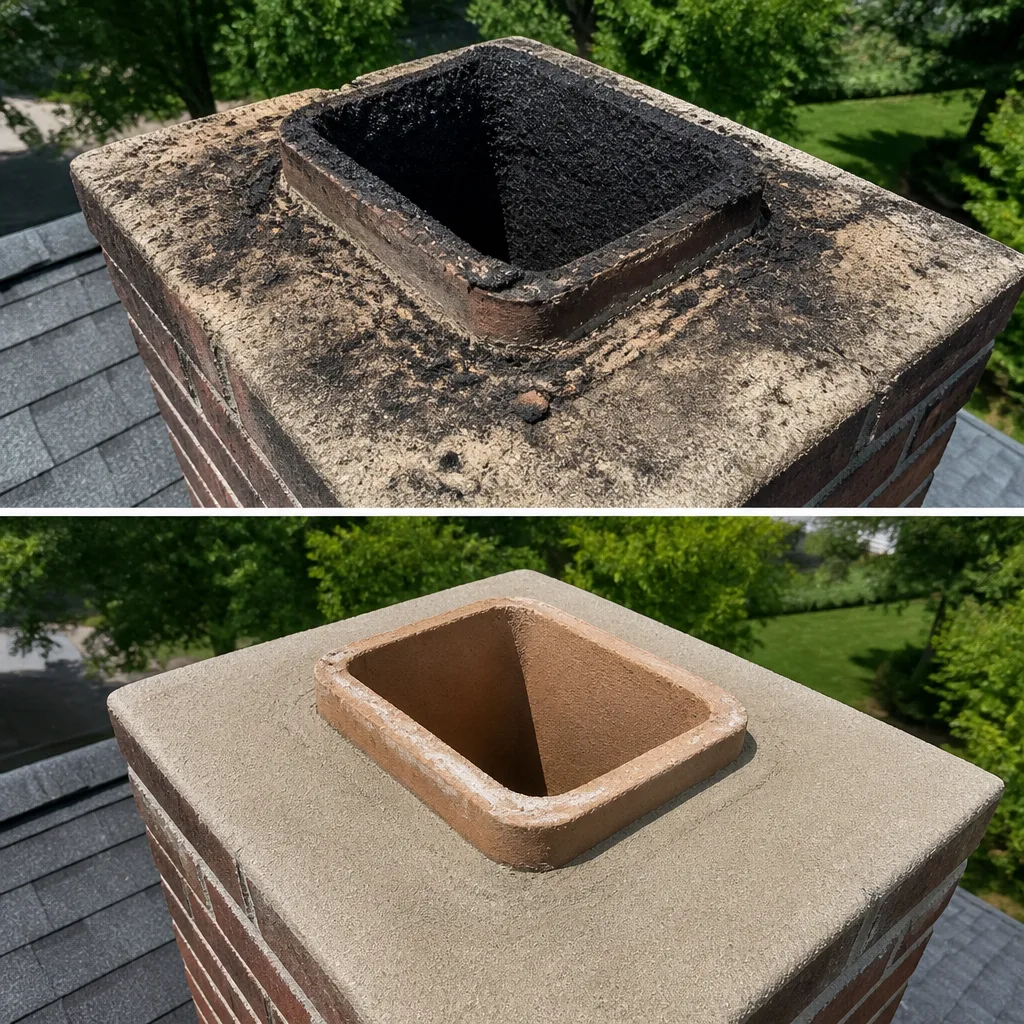
See the difference
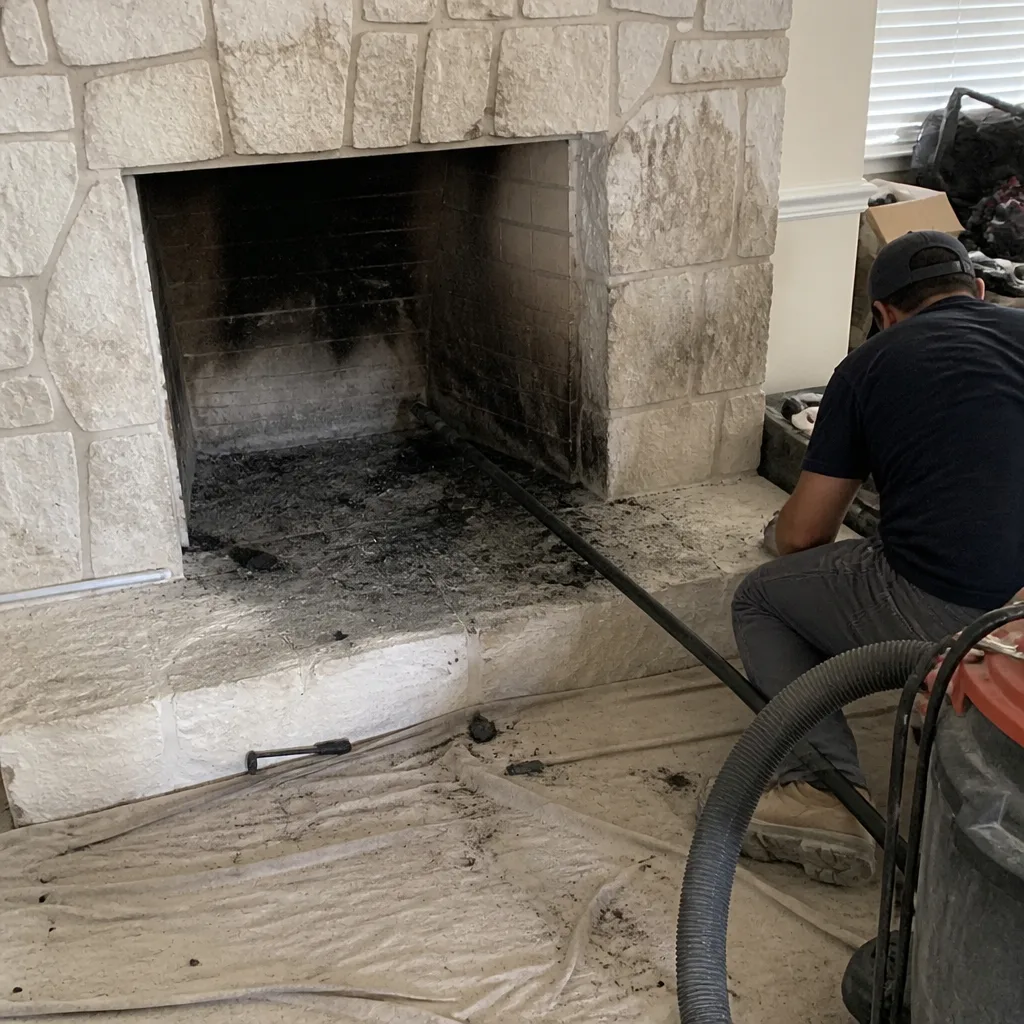 Before
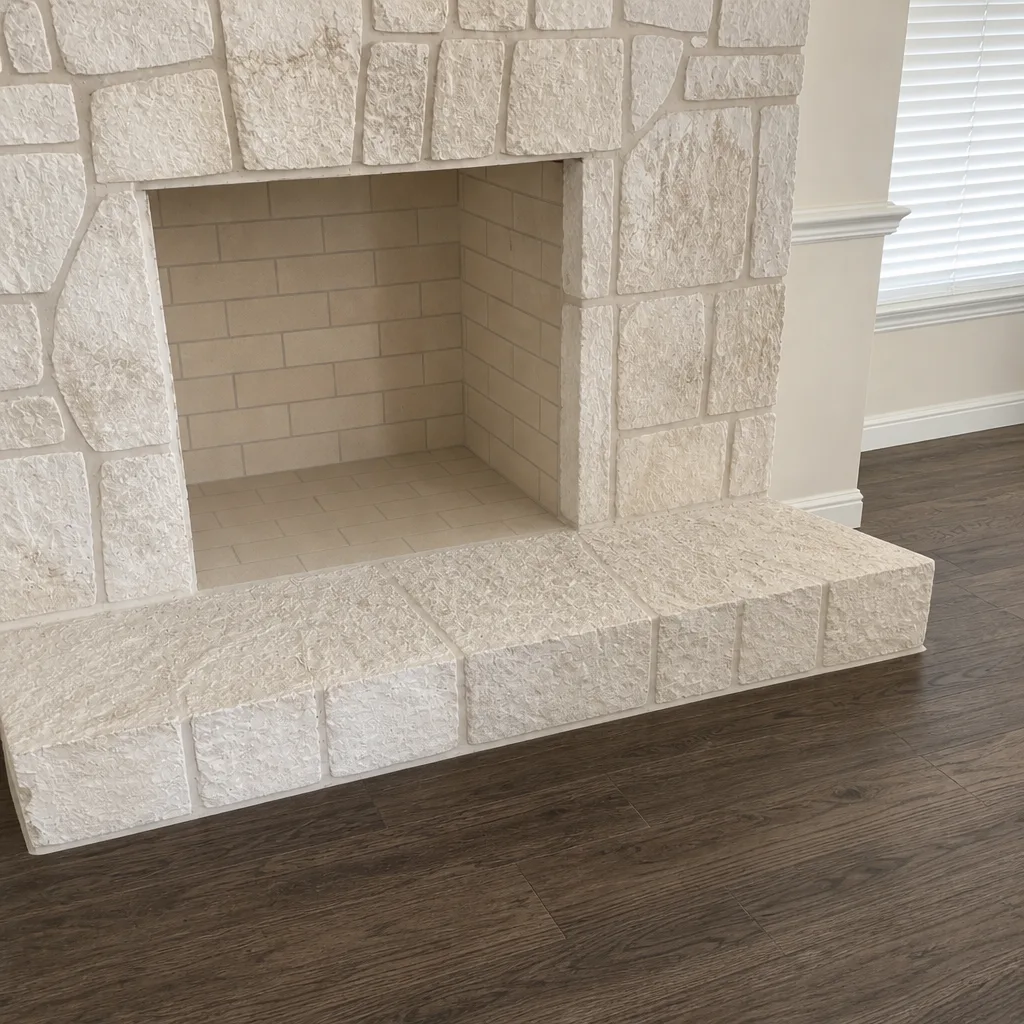 After
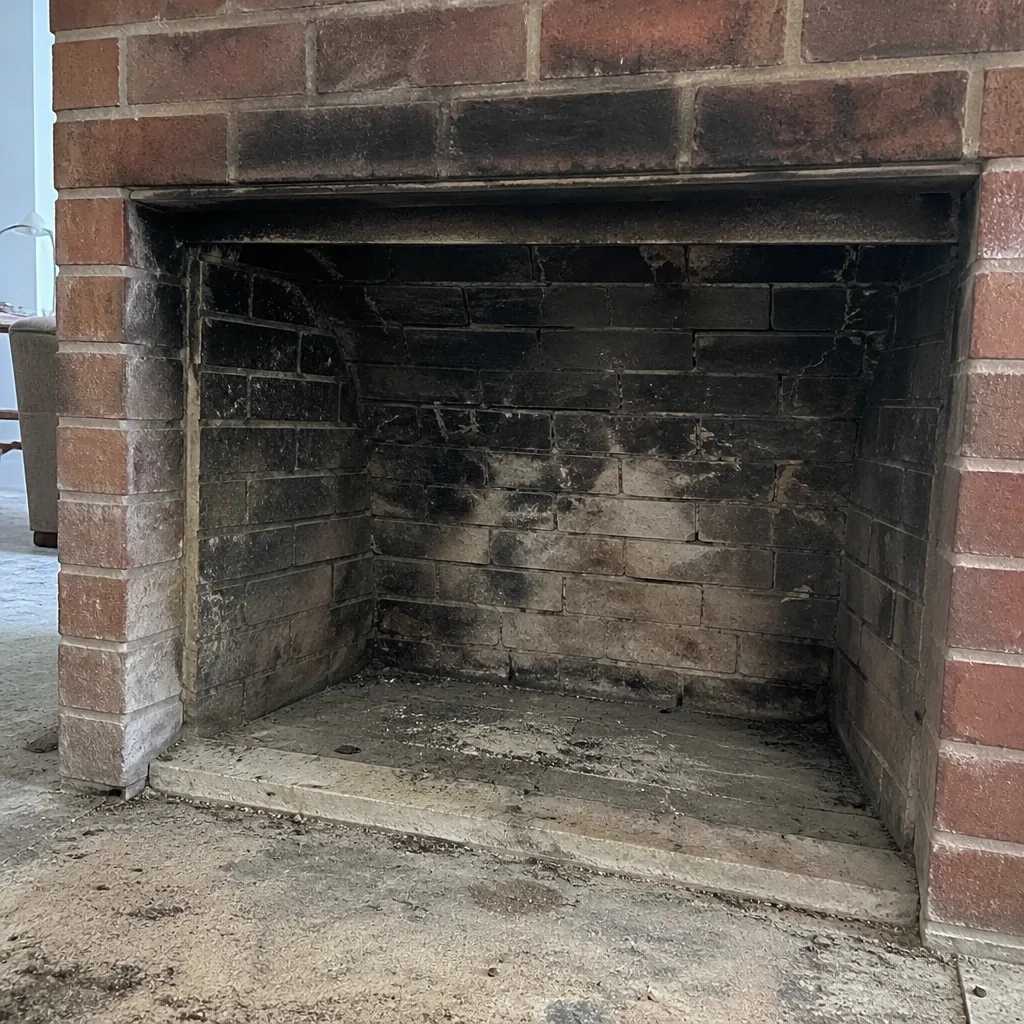 Before
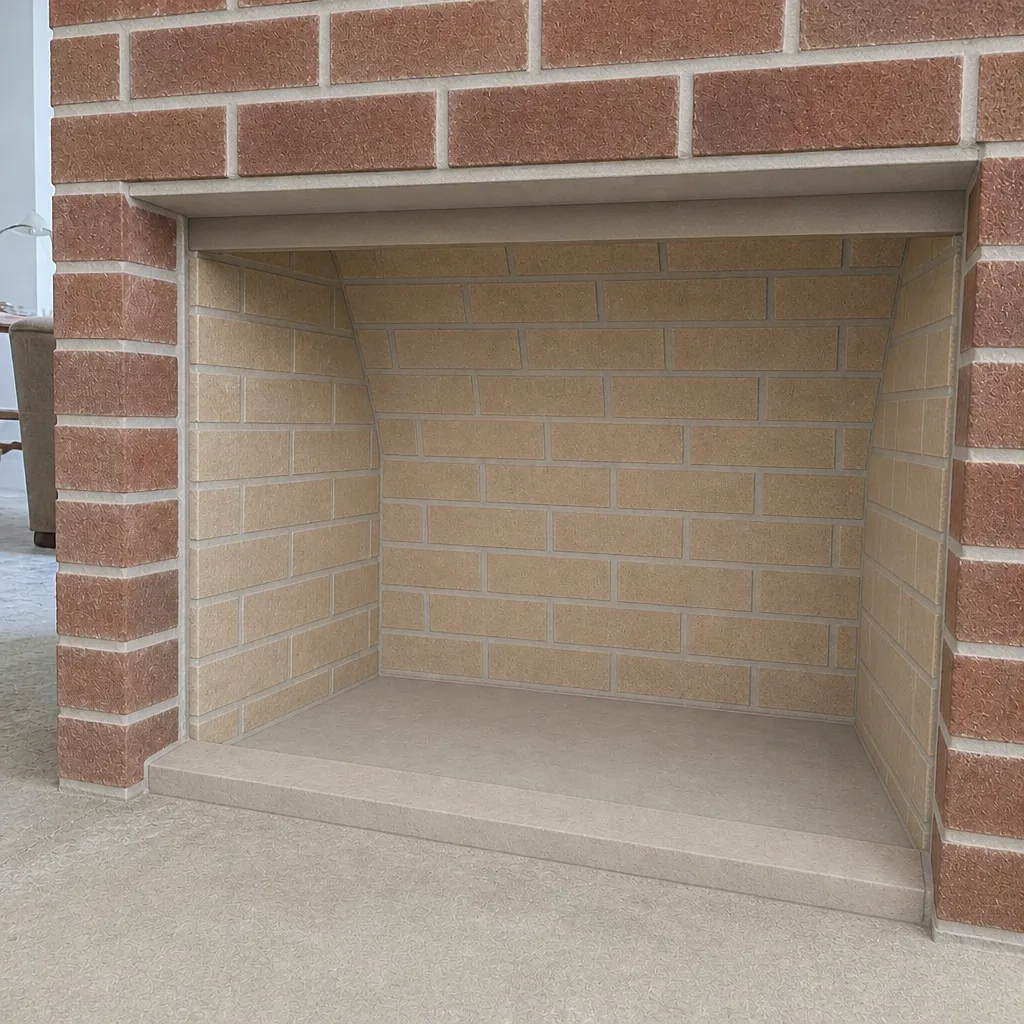 After
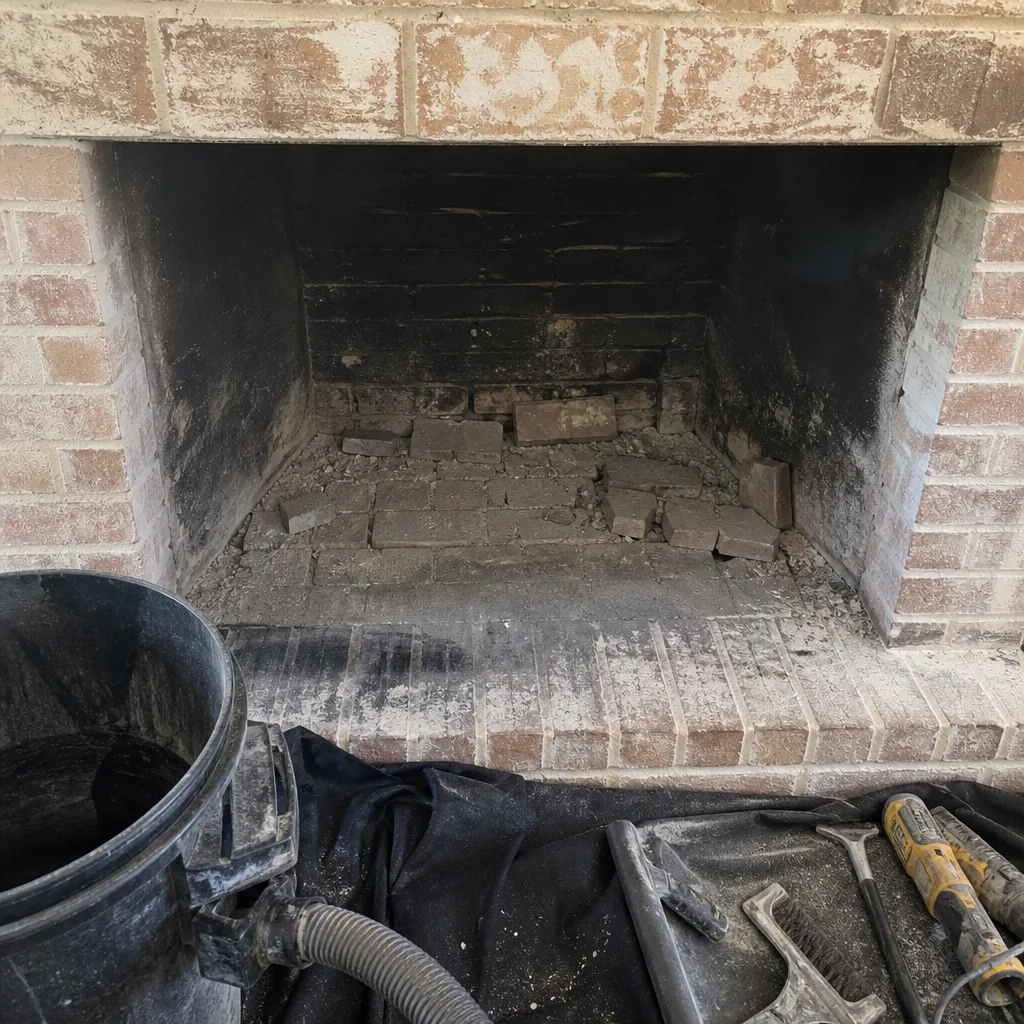 Before
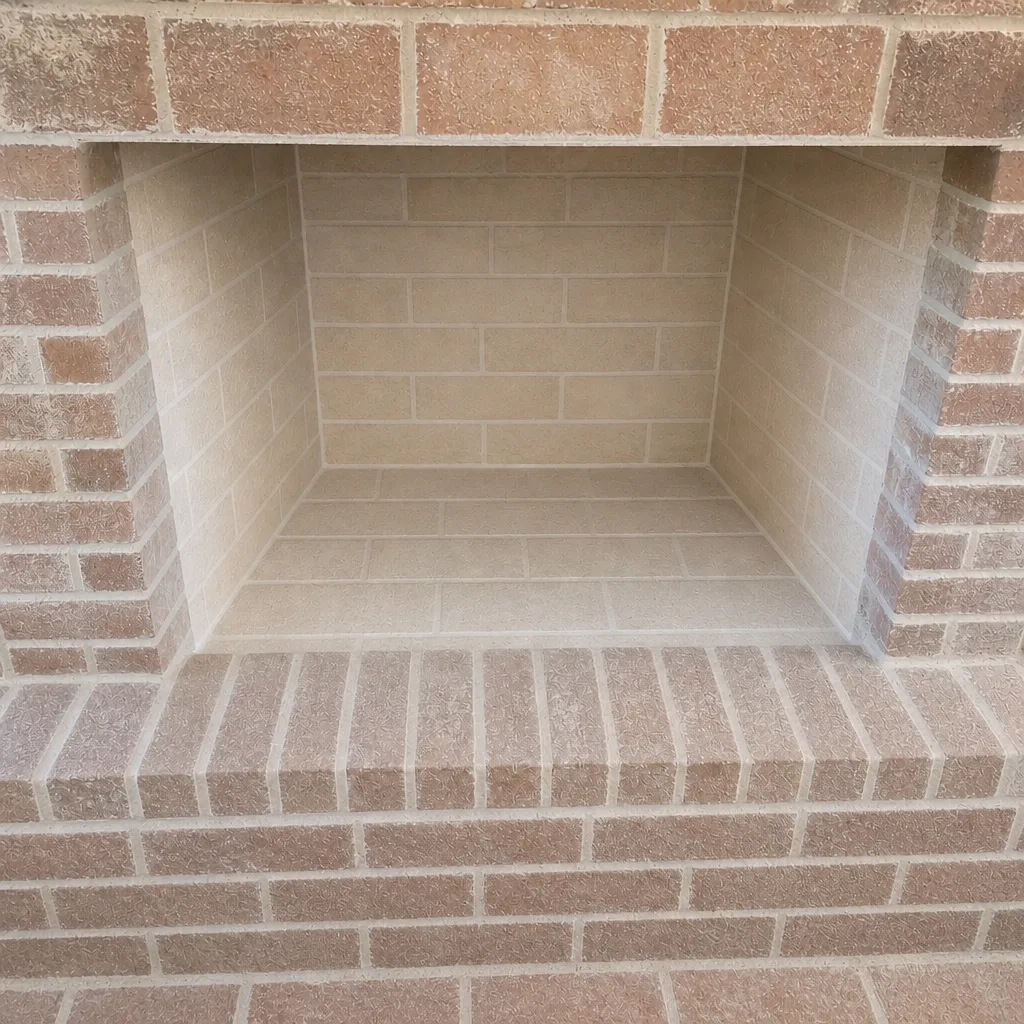 After
When to Call a Professional
Call a professional if any of the following is true: your chimney hasn’t been inspected since the last heating season, you notice smoke entering the room, you smell creosote when the fireplace isn’t in use, you see cracked firebrick in the firebox, birds or animals are visible around the cap, or you’re buying a home and want a documented chimney condition report. Also call if you’ve done a DIY brush pass and aren’t sure the flue is actually clear. A professional camera inspection answers that question quickly and inexpensively, and our estimates are free. Our technicians have up to 9 years of experience and work across the full sweep-to-repair arc, so if the inspection turns up a liner or masonry issue, you’re not starting over with a second contractor. Starling Chimney Sweep offers free estimates in Corpus Christi. Call (888) 869-3130.
Frequently Asked Questions
A standard chimney sweep in Corpus Christi typically runs in the low-to-mid three figures, depending on the number of flues, the amount of creosote, and whether any repair work is needed. A sweep with camera inspection and photo report is the baseline service, and any repair beyond that is quoted separately in a written estimate before work begins. Call (888) 869-3130 for a free estimate.
You can safely remove light, dry soot from the firebox with a brush and inspect the cap from the ground with binoculars. You cannot safely assess the flue interior, remove glaze creosote, or perform roof-level or liner work without the right tools and training. The physical cleaning is the easy part; the assessment is where the skill lies, and that’s the part most homeowners can’t replicate.
Creosote continues to build up in stages, from flaky to hard and glaze-like. A cracked liner can worsen with each heating cycle, and animal debris can compact in the flue and restrict airflow. The specific risk is a chimney fire or carbon monoxide entering the living space. Neither announces itself before it happens, which is why the dated inspection record and a camera look matter. Call (888) 869-3130 for a free estimate.
Not always. A flue with hairline cracks may qualify for HeatShield resurfacing, which seals cracks and restores the flue interior without a full relinea. A flue with structural liner damage usually needs DuraFlex lining. Neither is recommended without camera evidence the homeowner can see for themselves.
It can add real value if it’s supplementing a professional inspection, keeping the firebox clean, and catching obvious problems early. It becomes a problem when it substitutes for the professional assessment, because a brush pass can’t reveal what’s behind the soot. The best pattern is professional sweep and inspection before each heating season, with light DIY upkeep between visits.
It makes sense to have both checked together, since a home’s combustion-safety picture involves both vents and the standard of care is the same. The dryer vent is a leading cause of residential fires when lint accumulates, and it’s checked by the same team that handles the chimney. We cover both as core services, and our written estimates cover each job before any work starts.
The Bottom Line
DIY chimney cleaning removes surface soot. It does not assess the flue. In a mild, humid climate like Corpus Christi’s, that gap is where fire risk lives, and it’s why a free professional estimate is worth more than a $60 brush kit. A proper sweep includes camera inspection, a photo report, and a dated record you can show your insurer or a buyer. The physical cleaning is the visible part; the assessment is the point. If you’re buying a home, or you’re not sure your flue is actually clean, book the inspection. It’s free, it’s documented, and it tells you what you own.
Call Starling Chimney Sweep for a free estimate at (888) 869-3130. We answer 24/7. Fast dispatch from 7am to 7pm, Sunday through Friday. Our technicians have up to 9 years of experience and work with professional-grade materials, from Copperfield chimney supplies to HeatShield and DuraFlex systems, across chimney sweep, dryer vent cleaning, and repair work in Corpus Christi. If you’re weighing DIY versus a professional Starling Chimney Sweep visit, we’ll show you exactly what your chimney looks like from the inside.
Written by the team at Starling Chimney Sweep.