
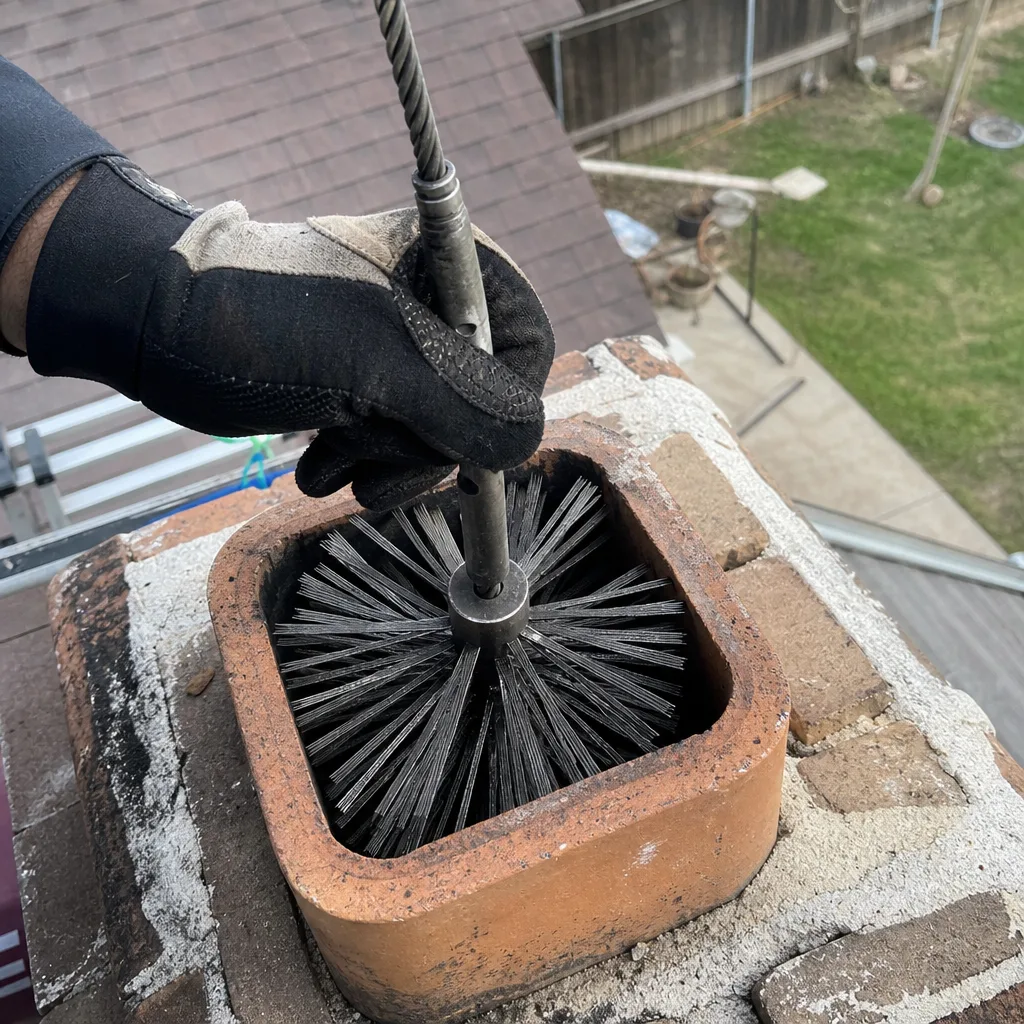
Last updated November 15, 2026
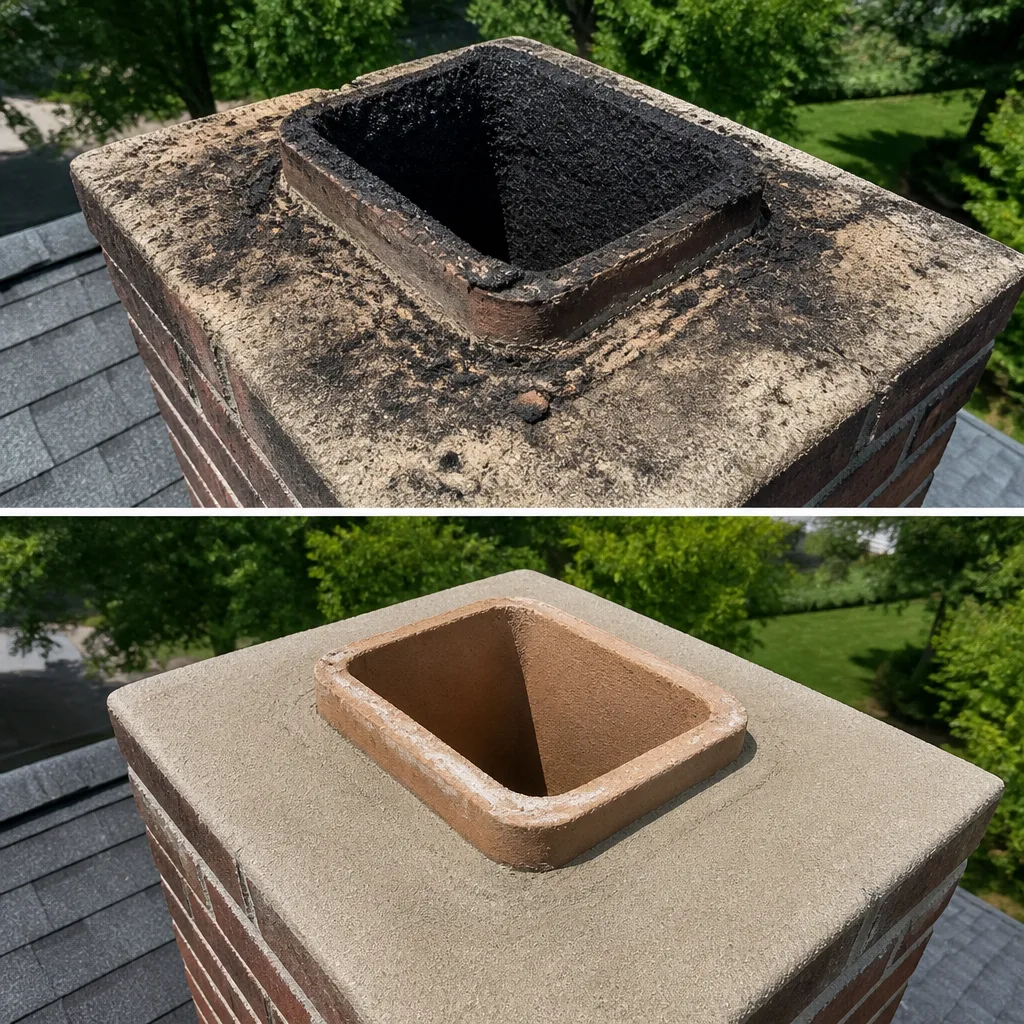 Sweep & inspection
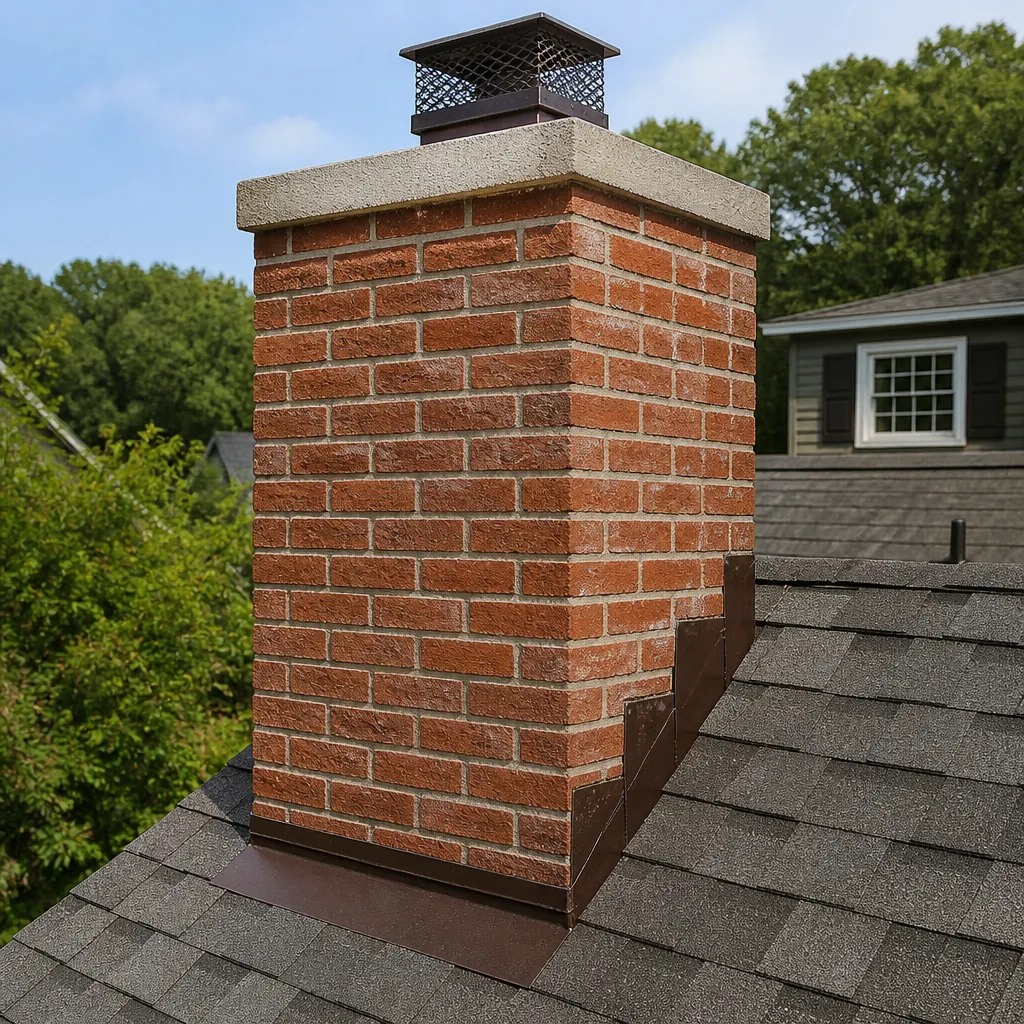
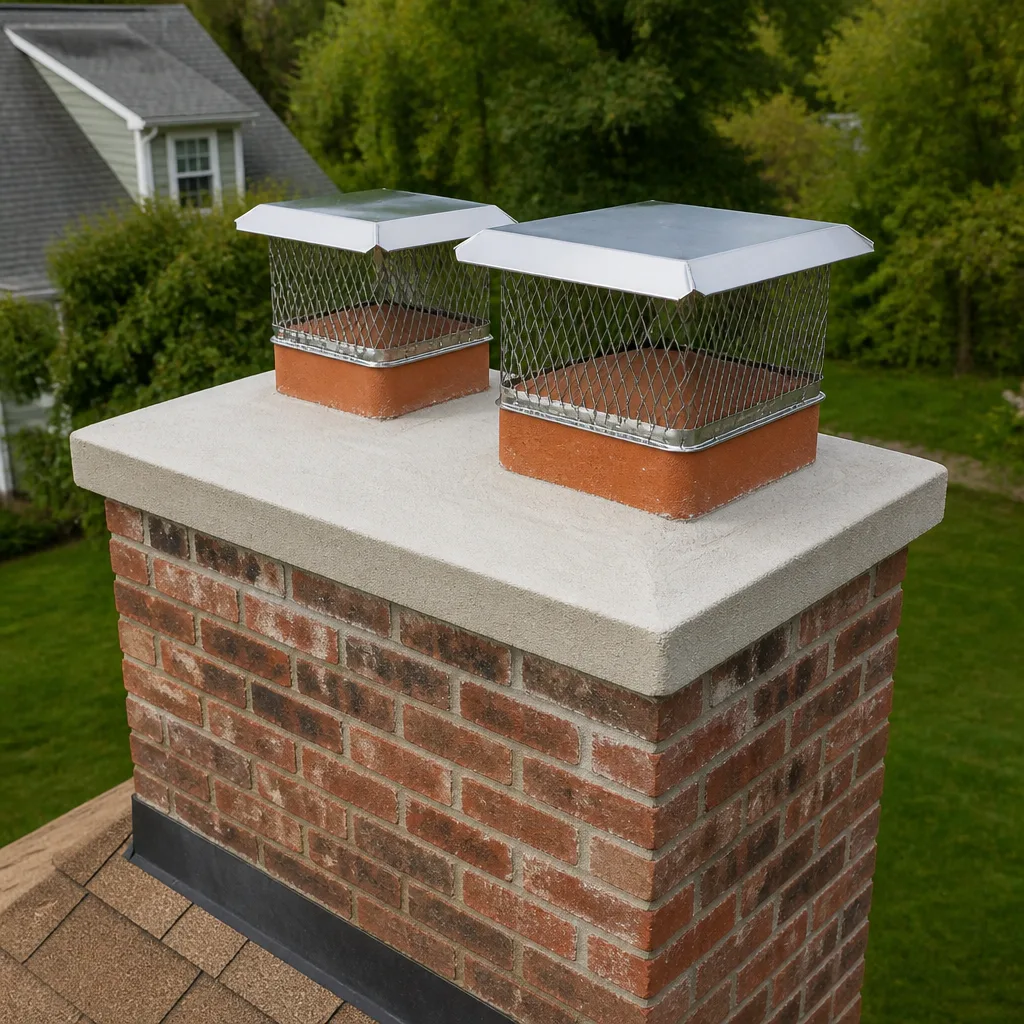 Caps & crowns
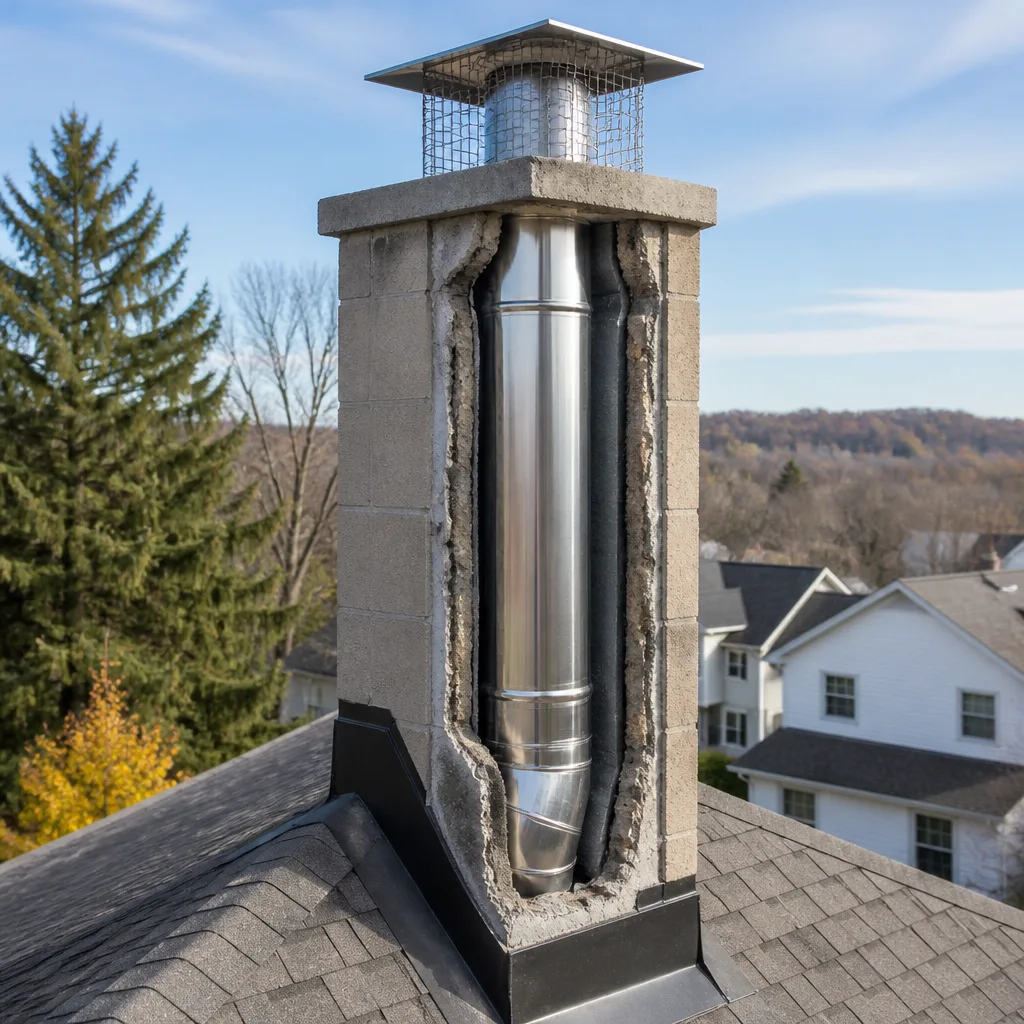 Flue relining
 Masonry repair
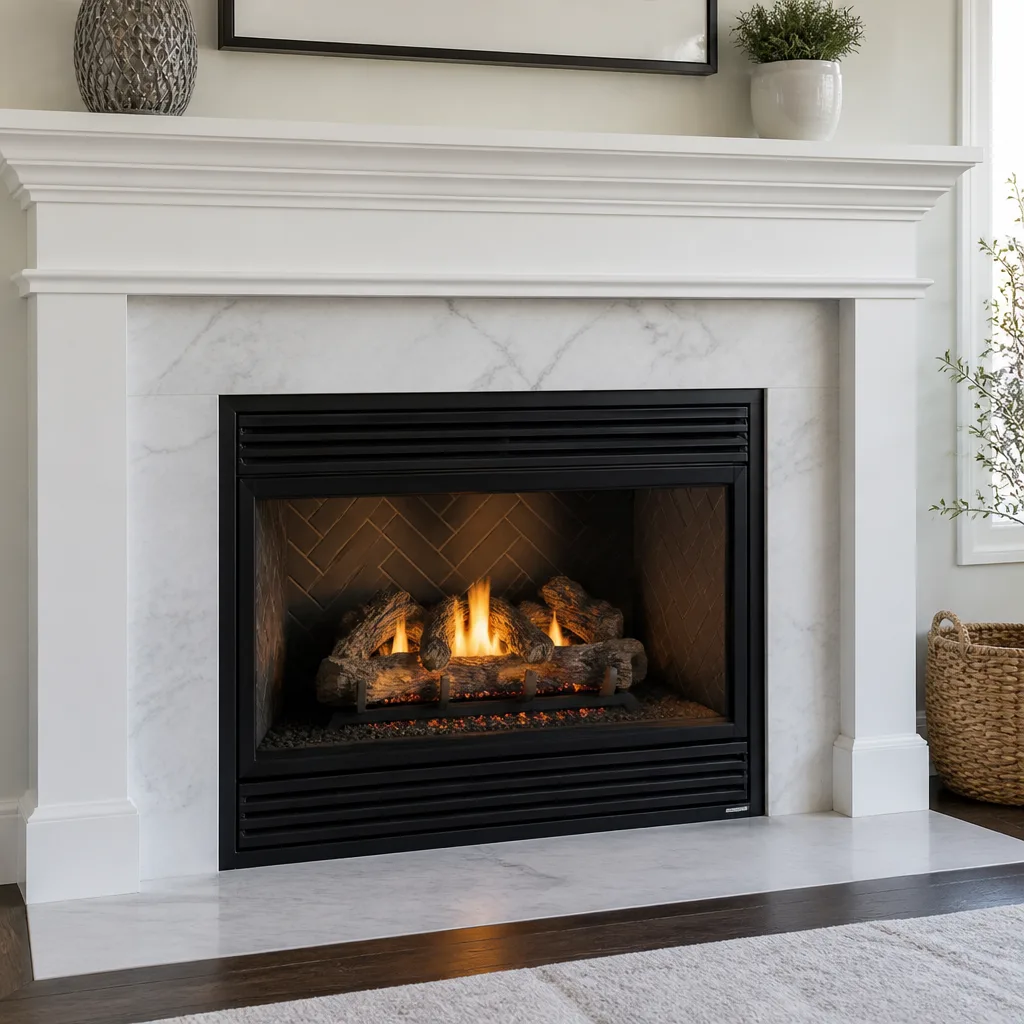 Gas fireplace service
Level 1 sweep and inspection to the NFPA 211 annual standard - flue, crown, cap, and flashing checked and photographed
Chimney sweep logs do not sweep chimneys. They loosen some creosote - which then falls where a brush and vacuum still have to collect it.
Chimney Cleaning Emergency Preparedness Guide for Corpus Christi Homes
A chimney fire is a fire emergency. A hurricane that drives a foot of rain down an open flue is a slow-moving structural emergency, and it’s statistically far more likely in Corpus Christi. Most homeowners we talk to have a fire extinguisher under the kitchen sink and no plan at all for the chimney sitting above their living room. This guide covers both scenarios: what to do in the first 60 seconds of a chimney fire, how to secure your chimney cap before a named storm, the order of checks after a storm passes, and why a dated inspection report is the single most useful document you can own when an insurance adjuster comes calling. You’ll finish knowing exactly what to secure, what to check, what waits for a professional, and what can’t wait at all. We’ve built this specifically for Corpus Christi homes.
Quick Answer
Chimney emergency preparedness in Corpus Christi means three things: securing your chimney cap and flue before a named storm, knowing the 60-second chimney fire response (close the damper, call 911, get everyone out), and assessing the exterior, crown, cap, liner, and firebox floor in that order before relighting after any significant storm. Water intrusion around the firebox is a remediation problem, not a cleaning problem, and a dated inspection report is what makes a storm-damage claim move smoothly through your insurer.
Styles & brands we work with
- Sweep & inspection
- Caps & crowns
- Flue relining
- Masonry repair
- Gas fireplace service
Table of Contents
- How do you prepare a chimney before a named storm?
- What is the post-storm assessment sequence?
- What should you do in the first 60 seconds of a chimney fire?
- What do you do when water gets into the firebox?
- Why does a dated inspection report matter for insurance?
- Why is dryer vent cleaning part of chimney emergency planning?
- How do you build a year-round prep schedule?
How do you prepare a chimney before a named storm?
Before a named storm reaches the Gulf, your chimney cap is the most exposed component on the whole fireplace system. A cap that’s properly seated and screwed down will shed wind-driven rain and keep out the debris that tropical weather throws around. A cap that’s loose, bent, or missing turns your flue into a funnel. Check it as soon as a system is named, not the day before landfall, because that’s when you still have time to act on what you find.
Work through this pre-storm checklist:
- Inspect the cap from the ground. Binoculars work fine. Look for a cap that’s tilted, visibly loose, or rusted through. If it moves in a stiff breeze, it won’t survive a tropical storm.
- Clear the roof of loose debris. Branches, palm fronds, and anything else the wind can lift and deposit in or against the flue.
- Close the damper. If your fireplace isn’t in use, a closed damper slows the rain that gets past a cap that’s already compromised.
- Check the firebox for existing water stains. A stain before the storm tells you water is already finding a path in. That’s a repair issue to address, not a symptom to hope the next storm misses.
- Photograph everything. The cap, the crown, the flashing, the firebox. Timestamped photos taken before a storm are the baseline an adjuster uses to separate storm damage from pre-existing wear.
If your cap is already damaged when the forecast arrives, don’t climb up and improvise. A roof in the middle of storm prep is not the place for a ladder. Call us or another professional and describe what you’re seeing. In many cases the safest move is to close the damper, keep the fireplace out of service, and get the cap secured once conditions allow. A compromised cap during a named storm mostly means you’ll be dealing with water intrusion afterward, and that’s a repair conversation you can plan for. Our chimney sweep team can assess a cap and crown as part of a pre-storm inspection.
What is the post-storm assessment sequence?
After any significant storm, check your chimney in this exact order: exterior, crown, cap, interior liner, firebox floor. The sequence isn’t arbitrary. Each step can rule out a problem before you spend time on the next, and you don’t relight the fireplace until every step comes back clean. This order is what a trained technician follows, and it’s the order you should follow as a homeowner before you call anyone.
- Exterior. Walk the outside of the chimney. Look for cracked or missing mortar, displaced bricks, or a chimney that’s visibly leaning. Storm wind can open joints that were tight before.
- Crown. The concrete crown at the top of the chimney is what sheds water away from the masonry. Look for cracks running through it, or sections that have broken away. A cracked crown lets water into the chimney structure every time it rains.
- Cap. Look for a cap that’s been blown off, dented, or knocked loose. A missing cap after a storm means debris and water have a clear path down the flue.
- Interior liner. From inside, look up the flue with a strong flashlight. You’re checking for cracked liner tiles, gaps, or a liner that looks displaced. A cracked flue liner allows combustion gases and heat into the structure of your home, so this step is not one to skip.
- Firebox floor. Look for standing water, damp ash, or a floor that shows cracks or crumbling. A wet firebox after a storm is the sign that water got past everything above.
If everything checks out, you can relight. If anything is questionable, don’t. The danger in relighting a storm-damaged chimney isn’t dramatic; it’s a liner crack that lets heat reach framing over the course of a winter. Our team uses DuraFlex liner systems when a liner turns out to be the problem, and that’s a repair decision we make only after we’ve seen the evidence with a camera. Read more about the full scope of Corpus Christi chimney care if you haven’t had a professional assessment in a while.
What should you do in the first 60 seconds of a chimney fire?
In the first 60 seconds of a chimney fire: close the damper, call 911, and get everyone out of the house. Closing the damper is the one move that buys you time, because it cuts the air feeding the fire and limits what can escape into the room. Everything else is secondary to getting people out.
A chimney fire can sound like a low roar or a series of pops, and it can send a lot of smoke into the room or none at all. You may see sparks or flames at the top of the chimney. You may see nothing and smell only an intense, hot smell. Treat all of those the same way.
- Close the damper immediately. If you can reach it safely, do it. It starves the fire of the air rushing up the flue.
- Get everyone outside. No gathering belongings, no phone call from the hallway. Out.
- Call 911 from outside. A chimney fire is a fire emergency. Fire can travel into framing and attic space where you can’t see it. This is the non-negotiable step.
- Don’t close the glass doors if they’re open. If the fire is roaring, leave the flue path alone once you’ve shut the damper. Don’t try to fight it with a garden hose or a pan of water.
- Wait for the all-clear from responders. Once the fire is out, don’t relight until a professional inspects the chimney. A fire that seemed small can have damaged the liner or cracked masonry.
After any chimney fire, an inspection is not optional. The fire department may tell you the fire is out, and it probably is, but that doesn’t tell you whether the liner is intact or whether heat reached the structure. We can inspect the flue with a camera so you see exactly what the fire did. If the liner is compromised, HeatShield resurfacing can sometimes restore a qualifying flue without a full replacement, which is a meaningful option when the alternative is a full reline.
What do you do when water gets into the firebox?
When you find standing water, damp ash, or soaked insulation around the firebox, stop treating it as a cleaning issue. This is water intrusion, and it’s a remediation situation. A sweep removes soot and creosote. It does not dry out saturated masonry, and it does not fix the path the water is using to get in. Those are two different problems with two different solutions, and confusing them wastes money and time.
Here’s how to handle it:
- Don’t use the fireplace. Wet masonry and a fire do not mix, and a firebox holding water is a sign water has reached parts of the chimney the fire was never meant to contact.
- Identify the source. The most common culprits after a storm are a missing or damaged cap, a cracked crown, failed flashing at the roofline, or cracked masonry above the firebox. A trained eye can narrow it down quickly.
- Document the damage. Photograph standing water, stained masonry, and any soaked material around the firebox. If a storm caused it, you’ll want that for an insurance claim.
- Get a professional assessment before any repair. Not all water intrusion requires the same fix. Sometimes the crown needs resurfacing, sometimes the cap needs reseating, sometimes the flashing at the roofline has failed. We diagnose first, then recommend.
- Don’t relight until the firebox is dry and the source is fixed. Relighting a wet firebox can drive moisture deeper into masonry and create a new set of problems.
Corpus Christi gets its share of heavy rain, and a chimney without a proper cap and crown is a rain catcher. If your firebox is wet after a storm, call us. Our technicians have up to 9 years of experience with exactly these situations, and we’ll tell you what we found and whether it can wait or can’t.
Why does a dated inspection report matter for insurance?
A dated inspection report is the document an adjuster uses to separate storm damage from pre-existing wear. Without one, a claim for chimney damage after a storm can be slow, disputed, or denied, because there’s no baseline for comparison. With one, the conversation shifts from “when do you think this happened” to “here’s what it looked like before the storm and here’s what it looks like now.” For a Corpus Christi homeowner heading into hurricane season, that dated report is the single most useful piece of paper in the house.
What a report that satisfies an adjuster’s requirements should include:
- The date of inspection, printed clearly. Not the date of the fire, not the date you noticed a leak. The date the inspection actually happened.
- The condition of each component. Cap, crown, flashing, liner, firebox, damper. Stated specifically, not summarized as “in good condition.”
- Photo documentation. Camera inspection of the flue and images of the exterior, cap, and crown. Adjusters respond to photos.
- Any existing repairs recommended. If the report notes a crown that’s starting to crack, that becomes the record that the crown was intact and inspected before the storm.
- The technician’s findings in plain language. A report full of trade jargon is fine, but the key findings should be readable by someone who doesn’t work in the trade.
We provide camera inspection and a photo report with every sweep. If you specifically need a dated inspection report for insurance, tell us when you book and we’ll structure it for that purpose. The point is to walk into a claim with evidence already in hand. For property managers handling multiple units, keeping current reports on file is one of the simplest ways to reduce claim friction after a storm. Our Starling Chimney Sweep team can walk you through what a compliant report looks like.
Why is dryer vent cleaning part of chimney emergency planning?
Dryer vent cleaning belongs in a chimney emergency plan because both are combustion safety systems, and the National Fire Protection Association identifies dryers as a leading cause of residential fires. A clogged dryer vent does what a blocked flue does: it traps hot exhaust with nowhere to go. The difference is your dryer runs far more often than your fireplace, which means the risk builds faster.
In a Corpus Christi home, the concern is compounded by a couple of things. First, a lot of homes have long dryer vent runs, and a long run with a few bends clogs more slowly at the dryer and more quickly down the line, so it can catch you by surprise. Second, hurricane prep and post-storm cleanup both push dryers into sudden heavy use, and a vent that was marginal before the storm can be clogged by the time the power’s back on.
Signs a dryer vent needs attention:
- Clothes take noticeably longer to dry than they used to.
- The dryer is hot to the touch when you open the door, or the laundry room gets humid.
- There’s lint visible around the back of the dryer, or lint accumulating on the exterior vent flap.
- The exterior vent flap doesn’t open fully when the dryer is running, or doesn’t open at all.
Every home with a wood-burning fireplace, gas insert, or older chimney should have the dryer vent checked on about the same schedule. We treat dryer vent cleaning as a core service, not an upsell. When we’re already in a home checking the chimney, we can check the vent run too. Our Starling Chimney Sweep team does both, and a single visit covers both systems.
How do you build a year-round prep schedule?
Build your prep schedule around the two points your fireplace system is most vulnerable: before heating season and after a long dormancy. Add one check at the start of every hurricane season and one post-storm assessment after any significant event, and you’ve got the framework. The rest is about having the right documentation current when it matters.
Here’s a schedule that fits Corpus Christi:
- Before heating season. Book an annual sweep and inspection. Creosote builds up over the burning months and a cracked liner you didn’t notice in the fall is a problem you find mid-winter. A pre-season sweep is also when we can identify a cap or crown issue before it becomes a water problem.
- After a long dormancy. If the fireplace sat unused for a season, get it inspected before relighting. A dormant chimney is where birds nest, and a flue blocked by nesting material is a carbon monoxide hazard. The name of the company is a nod to this: starlings are among the most common birds to nest in an unprotected flue.
- Start of hurricane season. Photograph your cap, crown, and firebox as a baseline. Note the date. Keep those photos with your home insurance documents.
- When a named storm is forecast. Verify the cap, close the damper, and note any existing damage before landfall.
- After any significant storm. Run the post-storm assessment sequence: exterior, crown, cap, interior liner, firebox floor. Don’t relight until each step is clean.
- Once a year, regardless of the fireplace. Get the dryer vent checked. It’s a separate system with its own risk, and it deserves its own calendar slot.
Two systems, one provider. That’s the practical reason we keep sweep, repair, and venting under one roof. You’re not coordinating a sweep from one company and a vent cleaning from another and wondering who’s responsible when one of them finds a problem. One company, one set of records, no gaps.
Common Mistakes to Avoid
- Relighting after a storm without a full check. Most homeowners look at the cap from the ground, decide it’s fine, and light a fire. The liner and crown are the components that fail, and neither is visible from the driveway.
- Treating a wet firebox as a cleaning problem. Standing water or soaked material around the firebox is water intrusion. A sweep won’t fix it, and relighting a wet firebox drives moisture deeper. Diagnose the source first.
- Leaving the cap unsecured during a named storm forecast. A cap that’s already loose will likely come off in tropical weather. Secure it, or close the damper and keep the fireplace off, before landfall.
- Skipping documentation. A dated inspection report taken before a storm is what makes a claim move. Without it, you’re arguing about when the damage happened.
- Waiting until the fire is roaring to find the damper. Know where your damper handle is before you ever need it. During a chimney fire is the worst time to be looking.
- Ignoring the dryer vent because the fireplace gets the attention. Dryers are a leading cause of residential fires, and a clogged vent builds up faster than creosote because the dryer runs more often than the fireplace.
- Improvising a cap or crown repair yourself. A ladder, a storm forecast, and a homemade fix on a roof are a bad combination. Call a professional and let the repair be done correctly.
See the difference
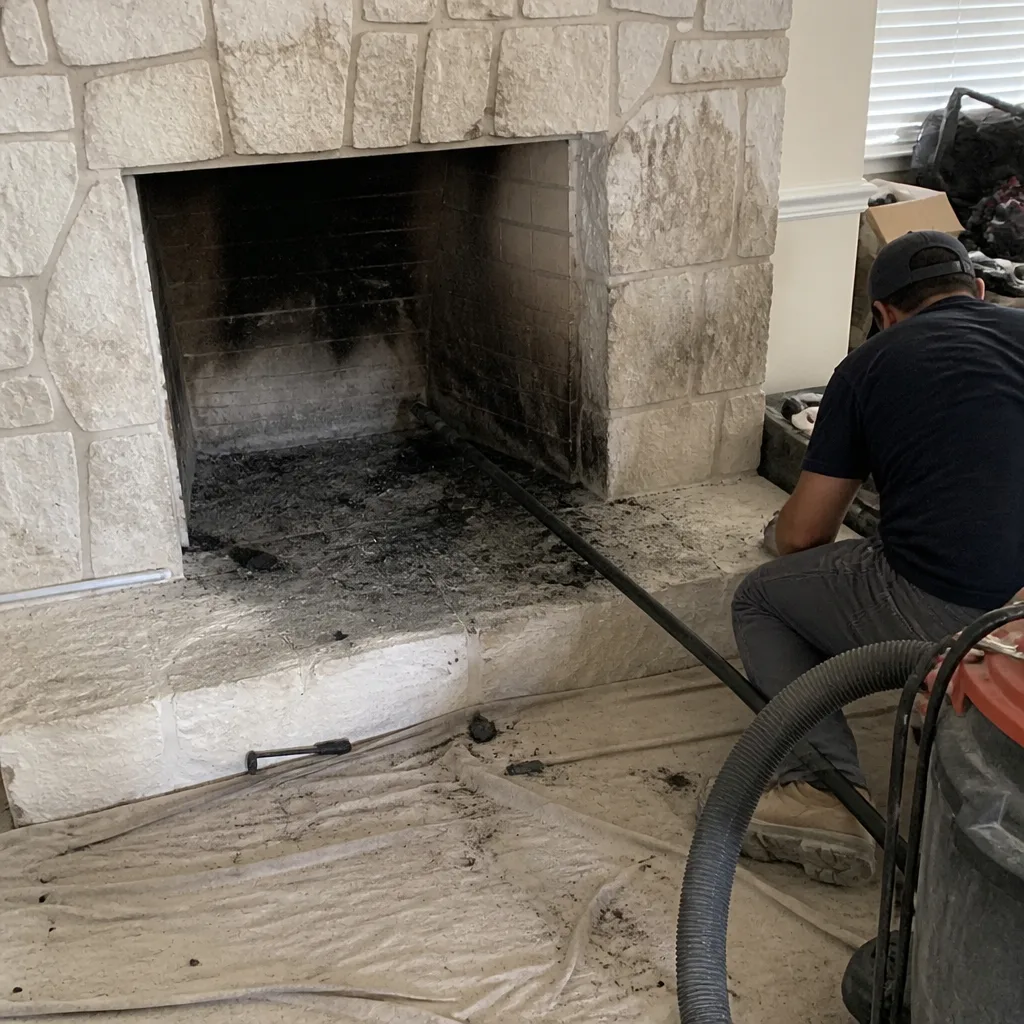 Before
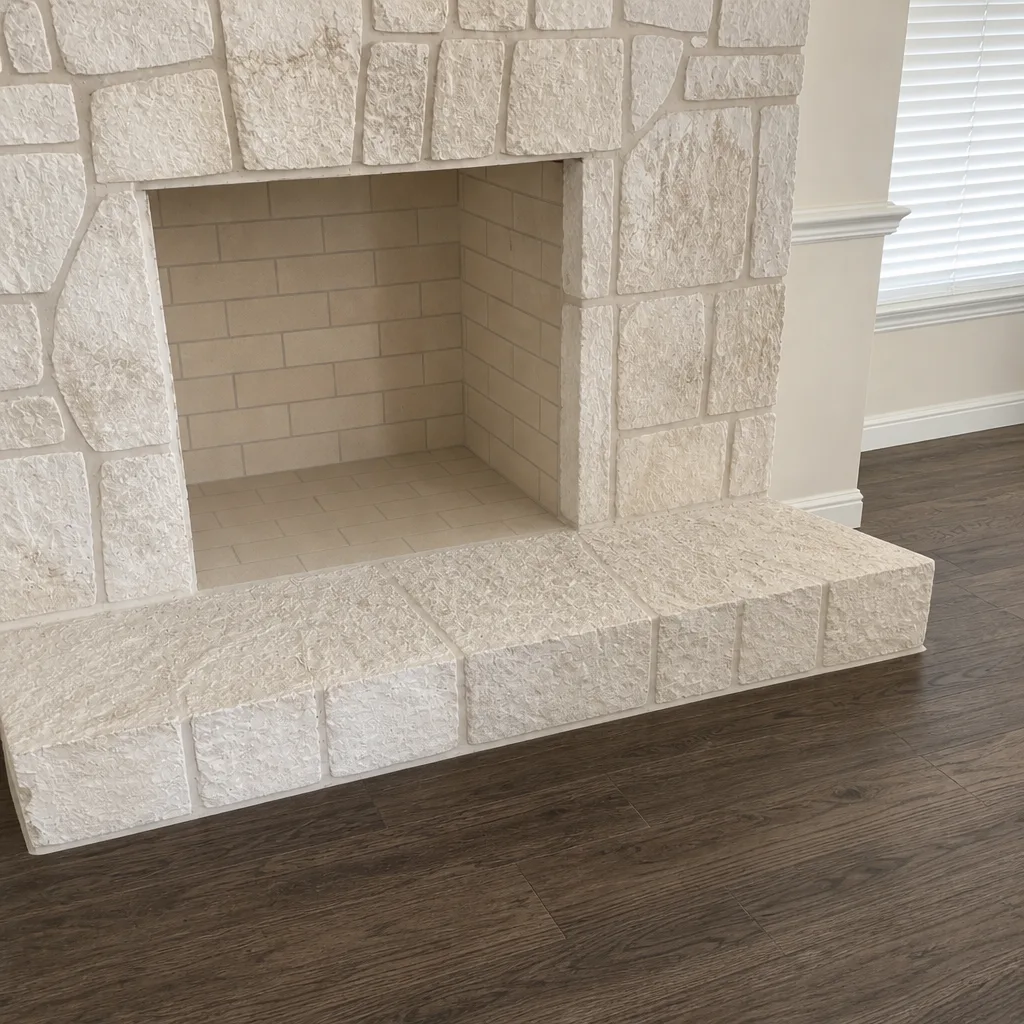 After
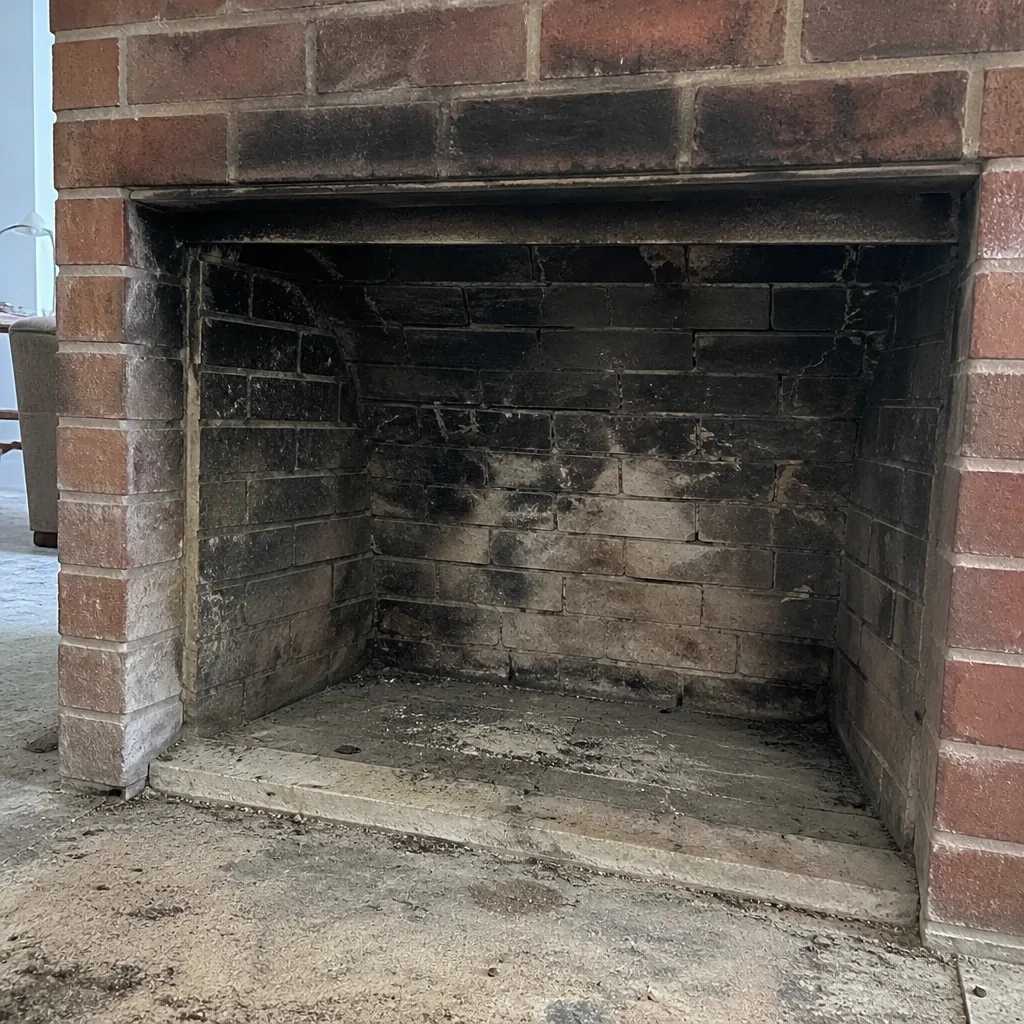 Before
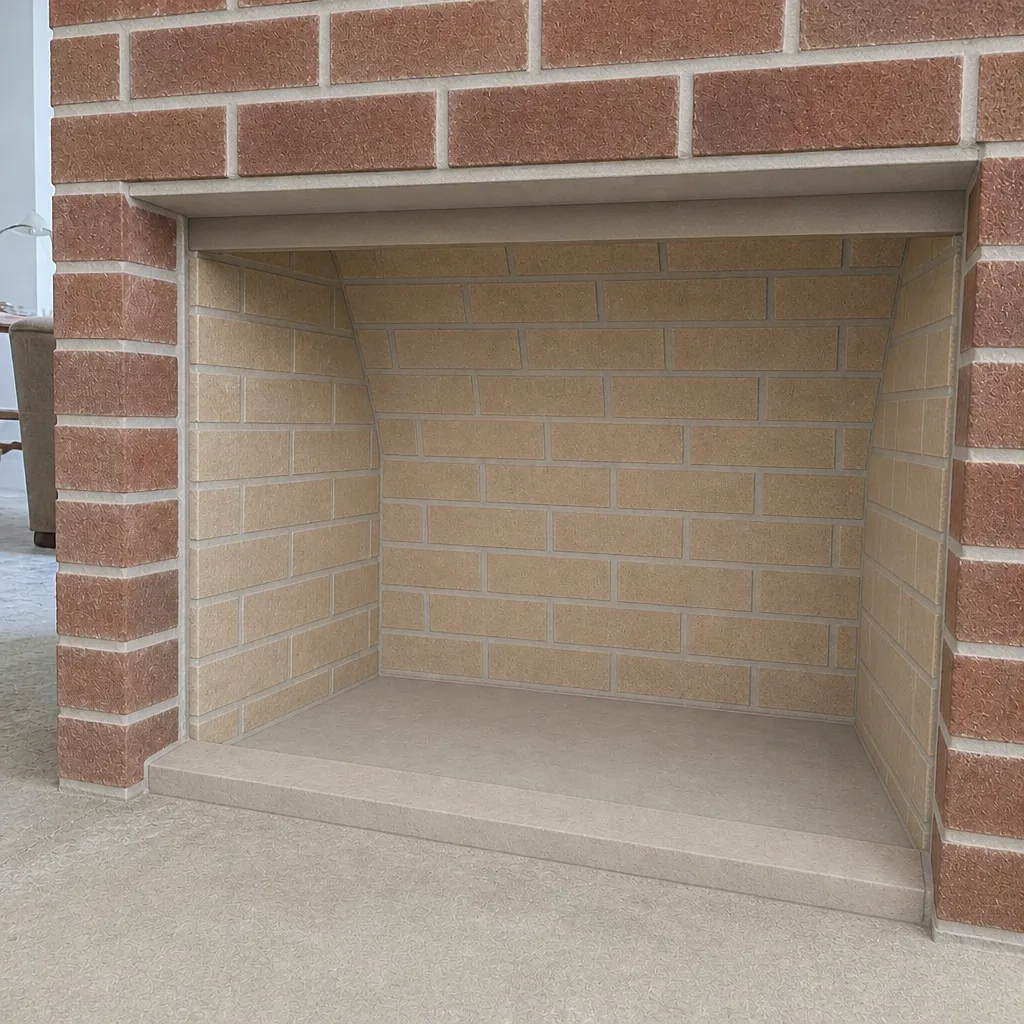 After
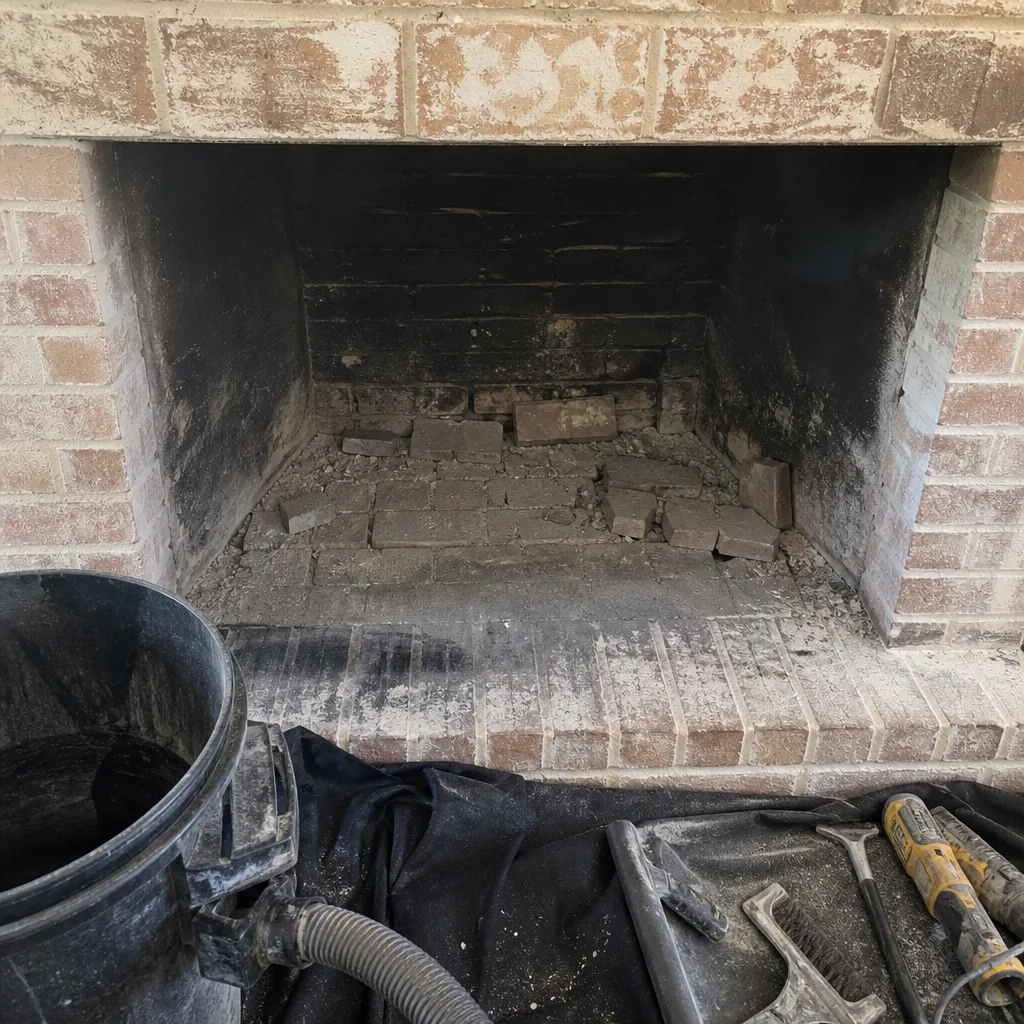 Before
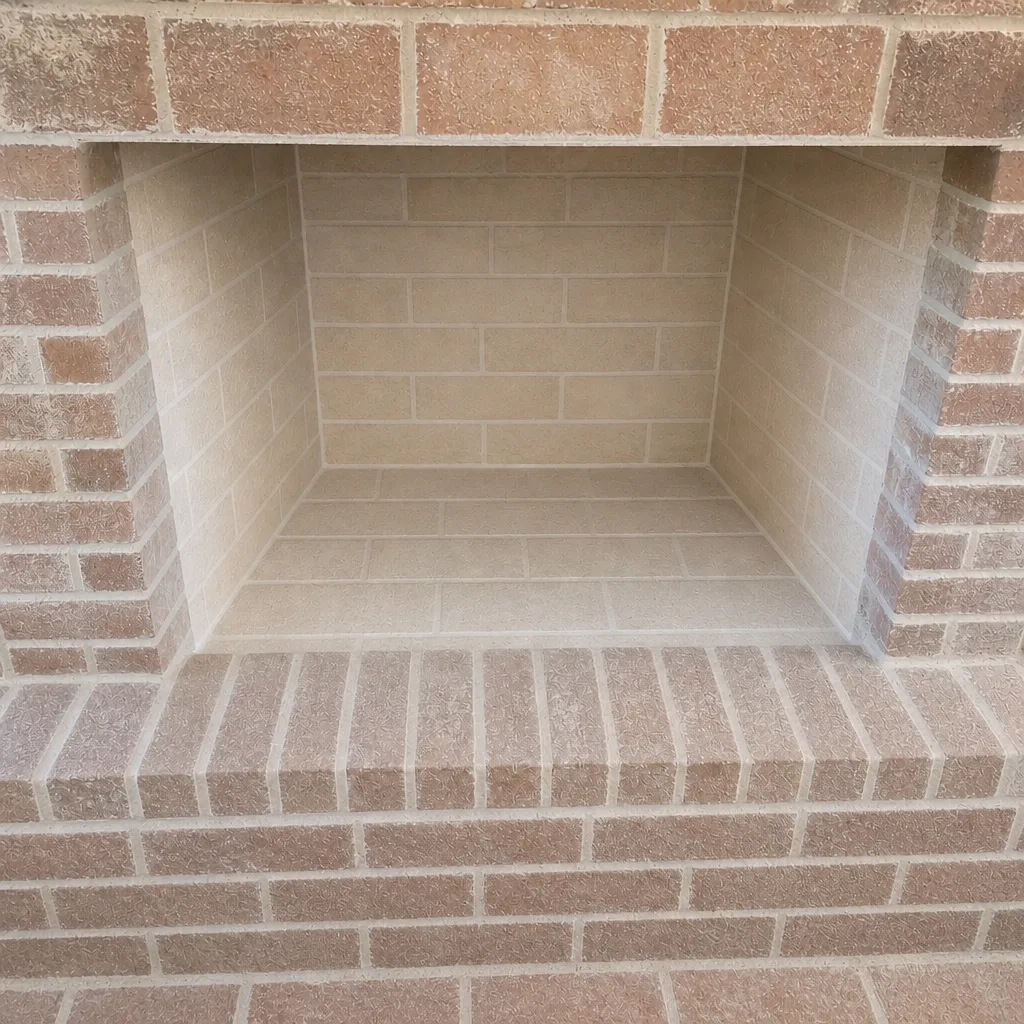 After
When to Call a Professional
Call a professional after any chimney fire, without exception, even if the fire department tells you it’s out. Call after any significant storm if you see a damaged cap, a cracked crown, a leaning chimney, or water in the firebox. Call before heating season if you haven’t had an inspection in a year, and call immediately if you notice a strong smell of smoke in the room when the fireplace isn’t in use, or a persistent carbon monoxide alarm you can’t trace. Starling Chimney Sweep offer free estimates in Corpus Christi, and our technicians have up to 9 years of experience. Call (888) 869-3130. We answer 24/7. Fast dispatch from 7am to 7pm, Sunday through Friday.
Frequently Asked Questions
Once a year if you burn wood regularly, and before heating season if the fireplace sat unused through the warm months. If you burn more than a cord of wood a season, twice a year is worth it. Corpus Christi’s long warm months mean the fireplace often sits dormant, and a dormant flue is where birds nest and creosote hardens into a glaze that’s harder to remove. Call (888) 869-3130 for an exact quote, and estimates are free.
Close the damper and keep the fireplace out of service until the cap is replaced. A missing cap gives water and debris a clear path down the flue, and rain-driven storms make that path a real risk. Don’t climb up and try to reseat it yourself during storm cleanup. Call us with a description of what you’re seeing, and we’ll assess the flue and get the cap replaced properly. Call (888) 869-3130. Estimates are free.
No. Water in the firebox is a water intrusion and remediation problem, not a cleaning problem. A sweep removes soot and creosote; it does not fix the path water is using to get in, which is usually the cap, crown, flashing, or masonry. Diagnose the source before any repair. Call (888) 869-3130 and we’ll tell you what we found and whether it can safely wait.
Not always. A chimney fire can crack a liner, but not every liner that’s been through a fire needs full replacement. HeatShield resurfacing can restore a flue with hairline cracks in qualifying chimneys without a full reline, which is a meaningful option when the alternative is a full replacement. The only way to know is a camera inspection. Nothing is recommended without evidence you can see for yourself. Call (888) 869-3130 for an exact quote, and estimates are free.
Because both are combustion safety systems, and the NFPA identifies dryers as a leading cause of residential fires. A clogged dryer vent traps hot exhaust just like a blocked flue, and it builds up faster because the dryer runs more often than the fireplace. We treat dryer vent cleaning as a core service, not an add-on. Call (888) 869-3130. Estimates are free.
No. The cap and the exterior are the easiest components to see and the least likely to be the actual problem. A cracked crown, failed flashing, or a displaced liner can all be invisible from the driveway, and those are the components that fail after a storm. Run the full post-storm assessment or get a professional inspection before relighting. Call (888) 869-3130. We answer 24/7.
The Bottom Line
In Corpus Christi, the chimney emergency you’re most likely to face isn’t a chimney fire. It’s a tropical storm that drives rain down an open flue and starts a slow structural problem you don’t notice for weeks. Prepare before the storm by checking the cap and closing the damper. Assess after the storm in this order: exterior, crown, cap, interior liner, firebox floor. Know the 60-second chimney fire response: close the damper, call 911, get everyone out. Treat water in the firebox as remediation, not cleaning. And keep a dated inspection report current, because that’s the document that makes a storm-damage claim move. Our technicians have up to 9 years of experience, and we work with pro-grade materials including Copperfield, DuraFlex, HeatShield, and Gelco because these are the components that hold up when a storm tests them. Call (888) 869-3130 for a free estimate. We answer 24/7. Fast dispatch from 7am to 7pm, Sunday through Friday. Closed Saturday, and a call outside dispatch hours is booked into the next opening.
Written by the team at Starling Chimney Sweep.