
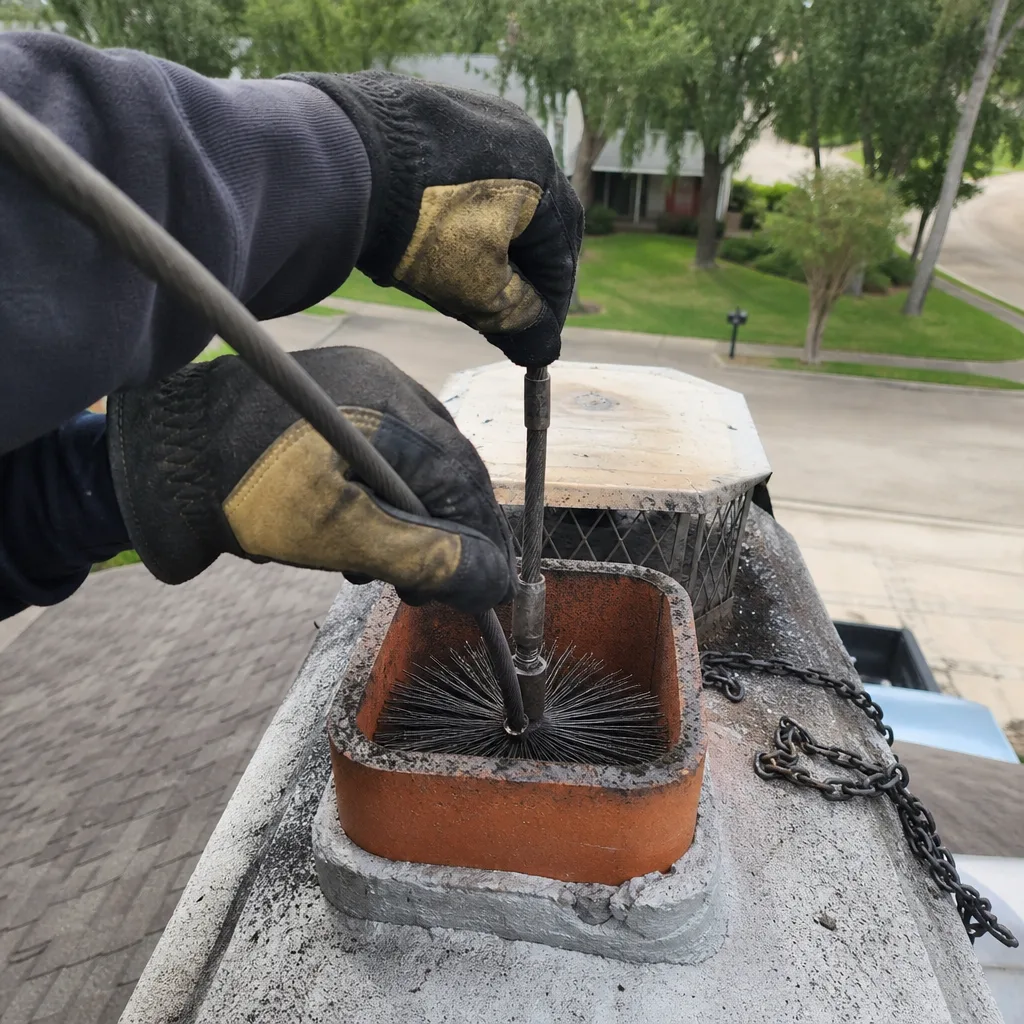
Last updated November 15, 2026
 Sweep & inspection
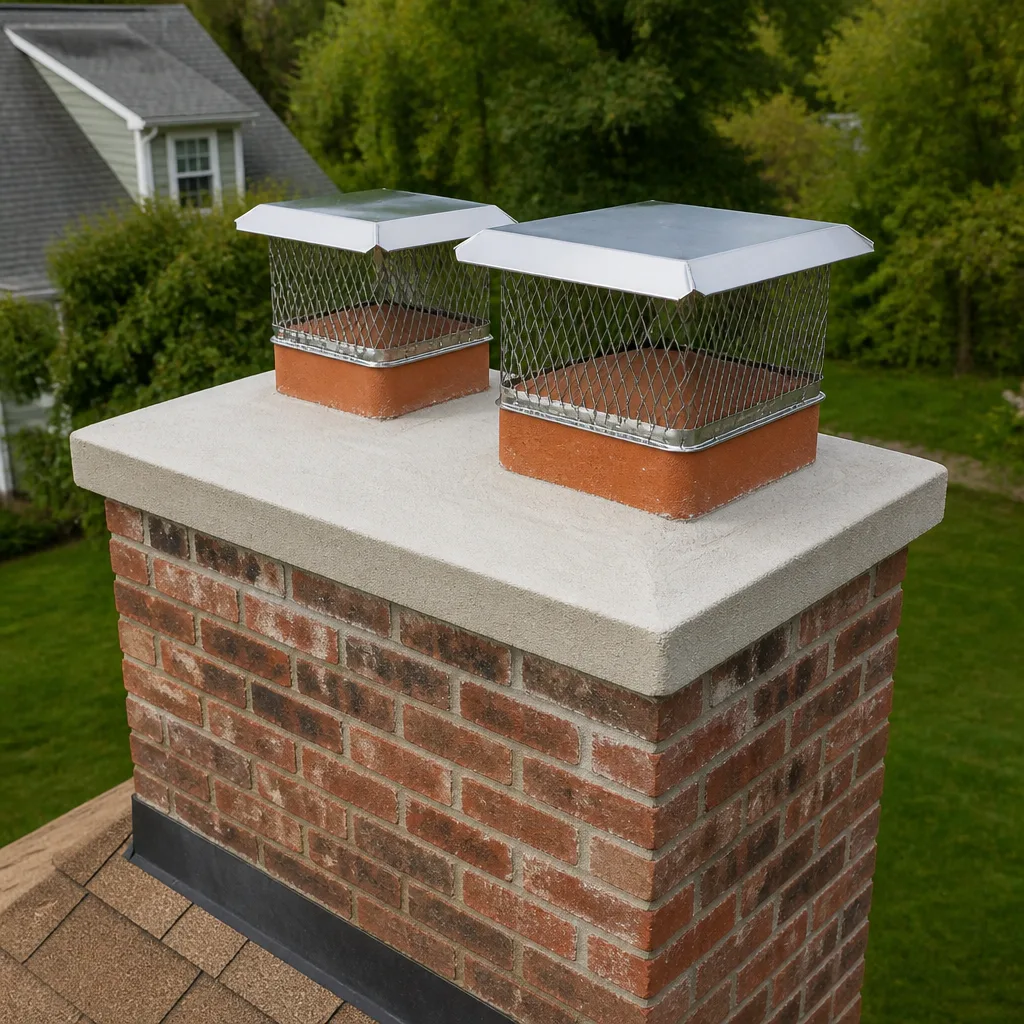 Caps & crowns
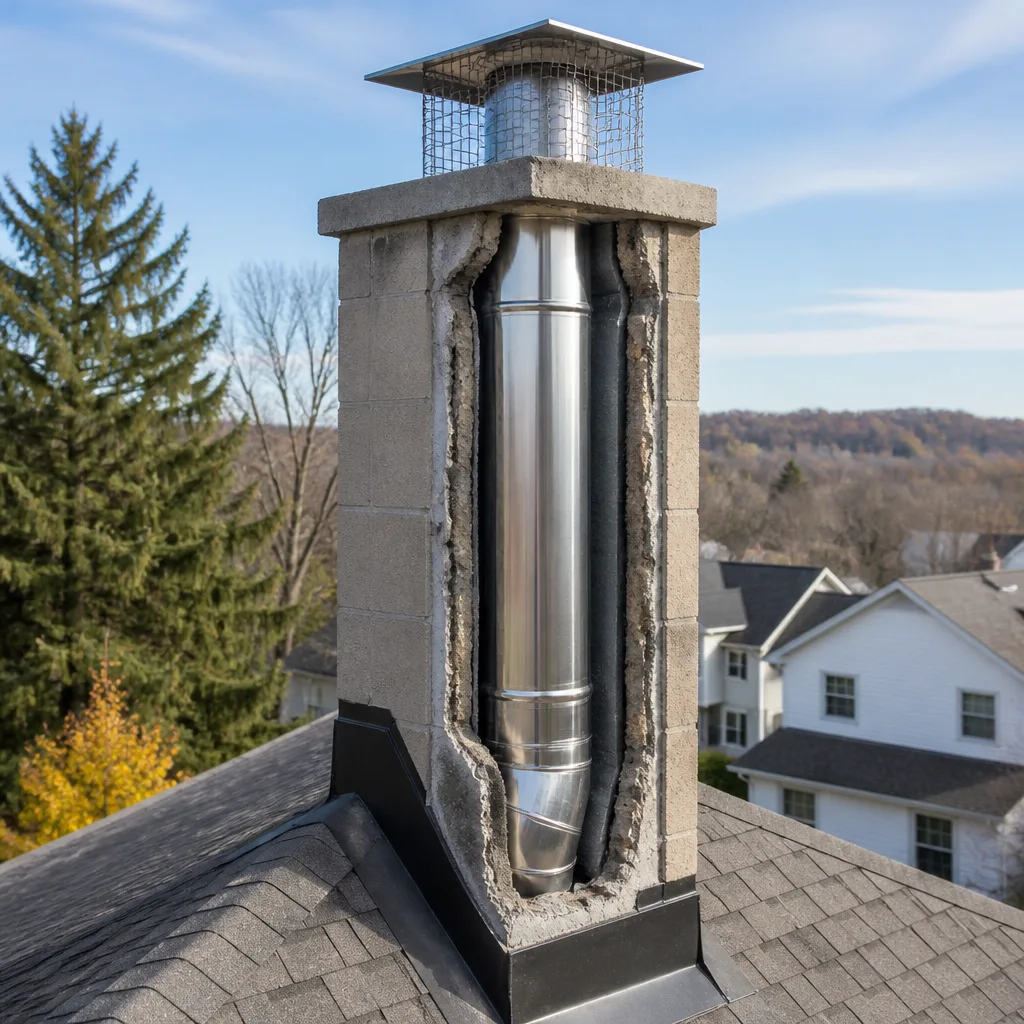 Flue relining
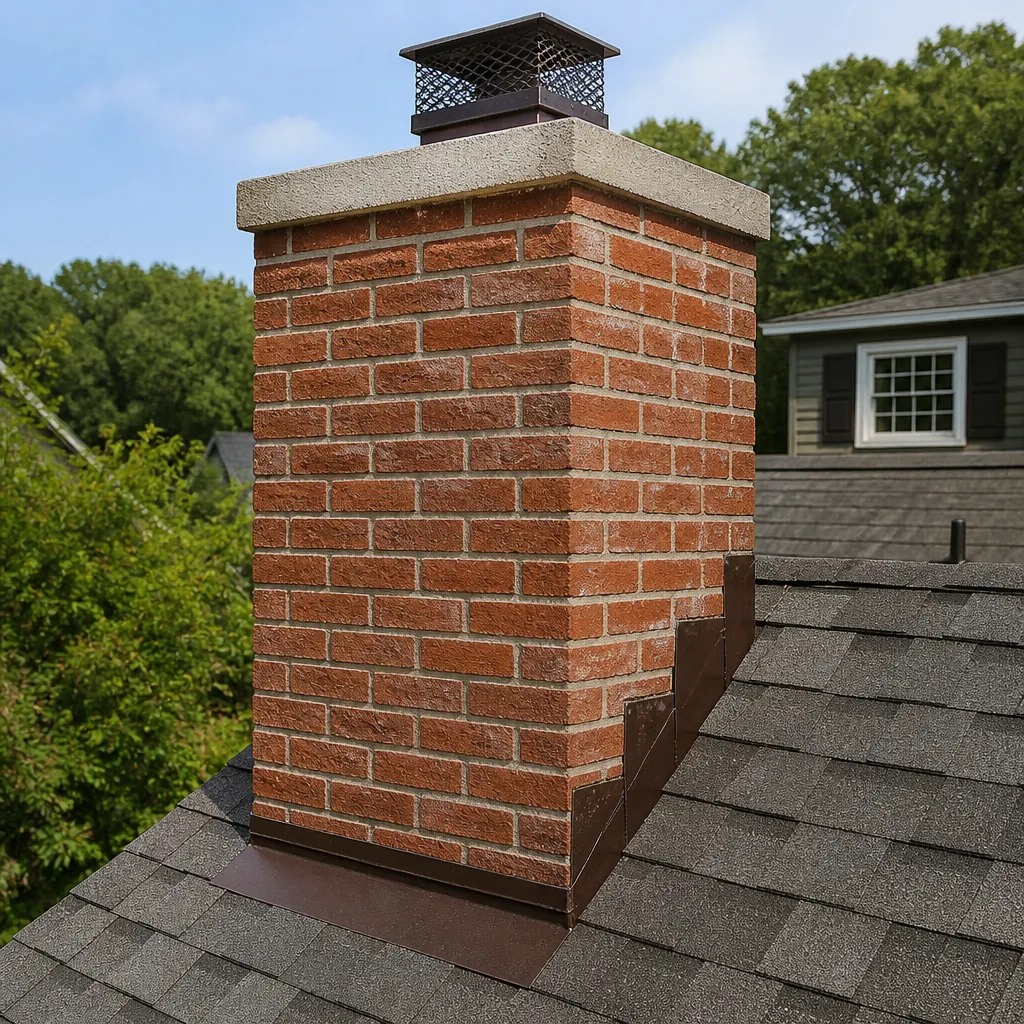 Masonry repair
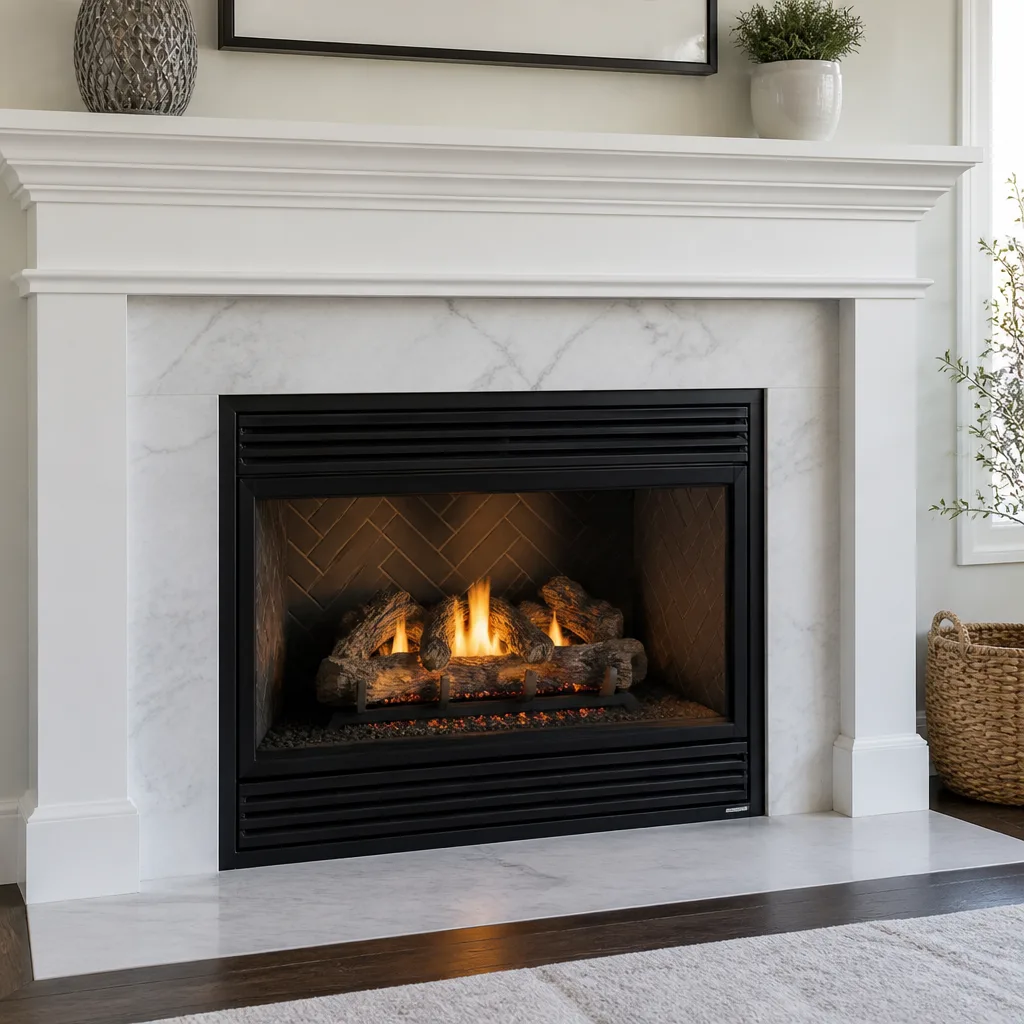 Gas fireplace service
Level 1 sweep and inspection to the NFPA 211 annual standard - flue, crown, cap, and flashing checked and photographed
Chimney sweep logs do not sweep chimneys. They loosen some creosote - which then falls where a brush and vacuum still have to collect it.
Chimney Cleaning Cost Breakdown: The Corpus Christi Homeowner’s Reference for 2026
A $129 chimney sweep quote is accurate for a clean, structurally sound flue. The question worth asking is how often that describes a chimney that hasn’t been serviced in three or more years. In our experience across Corpus Christi homes, it’s the rare case. The base sweep price is real, but it’s also incomplete, because it assumes nothing turns up on inspection. This reference maps every likely add-on cost to the actual condition that triggers it, so you can budget for the full picture instead of getting surprised by a number after the technician is already on your roof.
Quick Answer
A standard chimney sweep in Corpus Christi typically runs $150 to $300, and most homes also need a Level 2 inspection that adds $75 to $150. If the inspection turns up a cracked liner, deteriorated crown, or failed flashing, repair costs generally range from $350 for small masonry work up to $4,500 or more for a full stainless steel liner. The written estimate you receive after inspection sets the final price.
Styles & brands we work with
- Sweep & inspection
- Caps & crowns
- Flue relining
- Masonry repair
- Gas fireplace service
Table of Contents
- What does a base chimney sweep include in Corpus Christi?
- What inspection findings trigger repair costs?
- Stainless steel vs. aluminum liners: what changes the price?
- How much does dryer vent cleaning add to a chimney visit?
- How to read a chimney repair estimate
- When should you schedule chimney work in Corpus Christi?
- Common mistakes to avoid
- When to call a professional
What does a base chimney sweep include in Corpus Christi?
The base sweep price covers mechanical cleaning of the flue, firebox, smoke chamber, and damper, with a drop cloth laid and soot contained. For a wood-burning fireplace in reasonable condition, that’s a real service at a real price. What the base number usually does not include is the paper trail. Many quotes stop at “we swept it and it looked fine,” which leaves you with no documentation of the flue’s actual condition and no way to compare this year’s inspection to next year’s.
At Starling Chimney Sweep, a sweep is tied to a documented inspection so the findings travel with the house. Here’s what a complete visit typically involves:
- Visual check of the firebox, damper, and smoke chamber for cracks and creosote buildup.
- Mechanical brushing of the flue with the appropriate sized brush for your flue shape.
- A camera scan of the flue interior, so we’re looking at the liner surface, not guessing from the firebox up.
- A photo record of what we found, handed to you, not just described.
- A written summary of condition and, if repair is warranted, a line-item estimate.
That camera scan is the part that separates a useful sweep from a superficial one. Creosote glazing, hairline cracks in a clay tile, and gaps at the tile joints often don’t show up from below. For Corpus Christi homes with a fireplace that sees occasional winter use and long dormant stretches the rest of the year, that interior view is exactly where surprises live. A Corpus Christi chimney sweep that skips the scan is selling you the cleaning, not the diagnosis.
Expect the base sweep itself to land between $150 and $300 for a standard single-flue fireplace. Multi-flue chimneys, heavily glazed creosote that needs chemical treatment, or a firebox that hasn’t been touched in years can push toward the top of that range or slightly above, and the estimate should tell you which before the work starts.
What inspection findings trigger repair costs?
Most repair costs are not arbitrary. Each one traces back to a specific condition the inspection either finds or doesn’t. Mapping the condition to the category is the single best way to keep a chimney budget honest, because you can predict which categories are even in play for your house before anyone climbs the roof. Here’s how the triggers line up with typical 2026 Corpus Christi price ranges:
- Hairline cracks in the flue liner, no separation of tiles: HeatShield resurfacing, typically $1,200 to $2,500. This is a repair rather than a replacement, and it’s available when the liner is still structurally sound but its surface has broken down.
- Deteriorated or cracked crown: Crown rebuild or reseal, typically $450 to $1,200 depending on how much of the crown is affected and whether the top of the chimney needs rebuilding first.
- Failed flashing at the roofline: Flashing repair or replacement, typically $400 to $900. Water intrusion at the flashing is one of the most common hidden causes of interior chimney damage.
- Cracked or spalling masonry in the chimney stack: Tuckpointing and masonry repair, typically $600 to $2,000 depending on how many courses of brick are involved.
- Fully failed liner, disconnected sections, or a liner that’s the wrong material for the appliance: Full stainless steel relining, typically $2,800 to $4,500 or more for a standard height chimney.
- Severely glazed creosote (stage 3): Chemical creosote removal before any other work can proceed, typically $400 to $900 on top of the sweep.
Notice how much ground sits between “resurfacing a liner” and “replacing it.” That gap is where a homeowner’s budget lives or dies. The condition that determines which one applies is visible on the camera scan, and you should be shown the images that support whichever recommendation comes your way.
Two of these triggers are genuinely dangerous, and they’re worth flagging directly. A cracked flue liner allows combustion gases, including carbon monoxide, to escape into the living spaces of the home instead of up the chimney. Cracked masonry and failed flashing let water into the structure, which over time can compromise the chimney’s structural integrity. Neither is a “get to it whenever” category. Both are worth acting on before heating season.
Stainless steel vs. aluminum liners: what changes the price?
When a liner actually needs replacing, the two material choices you’ll hear about are stainless steel and aluminum, and the price difference is significant. A stainless steel liner for a typical Corpus Christi home runs $2,800 to $4,500 or more. An aluminum liner runs lower, often in the $1,000 to $2,000 range. The gap exists for a reason.
Aluminum is a lighter-duty material. It works for certain venting applications where the exhaust is cool and the liner is protected from the conditions inside a working flue. What it doesn’t handle well is the heat and the slightly corrosive environment of a wood-burning flue over time. Stainless steel is built for that environment. It’s the standard for wood-burning appliances and gas appliances alike, and it’s what we install when we’re lining a flue for the long haul.
We work with DuraFlex liner systems specifically for this reason: it’s a professional-grade stainless product designed for the pressures of a real flue, not a bargain bin substitute. When a homeowner asks why we don’t quote the aluminum option, the honest answer is that for most fireplaces we’re lining, aluminum isn’t the right material for the job. The cheaper liner isn’t cheaper if it has to be replaced again.
There’s one more layer worth understanding. Stainless liners come in different alloy grades, and the grade matters for how the liner handles the particular conditions inside your flue. We size and specify the liner to the appliance and the flue, not to a single default. If you’re comparing estimates and one quote specifies a generic “stainless liner” while another names the alloy and the manufacturer, that difference tells you something about how carefully each job was scoped.
For Corpus Christi homes with older chimneys, the liner decision often comes down to this: HeatShield resurfacing if the liner structure is intact but the surface is failing, full stainless relining if the liner has actually failed. Choosing resurfacing where it’s appropriate is what keeps the cost at $1,200 to $2,500 instead of $2,800 to $4,500.
How much does dryer vent cleaning add to a chimney visit?
Dryer vent cleaning is a separate service from chimney cleaning, but it’s worth bundling when the technician is already at the house. Added to a chimney visit, dryer vent cleaning typically runs $100 to $175. As a standalone call, it’s usually $125 to $225 depending on vent length, number of elbows, and roof or wall termination. The savings from bundling is modest, but the safety benefit isn’t.
Why does dryer vent cleaning belong in a chimney conversation at all? Because the fire risk is the same category. The National Fire Protection Association identifies dryers as a leading cause of residential fires in the U.S., and lint buildup in the vent is the ignition source. A clogged dryer vent traps heat, the heat ignites the lint, and the fire travels up the vent the same way a chimney fire travels up a flue. Both are combustion events in a restricted pathway, and both are preventable with regular cleaning.
For property managers and landlords, dryer vent cleaning is also a compliance item, not just a courtesy. Tenants don’t typically think about their dryer vent until something goes wrong, and a documented cleaning gives you a record that the vent was serviced. It’s one of those maintenance items that’s invisible until it isn’t.
What we look for during a dryer vent cleaning:
- Lint accumulation along the full length of the vent, not just at the dryer connection.
- Crushed or kinked flexible ducting, which restricts airflow and accelerates buildup.
- Improper termination (screens, plastic flappers) that trap lint at the exterior.
- Vent runs that are too long or have too many elbows for the dryer’s rated capacity.
- Signs of overheating at the dryer connection or along the run.
Notice that a wall connection that looks fine from the laundry room can hide a crushed duct behind the drywall. The camera inspection we use on flues is the same approach that finds the problem in a dryer vent run. Both are hidden pathways, and both benefit from actually looking inside.
How to read a chimney repair estimate
A well-written estimate tells you what work is being done, where, with what material, and why. A vague estimate does none of those, and it’s usually the one where the final bill exceeds the quoted number. You’re not being difficult by reading carefully. You’re protecting yourself from scope creep, which happens when a job description is loose enough that anything can be added later as an “extra.”
Here’s what to look for, line by line, and what should raise a flag:
- Specific scope language. “Chimney repair” is vague. “Rebuild chimney crown approximately 4 inches thick, 36 x 36 inches” tells you what you’re paying for. The estimate should name the specific element being repaired, not just the category.
- Named materials. Specifying DuraFlex, HeatShield, Gelco, and Olympia Chimney components tells you the technician knows the materials and isn’t planning to substitute whatever’s on the shelf. A named material is a commitment; a generic one isn’t.
- Measurements. Linear feet of liner, square footage of masonry, number of courses of brick, length of vent run. These are the variables that drive price, and they should appear in writing.
- Reason for the recommendation. The best estimates include a one-line note on why this repair applies. “Liner has visible cracks at tile joints 3 through 7, verified by camera, resurfacing recommended” is a professional scope. “Liner needs repair” is not.
- Photo or video documentation. The camera images that justify the recommendation should be available to you. If they can’t be shown, the recommendation should be treated with skepticism.
- No unexplained add-ons. A line item for “miscellaneous materials” or “labor contingency” with no detail is a red flag. Materials and labor should be broken out.
- A clear note on what can wait. A professional estimate tells you which findings are urgent and which can safely wait to a future visit. If everything on the estimate is framed as emergency, that pattern is a signal.
The estimate at Starling Chimney Sweep is free, and the price it contains is what you’ll pay. We don’t do the diagnostic-and-upcharge dance where the number on the phone call turns into a different number on the invoice. If we find a condition that requires repair, you’ll see what we’re seeing before you approve anything.
One more thing: nothing is recommended without camera evidence you can look at yourself. If a technician tells you the liner needs to be replaced and can’t show you the crack, that’s not a repair recommendation, that’s a sales pitch. You’re entitled to see the footage.
When should you schedule chimney work in Corpus Christi?
The best window for chimney work in Corpus Christi is before heating season, not during it. Winters here are mild enough that fireplaces sit dormant for much of the year, which means the flue accumulates creosote and the masonry absorbs moisture with no fire to dry it out. Booking a sweep in early fall, when the fireplace is about to see its first use of the year, catches whatever the dormant months put in place.
The second-best window is after a long dormancy, before you light the first fire. If the fireplace hasn’t been used since last winter, that’s the moment to have the flue inspected. Creosote that builds up over the off-season, a bird nest in the flue, or a liner crack that developed during the dry months are all things you want to know about before the fire is lit, not after.
What should trigger a call rather than a mental note:
- It’s been three or more years since the last sweep, or you can’t remember when it was.
- You’ve noticed smoke rolling back into the room when you light a fire.
- You smell a strong, acrid creosote odor in the house, especially on warm days.
- You see soot around the firebox, mantle, or chimney exterior.
- You’re buying a home and want the chimney condition documented before closing.
- You’ve heard a bird or animal in the flue (yes, this is common in Corpus Christi, and starlings will happily nest in an uncapped flue).
Timing around burning season is practical, not urgent. A sweep is a scheduled appointment, and it’s worth booking before the first cold snap when the calendar fills up, rather than waiting until the fireplace is already cold and dark. If you want a sweep before the fall rush, calling in late summer gives you the most flexibility.
Common Mistakes to Avoid
- Treating the phone quote as the final price. A sweep quote given before inspection is an estimate of one thing: the cleaning. It can’t price a repair it hasn’t seen yet. Ask what the quote covers and what would trigger an additional charge, then get the inspection findings before committing to anything beyond the sweep.
- Skipping the inspection to save $75 to $150. The inspection is the part that catches a liner crack or failing crown before it becomes a much larger repair. Skipping it means the sweep is cleaning a flue you still don’t know the condition of.
- Choosing a sweep by price alone. The lowest quote is usually for the sweep only, with the repair work priced after. A slightly higher quote that includes inspection documentation and camera footage is almost always the better value once the findings come in.
- Ignoring the dryer vent because the chimney seems fine. Both are combustion pathways, and the dryer vent is often the more overlooked of the two. A clogged vent is a fire risk whether or not your chimney has issues.
- Waiting until the first cold snap to book. The first cold week of the year is when everyone in Corpus Christi wants their sweep, and the calendar fills fast. Booking before burning season means you’re not competing for the same appointment slots.
- Approving a liner replacement without seeing the evidence. Camera footage of the crack is the difference between a professional recommendation and an upsell. Ask to see it, and if the technician can’t or won’t show it, get a second opinion.
- Assuming HeatShield resurfacing doesn’t apply to your older liner. A lot of homeowners assume a failing liner means full replacement. Resurfacing, when the liner structure is still sound, can restore the flue for $1,200 to $2,500 instead of $2,800 to $4,500. It’s worth asking whether your chimney qualifies before approving a full reline.
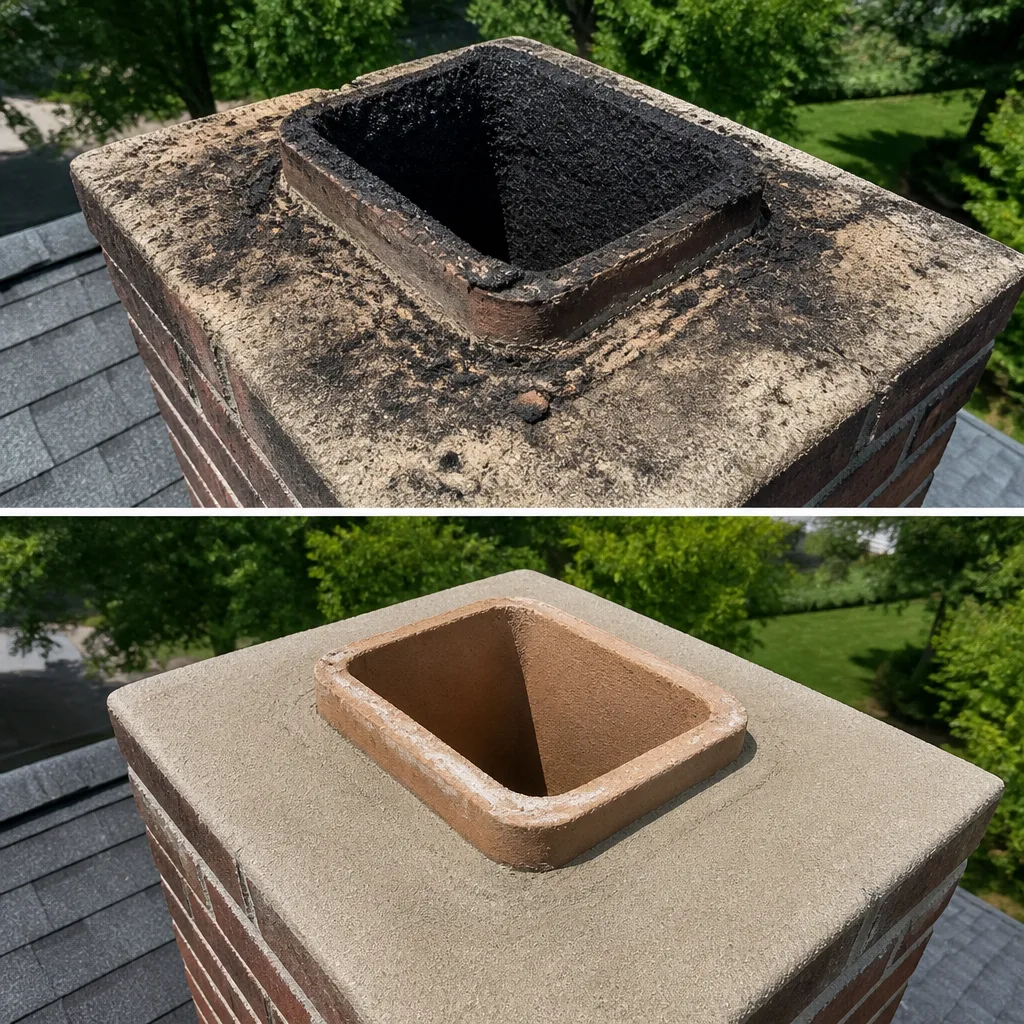
See the difference
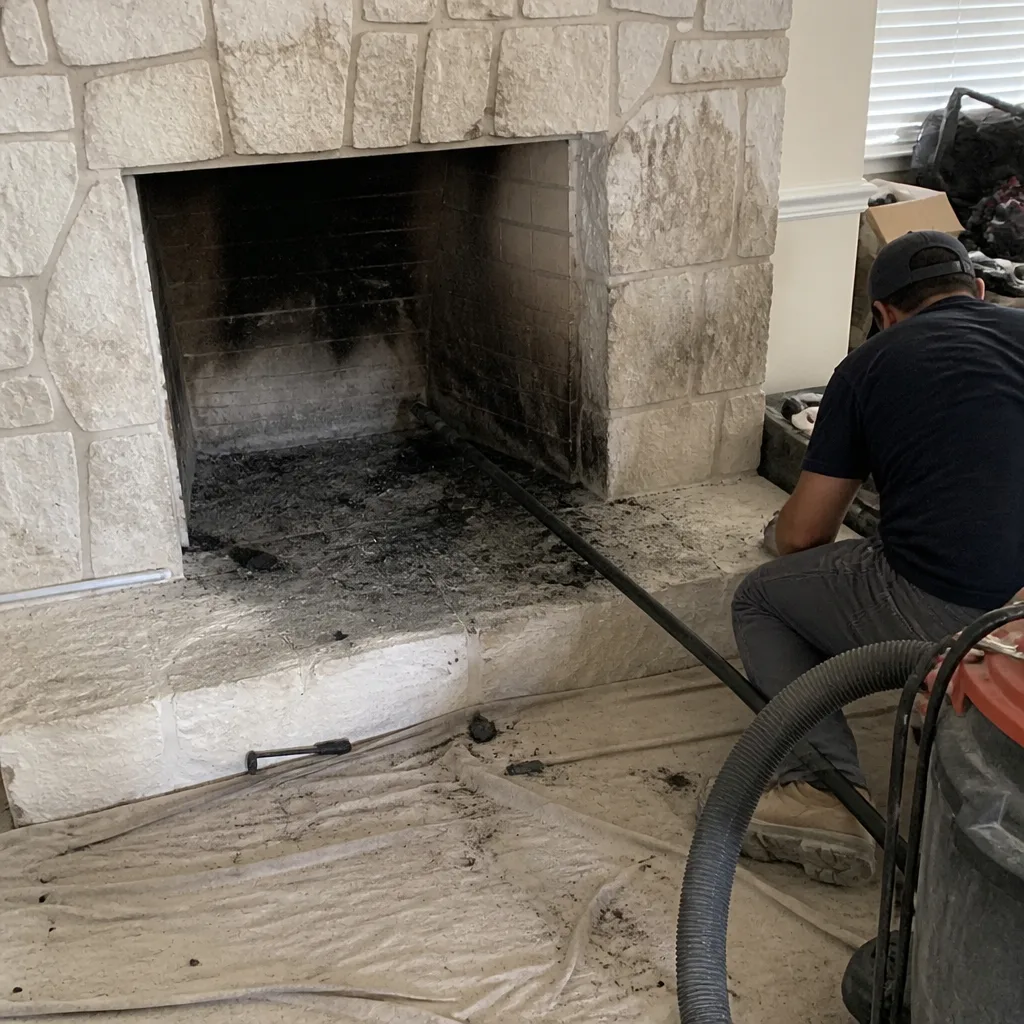 Before
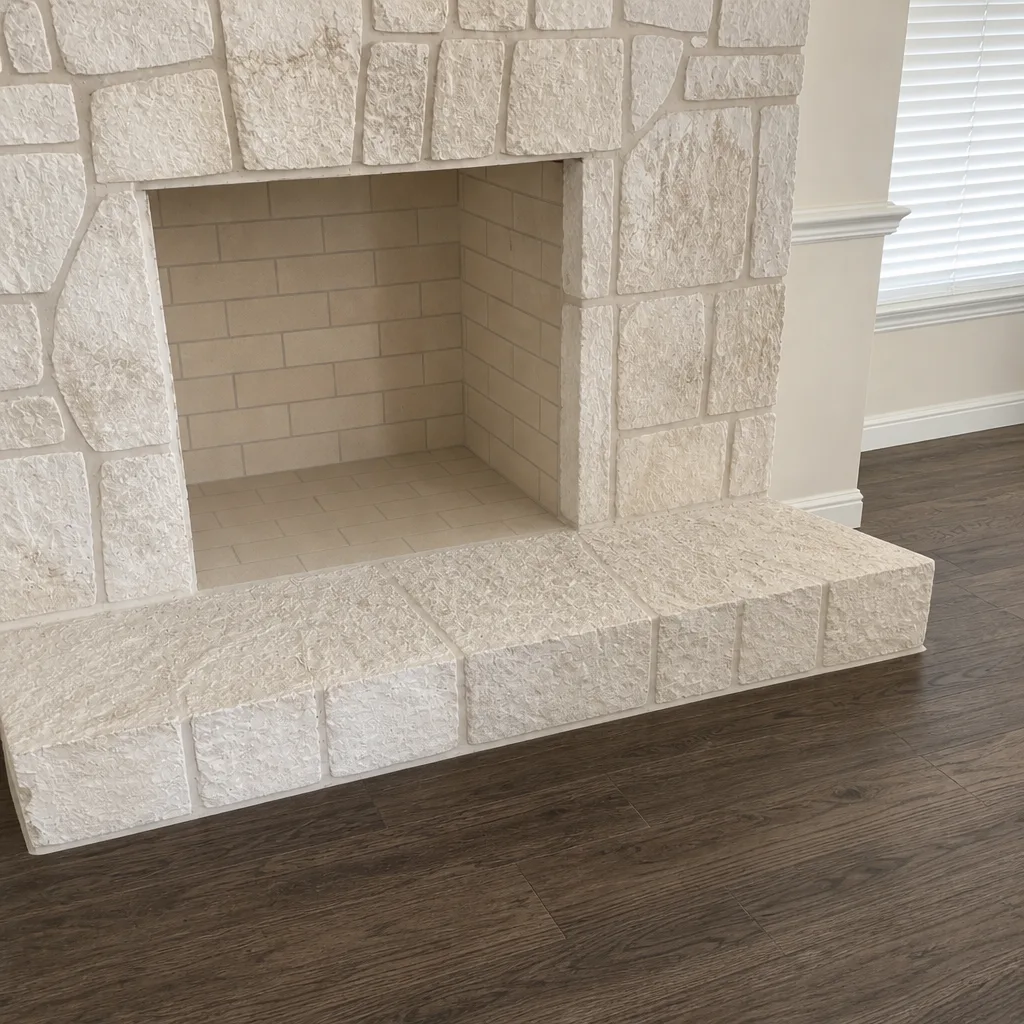 After
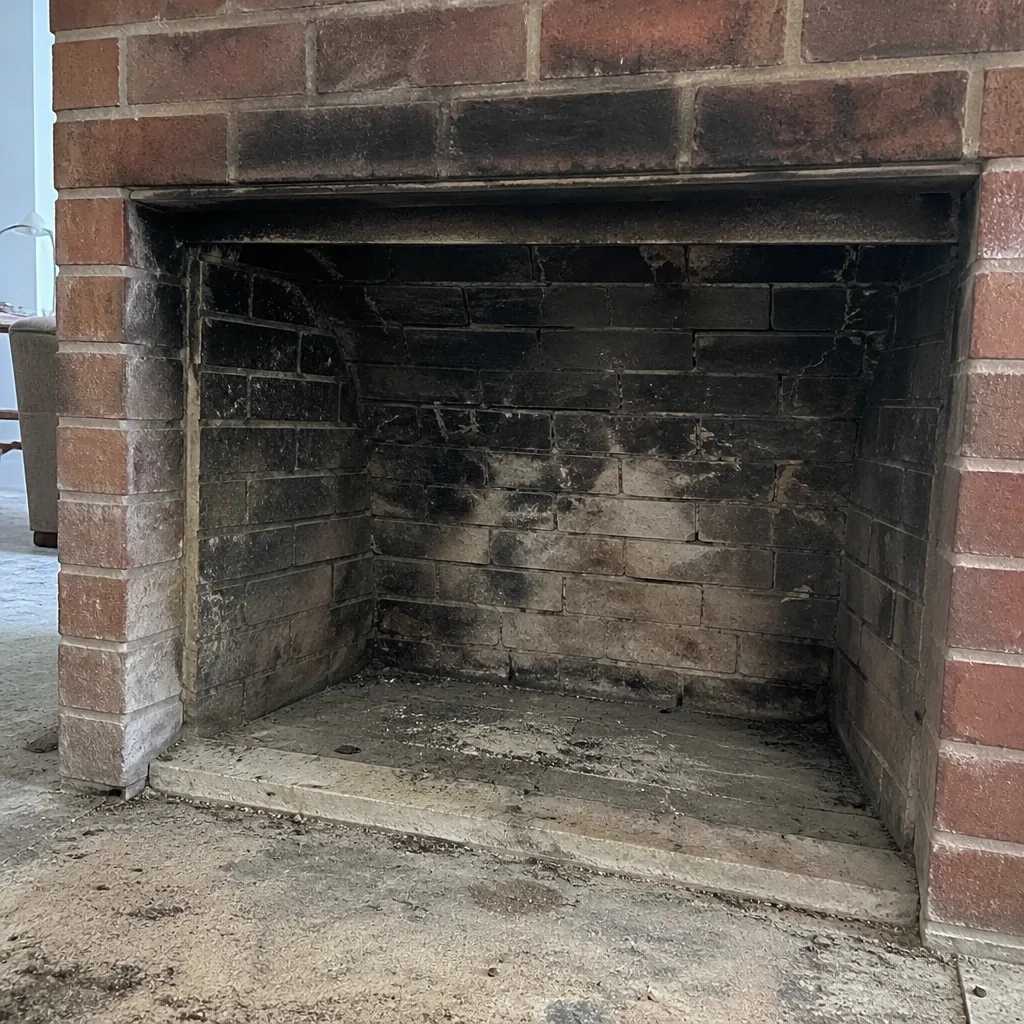 Before
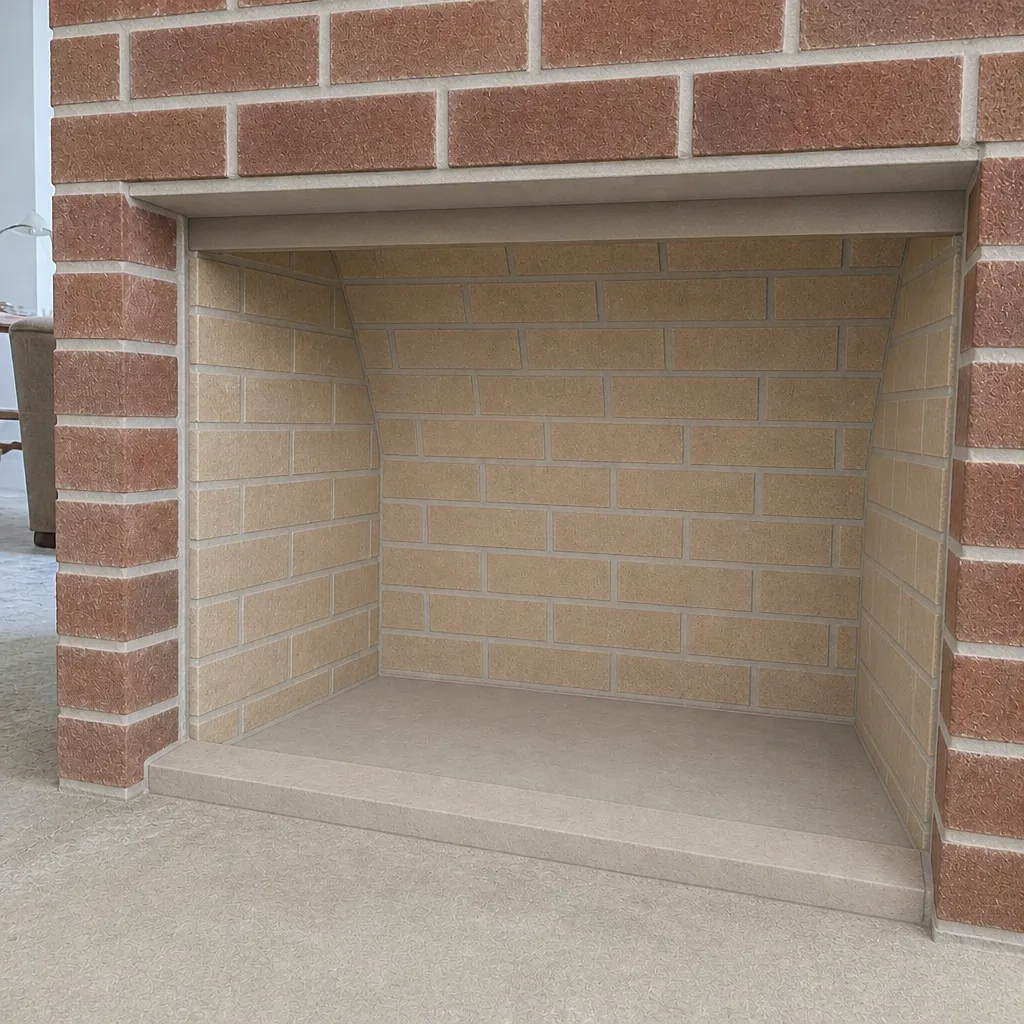 After
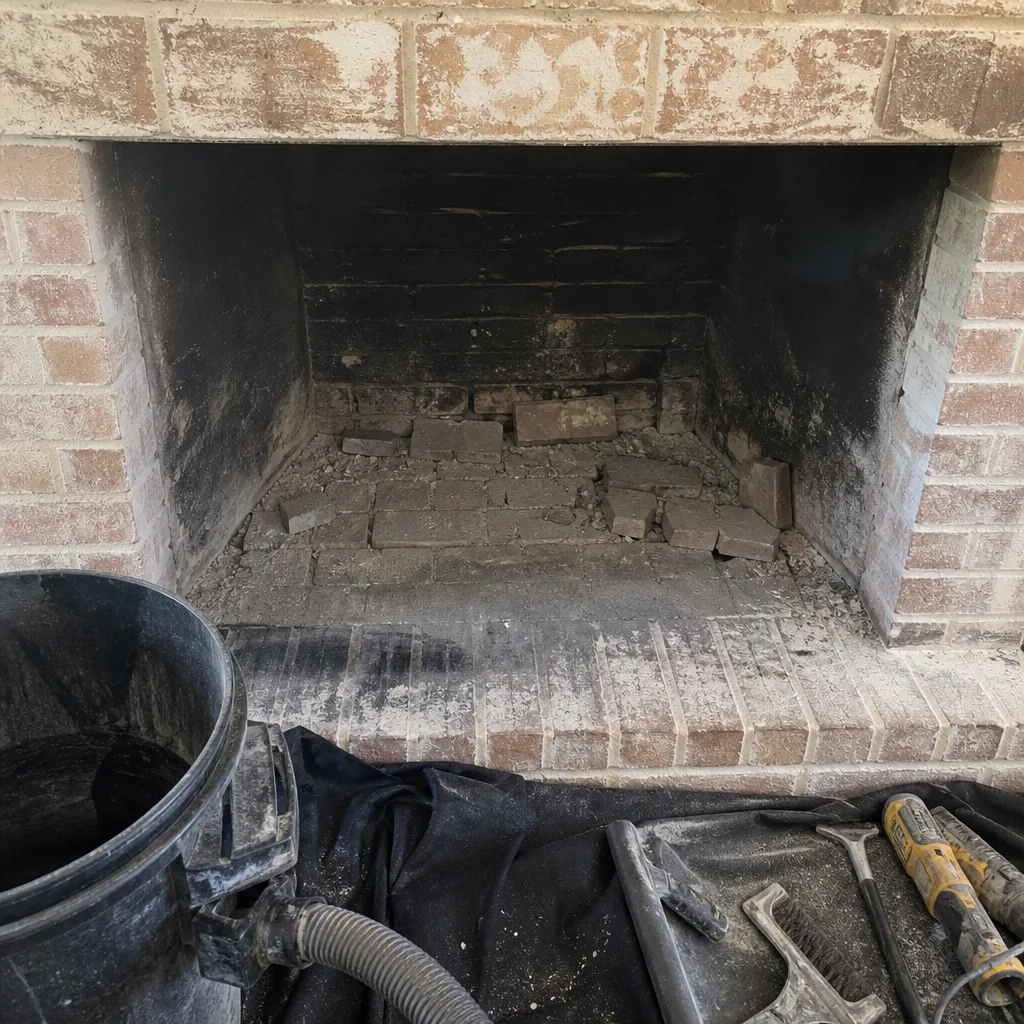 Before
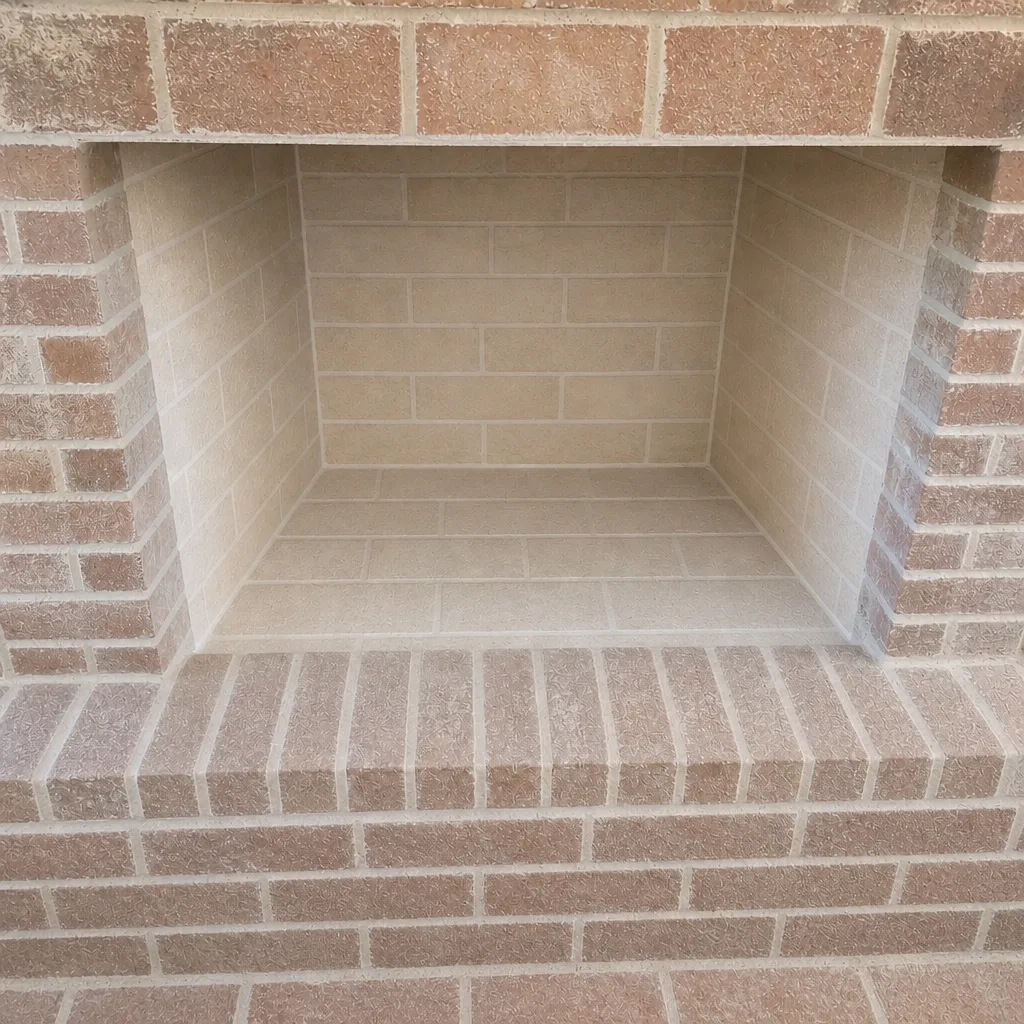 After
When to Call a Professional
Some chimney issues announce themselves and some don’t, which is why an inspection matters more than symptom-spotting. The triggers worth calling about: smoke backing into the room, a strong creosote smell that lingers, soot on the mantle or chimney exterior, an animal nesting in the flue, a crack of any kind visible in the firebox or smoke chamber, or a fireplace you haven’t had swept in three or more years. For homeowners with a gas insert or gas log set, the chimney still needs inspection even though there’s no wood smoke, because gas appliances vent through the same flue and a compromised liner is a carbon monoxide risk regardless of the fuel. If your home has been dormant all year and you’re planning the first fire of the season, that’s the natural moment to book. Starling Chimney Sweep offers free estimates in Corpus Christi. Call (888) 869-3130 for a free estimate.
The stakes here are not hypothetical. A chimney fire is a combustion event in a restricted pathway, and every year in the U.S. it puts homes and families at risk. Carbon monoxide from a cracked liner is odorless and invisible. A sweep and inspection is a small expense relative to what it prevents, and it’s the reason we’d rather talk a homeowner out of an unneeded repair than talk them into one they don’t need.
We answer 24/7. Fast dispatch, 7am-7pm.
Frequently Asked Questions
A standard chimney sweep in Corpus Christi typically runs $150 to $300 for a single-flue fireplace, and a Level 2 inspection with camera footage typically adds $75 to $150. Multi-flue chimneys, heavily glazed creosote, or a firebox that hasn’t been serviced in years can push the top of that range. Call (888) 869-3130 for an exact quote on your chimney: estimates are free.
Not always. Whether you need a new liner depends on the condition of the liner itself, and the decision should be based on camera images you can see. If the liner structure is intact but the surface is cracked, HeatShield resurfacing is often a better option than full relining, and it typically costs $1,200 to $2,500 versus $2,800 to $4,500 for a stainless replacement. Ask to see the footage before approving liner work, and if the recommendation seems off, get a second opinion. Call (888) 869-3130 for a free evaluation.
The general rule is once a year when the fireplace is in regular use, or whenever creosote has built up to a noticeable layer in the flue. But a lot of Corpus Christi homes use their fireplace only a few times a winter, which means the real schedule is driven by use rather than the calendar. A sweep every three years for a lightly used fireplace is reasonable in many cases; yearly is the safer default, and an inspection alone is cheaper than a sweep when the flue is clean. Call (888) 869-3130 to schedule an inspection.
Skipping a sweep doesn’t cause an immediate problem, which is why people skip it. What happens over time is that creosote builds up in the flue, and at a certain concentration, a hot fire can ignite it. A chimney fire is loud, hot, and often invisible from inside the house until it has already done damage. Separately, a liner crack that goes unaddressed lets carbon monoxide vent into the living space instead of up the chimney, which is the risk no one can see. Neither scenario is common on any given day, but both are the reason the sweep exists. Call (888) 869-3130 to get on the schedule before burning season.
Dryer vent cleaning in Corpus Christi typically runs $125 to $225 as a standalone service, and $100 to $175 when added to a chimney visit. The range depends on vent length, the number of elbows, and whether the vent terminates through the roof or the wall. It’s worth bundling with a chimney sweep since the technician is already at the house. Call (888) 869-3130 for an exact quote: estimates are free.
The mild winters here mean fireplaces often sit dormant for long stretches, which changes the maintenance pattern. A flue that isn’t used still accumulates creosote residue from the previous season and can take on moisture during humid months, both of which are good reasons for a pre-season inspection even if the fireplace wasn’t used much last year. The climate doesn’t create the problems, but dormancy does concentrate them into the first fire of the season. Call (888) 869-3130 to book an inspection before the season starts.
The Bottom Line
Chimney cleaning in Corpus Christi isn’t a $129 decision. It’s a $150 to $300 sweep and a $75 to $150 inspection that determines whether the bigger costs (resurfacing, relining, masonry repair, flashing) are on the table at all. The base price is real, and the add-on prices are real too, but the add-ons are driven by what the inspection finds, not by what the technician wants to sell. Ask for the camera footage. Ask which repairs can safely wait. And ask for an estimate that names the materials and the measurements. That’s the whole game. If you want to start with a free estimate, Starling Chimney Sweep is ready when you are, and the Starling Chimney Sweep team would be glad to take a look. Whether your next call is a sweep, a repair, or a dryer vent cleaning, the number is the same: (888) 869-3130. We answer 24/7. Fast dispatch from 7am to 7pm, Sunday through Friday. And if you’re new to the area or looking for chimney services in Corpus Christi, we’d be glad to help you get on the schedule.
Written by the team at Starling Chimney Sweep.